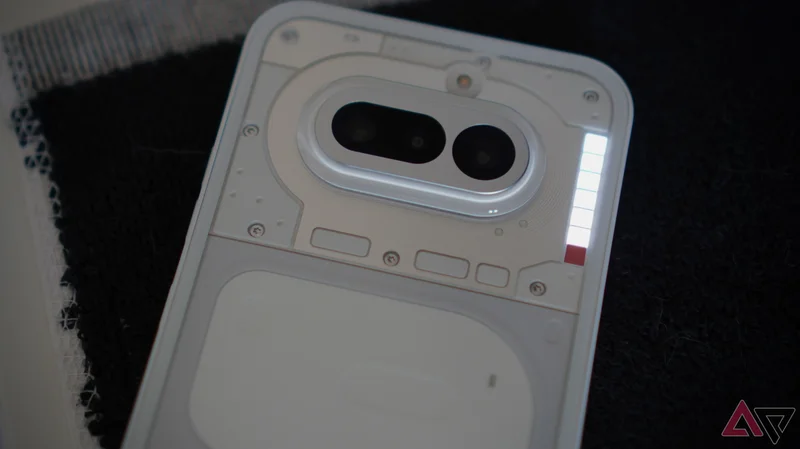
Google has brought back the notification light, and mobile fans around the world are rejoicing.
A much-missed relic of phones from a bygone age, Google’s HiLight is found on the back of the Google Pixel 11 Pro and Pro XL, ready to inform you of incoming messages and calls on your phone when it's face down on a desk.
The trouble is, the notification has already been reinvented for the modern age, and done better too.
What does the HiLight do?
Not as much as you may expect
Google’s HiLight is on the back of the Pixel 11 Pro and Pixel 11 Pro XL, hidden around the camera flash, and it lights up to alert you of incoming calls and WhatsApp messages from your favorite contacts, and for when you’re talking to Gemini.
If you think HiLight sounds a little light on features, you’d be right. Unfortunately, that’s it for now, but Google has said it will add more features to HiLight in the future.
Google’s intention with HiLight is to minimize distractions, but still make sure you know when something is important. It’s an extension of Google’s existing Flip to Shhh feature, and is apparently a blend of both hardware and intelligent software.
Nothing’s Glyph Lights got there first
And did it better
Notification lights, which were LED indicators to alert you of incoming messages, were just as basic as the HiLight. Different colors and sometimes even patterns kept you informed before the advent of always-on screens and smartwatches.
Today, the simple notification light is largely redundant, so it had to be reinvented to make sense on a modern phone, and Nothing did exactly that with its Glyph Light and Glyph Matrix systems.
Nothing brought back the notification light in 2022 with the release of the Nothing Phone (1), and it was something really special. The Glyph Light flashed and pulsed on the back of the phone, and was also intelligent enough to silence the phone when you placed it face down on a surface.
What could have been a flash-in-the-pan (sorry) feature became a signature one, with Nothing working to improve and enhance it over its many phone releases since then.
A customizable, useful tool
It does more than you first expect
The Glyph Bar on the Nothing Phone (4a) is the closest we have to a traditional notification light today. It’s made up of 63 mini-LEDs and can be customized to alert you to incoming notifications and calls, plus it can be tied to apps to measure progress, such as when a delivery may arrive or a timer.
Nothing understands that light works best for attracting attention when matched with sound, and the Glyph Bar works in conjunction with Nothing’s excellent ringtones and notification sounds. This means it’s also useful for those who may not be able to see the light array too.
It’s a combo that brings the notification light into the 21st century. If you want more, the Glyph Matrix on the Nothing Phone (3) uses micro-LEDs to show everything from the time to mini-games on the back of the phone.
There’s even the option for developers to create mini-apps and designs for the Glyph Matrix, opening the feature up to Nothing’s engaged fanbase.
The Glyph Light and Glyph Matrix require effort to understand at first, but once you get into the habit of putting your phone face-down and letting it do its work, the feature is surprisingly useful. I enjoy it when I use a Nothing phone, and love how it adds a unique element to the device.
Can HiLight compete?
Not when it's so limited
On the surface, HiLight looks very basic next to Nothing’s Glyph lights.
It’s also surprising Google has decided to make it a premium feature reserved for its Pro phones, and not add it to the non-Pro Pixel 11, or even the Pixel 11 Pro Fold.
Nothing sensibly adapted its Glyph lights for its entry-level phones. The Nothing Phone (4a) with the Glyph Bar is £350 in the UK, while the Nothing Phone (4a) Pro is $500 in the USA, and has a version of the Glyph Matrix on the back.
If you want to try out Google’s new HiLight for yourself, the Pixel 11 Pro starts at $1,099. While it’s certainly not a feature that’s going to sell the Pixel 11, it may turn out to be a useful addition, but that’s a lot of money to spend to find out.
What will make the HiLight better?
It needs to do more, fast
Google will need to add more features to the HiLight if it wants to take the notification light crown away from Nothing.
It needs to work with more apps and notifications, be customizable. And you should be able to link it with audio alerts.
Nothing got there first with reinventing the notification light, and by making it available on all its phones regardless of price, along with a host of features to make it useful to more people, it has set the bar very high for other brands wanting to compete.
Google may have missed the mark with HiLight, even though it could look in Nothing's direction to see how a modern notification light should be done.