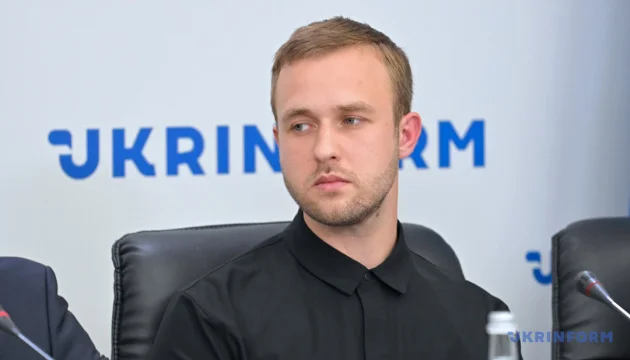
Kyrylo Viktorov, head of the Department for Countering Information Threats to National Security at the Center for Countering Disinformation (CCD), reported this during a press conference at Ukrinform.
According to him, the study covered the period from January 1 to August 11, 2026. Using specialized software, analysts examined more than 94,000 publications from nearly 24,000 sources. The study covered both Ukrainian- and Russian-language segments of the information space, while the total number of views of the analyzed materials reached 419 million.
The Center's representative emphasized that not all of the publications analyzed contained destructive narratives. Analysts identified messages that Russia uses to carry out information operations, as well as the corresponding narratives and their objectives.
Read also:Russian propaganda spreads fake videos to sow fear over strikes on Ukrainian gas stations – CCD
"The main pattern revealed by our analysis is that Russia often does not need to invent the event itself. It is enough to use a real event and impose the desired interpretation of it on the audience," Viktorov said.
According to him, the first main direction is the dissemination of claims that Ukraine allegedly does not want to return its prisoners of war. Russian and pro-Russian sources systematically promote the idea that Ukraine supposedly refuses to conduct exchanges, does not want to return certain prisoners, or is interested only in bringing back specific categories of servicemen.
"In this way, they try to shift responsibility for the difficulties or delays in the exchange process onto Ukraine, onto the Ukrainian side," the Center's representative explained.
The second direction, according to Viktorov, concerns manipulation of the issue of missing persons. Russian sources attempt to fill the information vacuum with their own explanations, including claims that the missing-person status is supposedly used to conceal the actual number of people killed or to avoid making payments to their families.
The third direction involves creating a positive image of Russian captivity. To this end, Russia uses videos and statements by Ukrainian prisoners of war that emphasize allegedly good treatment by Russia, an alleged unwillingness to return to Ukraine, or reluctance to go back to the front.
"A person who is being held captive cannot be considered a free participant in information communication, especially when we are talking about Russian captivity," Viktorov stressed.
He described the fourth direction as discrediting Ukraine by spreading fake information and disinformation about allegedly inadequate conditions for Russian prisoners of war, lack of medical care, poor food, beatings, or other forms of cruel treatment.
The Center's representative noted that this ultimately creates a distorted narrative: "Russia supposedly treats Ukrainian prisoners of war humanely, while Ukraine, on the contrary, allegedly treats Russians brutally."
He emphasized that these narratives are interconnected and have a common goal — to undermine trust in Ukraine. This includes undermining servicemen's trust in the state, families' trust in institutions responsible for searching for and returning people, citizens' trust in verified information, and international partners' trust in Ukraine.
Viktorov concluded that periods when public attention to the issue rises sharply are particularly favorable for such information operations — including during prisoner exchanges and negotiations, as well as when lists or new information about prisoners of war and missing persons emerge.
As Ukrinform reported, Ukrainian law enforcement agencies currently have information on more than 114,000 missing civilians and military personnel.