The doctor of former Vice President Dick Cheney has argued Americans “deserve answers” about the mysterious ailments impacting President Donald Trump.
Dr. Jonathan Reiner asked several medical questions about Trump, 80, that he believes should be publicly answered as scrutiny grows over the president’s hand bruising, leg swelling and moments where he appears to nod off on camera.
“In a representative democracy, the people must have confidence in the health of their leader, and in the leader’s capacity to guide the nation. We have been kept in the dark too long,” Reiner said in a guest essay for The New York Times published Wednesday.
The White House defended Trump’s fitness to lead the country, but did not answer the medical questions Reiner had posed.
“If it quacks like a duck, it may actually just be a Democrat hack doctor,” White House spokesman Davis Ingle told The Independent. “President Trump is the sharpest, most accessible, and energetic president in American history and any so-called medical professionals engaging in armchair diagnosis or false speculation for political purposes are clearly breaking the Hippocratic Oath they’ve sworn to.”
Reiner was Cheney’s cardiologist for 27 years, including during his time in the White House, where he had to undergo several treatments for heart issues. The Republican, who served two terms under former President George W. Bush, died last November at age 84 due to complications of pneumonia and cardiac and vascular disease.
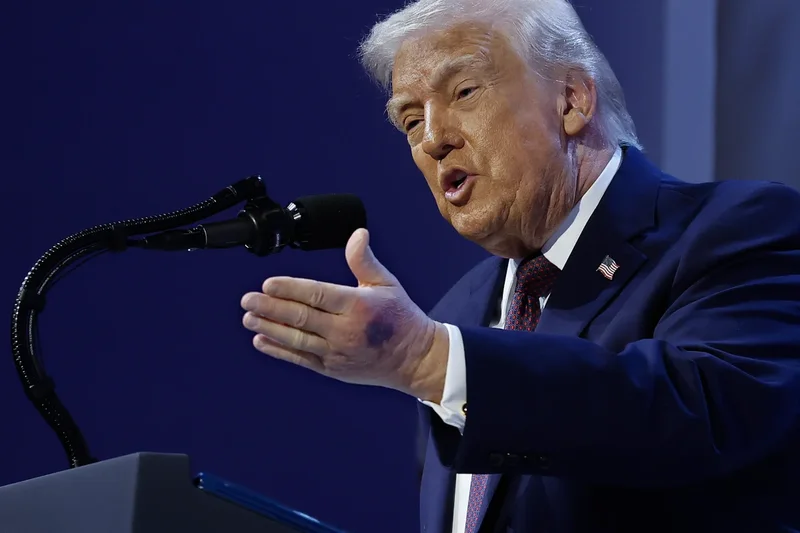
The doctor questioned one of the most attention-grabbing physical ailments of Trump in his essay — the black and blue on the back of his hands. The Trump administration has chalked it up to frequent handshaking and aspirin use.
But Reiner said, “Trauma from handshaking has never seemed plausible, and it doesn’t explain why the president’s left hand is often similarly discolored.
“Also, why would the president take a dose of aspirin four times as high as the dose typically recommended by doctors?”
Dr. Sean Barbabella, the physician to the president, said in a January Wall Street Journal article that Trump takes 325 milligrams of aspirin a day for “cardiac prevention.”
“They say aspirin is good for thinning out the blood, and I don’t want thick blood pouring through my heart,” Trump told the Journal at the time. “I want nice, thin blood pouring through my heart. Does that make sense?”
Following reports of Trump appearing to have swollen ankles last year, Barbabella released a statement saying that the president was diagnosed with chronic venous insufficiency, a common condition in those over 70 years of age. The doctor noted no evidence of more serious conditions, including deep vein thrombosis or arterial disease.
Reiner pointed out that chronic venous insufficiency “usually develops gradually over a long period. But during Mr. Trump’s comprehensive physical examination just a few months earlier, Dr. Barbabella documented no swelling in the president’s legs.
“If that’s true, his swelling would be by definition acute, not chronic. Acute leg swelling is a potentially much more consequential finding that can be caused by issues such as heart and kidney disease. What’s the reason for this discrepancy?”
Barbabella wrote in the results of Trump’s physical exam last May that the president had slightly lower leg swelling, showing improvement from last year. It was his third medical exam in 13 months.
Over the past year, Trump appeared to have trouble staying awake during Cabinet meetings and Oval Office events. The president even appeared to doze off at more fast-paced events such as the UFC fight he hosted on the White House lawn for his birthday and a game at Madison Square Garden during the NBA Finals.
“Although the president is a renowned night owl, his sleepiness seems relatively new. There are several possible causes for the president’s symptoms, some of which could have serious complications if left untreated,” Reiner said. “Has the president’s medical team identified the source of this issue? And how are they addressing it?”
Barbabella said in May that Trump “remains in excellent health” and that he is “fully fit to carry out all duties of the Commander-in-Chief.”
But Americans don’t seem too convinced. Fifty-five percent of U.S. adults believe Trump is not in good enough physical health to serve effectively as president, a Washington Post/ABC News/Ipsos poll conducted in April found.