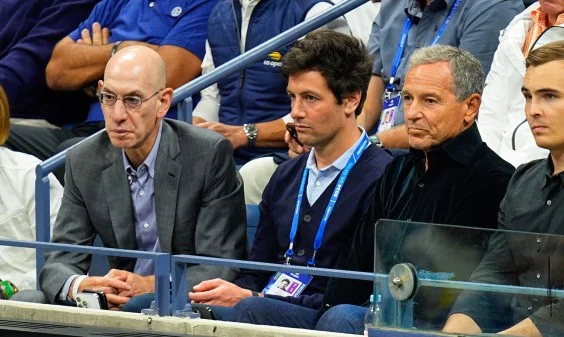
Out of nowhere, and after only a few short days of negotiation, Joshua Kushner and Bob Iger have agreed to buy the Los Angeles Lakers from Mark Walter for a reported record price of $12.5 billion. Every part of that sentence is wild, especially given the recent financial maneuverings of Walter and Kushner.
Let's start with Walter, who bought the Lakers in June 2025 for $10 billion. Walter also owns the Los Angeles Dodgers and has turned them into an organization so hyper-competent that it has made people who should know better argue for a salary cap in baseball. Walter's takeover of one of the NBA's flagship franchises was the most significant acquisition in a recent wave of sales that included the Celtics, Blazers, and Timberwolves. As of the second half of this past season, Walter was beginning the process of replacing longtime functionaries of the previous ownership group, the Buss family. With Luka Doncic around, the long-term future of the team seemed secure.
However, Walter's position was not as secure as it seemed. Bloomberg reported on July 20 that the federal government was conducting an investigation into Walter's Guggenheim Partners over some suspicious accounting. The heart of the issue is billions of dollars in private credit deals between companies within Walter's business empire. Private credit has been having a moment on Wall Street for a few years now, for the way the financing tool allows sprawling entities to move around money without as much regulatory scrutiny. At specific issue in this investigation, per the Wall Street Journal, is that nearly "$21 billion in loans extended to companies tied to Walter or his conglomerate, TWG Global, wound up on the books of insurance companies he owns after passing through a third entity." Insurance companies, in this case Delaware Life Insurance and Clear Spring Life, are subject to stricter regulations than many other financial institutions, because the money needs to be in place for when policyholders make claims.
The investigation began after an internal whistleblower complaint, and the U.S. Attorney’s Office in Manhattan and the Securities and Exchange Commission began investigating last year. By September, three months after Walter's purchase of the Lakers, the feds had seized laptops and phones. This past February, the two insurance companies received subpoenas. And in July, per the WSJ, "[the credit-rating agency] Fitch placed Delaware Life on negative watch and S&P revised its outlook to negative." The WSJ also reported that Walter has been dealing with some health issues after suffering a stroke in late 2024.
Meanwhile, Joshua Kushner, brother of Donald Trump's son-in-law Jared, was making moves. His Thrive Capital provided the money behind the plan for private-equity investors to buy the World Cup, though that plot fell through, perhaps costing FIFA president Gianni Infantino his job in the process. Thrive just announced a $2 billion spin-off into Thrive Holdings, which, per the New York Times, will use that money to buy "traditional service providers like accounting businesses and infuse them with A.I."
That Kushner made his money doing evil stuff is so obvious as to barely warrant mention, but yes, of course he did. According to ESPN's Ramona Shelburne, who got the exclusive and has happily provided positive coverage of Kushner's maneuverings, Kushner and Bob Iger, the acceptable public face of the ownership group, have been in on the NBA's planned Las Vegas expansion team. But as negotiations on that front continued, the price reportedly climbed "into the stratosphere."
So Kushner and Iger pivoted. According to Shelburne's reporting, the deal to purchase the Lakers came together in a "matter of days," which is suspicious. Sales of this size tend not to cohere this quickly unless there's some considerable force of external pressure—like, say, a thumb on the scale from one party's brother's boss who runs the federal government like an extortion racket. Hypothetically.
The Walter investigation is not over but already seems ominous. While someone will only pay $10 billion for an NBA team if they really want to run it, getting a $2.5 billion profit and some hypothetical relief from regulatory pressure is a pretty good alternative. With this outcome, commissioner Adam Silver can take credit for another franchise-record sale, and Trumpworld's sprawling financial criminality can waft its stench over the NBA.