Chile Green-Lights US$2.9 Billion in New Investment Projects in July
Chile · Investment
A single month’s approvals show where the money wants to go in Chile: into digging up copper and generating power.
Chile cleared nearly US$3 billion of new investment projects in a single month. The country’s environmental regulator approved 22 of them in July, worth US$2,887 million.
A snapshot of where capital is flowing in one of Latin America’s steadiest economies.
What was approved
The green light came from the SEA, Chile’s environmental assessment service, which vets projects before they can proceed. In July it favourably qualified 22 projects, together worth US$2,887 million.
Most were cleared by regional commissions, with one larger case handled centrally. It is the kind of routine bureaucratic tally that, added up, reveals the real direction of an economy.
Copper leads the way
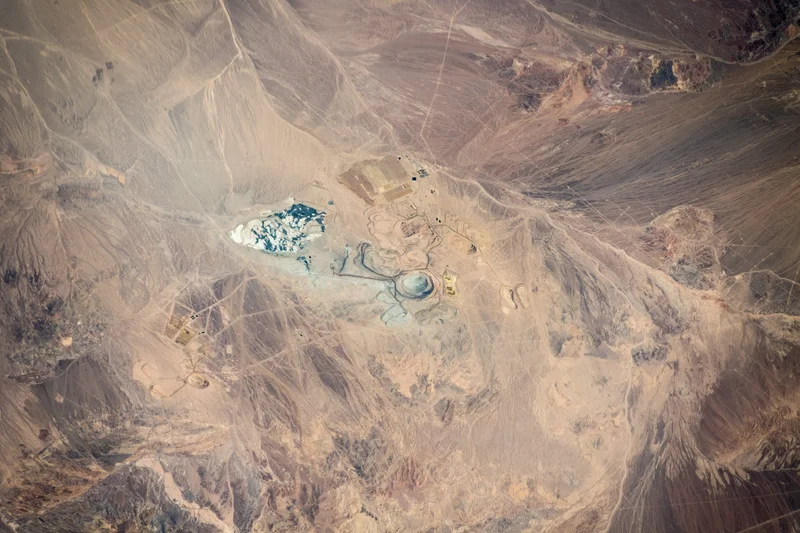
No surprise for Chile: mining was front and centre. The single largest project was an expansion of the Escondida copper mine.
That optimization plan in the Antofagasta region alone carries a price tag of US$1,300 million. With copper prices near records, investing to squeeze more metal out of existing mines makes obvious sense.
Live Market IntelligenceChile — Live Market Board
Rio Times · Live Market Intelligence
Chile — Live Market Board
-1.37%
167,810.01
-0.04%
65,860.95
+0.45%
10,976.50
-1.37%
3,020,914
-0.05%
2,422.40
-0.04%
58,737.38
-0.47%
| Instrument | Last | Change | YoY | Prev. | High | Low | Volume |
|---|---|---|---|---|---|---|---|
| IPSA | 10,976.50 | -1.37% | — | 11,128.56 | 11,210 | 10,984 | 1,513,213,483 |
| USD/CLP | 913.98 | +0.04% | -5.67% | 913.65 | 915.11 | 906.68 | — |
| COPPER | 6.61 | +0.03% | +46.70% | 6.61 | 6.71 | 6.61 | 39,543 |
| SQM-B | 65,305 | -0.84% | +49.03% | 65,860 | 66,949 | 64,978 | 76,539 |
| COPEC | 5,964 | -1.09% | -11.70% | 6,030 | 6,100 | 5,960 | 634,331 |
| BSANTANDER | 78.37 | -2.28% | +35.94% | 80.20 | 81.69 | 78.34 | 36,288,711 |
| FALABELLA | 6,334 | -1.48% | +23.28% | 6,429 | 6,450 | 6,300 | 26,085,814 |
| ENELAM | 87.09 | +0.10% | -10.13% | 87.00 | 87.40 | 86.50 | 13,106,417 |
| CENCOSUD | 1,946 | -2.19% | -35.30% | 1,990 | 2,010 | 1,945 | 966,528 |
| CMPC | 1,020 | -1.96% | -29.10% | 1,040 | 1,050 | 1,015 | 3,526,677 |
| BANCO CHILE | 184.96 | -1.01% | +32.87% | 186.85 | 189.99 | 184.33 | 18,101,240 |
| LATAM AIR | 24.08 | -1.11% | +16.61% | 24.35 | 24.59 | 23.88 | 573,612,753 |
| SOUTHERN COPPER | 193.97 | -0.26% | +104.01% | 194.48 | 199.36 | 192.59 | 367,102 |
2 of 11names higher.
Utilitiesled, while
Consumer Stapleslagged.
Power and water close behind
Energy projects filled much of the rest of the list, reflecting Chile’s push to expand and clean up its grid. A large interregional water-pumping system for the Andina mining division was approved at US$650 million.
A battery storage project, Remanso, in the O’Higgins region added another US$165 million, a nod to the country’s renewable ambitions.
Spread across the country
The investment was not concentrated in one corner. Projects were distributed across ten regions, from Arica in the north to Los Lagos in the south.
That breadth matters for jobs and local economies far from the capital. It also shows that Chile’s appeal to investors is national, not confined to a single mining belt.
Why the SEA matters
Every one of these projects had to pass environmental review first. The SEA is the gatekeeper that decides.
Projects come in two forms: lighter declarations for smaller impacts, and full studies for the larger ones. July’s batch was mostly the lighter kind, with a handful of major projects requiring the deeper review.
A vote of confidence in Chile
Behind the paperwork is a message. Companies are still willing to commit billions to Chile for the long haul.
In a region where political and economic swings can spook investors, that steadiness is an asset. Chile’s institutions, for all their frictions, remain predictable enough for capital to plan around.
The copper thread runs through it
It is striking how much of the list ties back to copper, directly or indirectly. The Escondida expansion is copper.
The Andina water system serves a copper division. Even new power feeds the mines.
Chile’s economy still orbits the red metal, and this month’s approvals orbit it too.
What it means for the economy
Approved investment is not spent money, but it is a leading indicator. It signals what will be built in the years ahead.
Construction brings jobs first, then production and exports once the projects come online. For a government watching growth and employment, a healthy pipeline of approvals is welcome news.
The environmental balancing act
The flip side is real. Mining and energy leave a footprint, and Chile’s approvals draw scrutiny from communities.
Water, in particular, is a flashpoint in the arid north, where mines and towns compete for scarce supply. Every green light is also a bet that the benefits outweigh the local costs.
What to watch next
One strong month does not make a trend. The figure to watch is whether approvals hold up through the year.
Also worth tracking is how many approved projects actually break ground, rather than sitting on the shelf. For now, though, Chile has quietly signalled that it remains open for serious business.
How Chile compares in the region
Chile’s draw is not just its geology but its reliability. Rules are known, courts function, and contracts hold.
That predictability is rarer than it should be in the region, and investors pay a premium for it. It is why a mid-sized economy keeps attracting sums that larger neighbours sometimes struggle to secure.
The energy transition angle
Many of the approved energy projects point in one direction: cleaner power and storage. Battery systems like Remanso help Chile use its abundant solar and wind after the sun sets and the wind drops.
Greening the grid also serves the mines, which face pressure to cut the carbon in their copper.
From paper to poured concrete
Approval is a milestone, not a finish line. Financing, permits and construction still lie ahead for each project.
Some approved plans stall for years; others break ground within months. The gap between what is cleared and what is built is where a country’s investment climate is really tested.
Frequently Asked Questions
What did Chile approve?
Its environmental service, the SEA, favourably qualified 22 investment projects worth US$2,887 million in July, led by energy and mining.
What was the biggest project?
An expansion of the Escondida copper mine in Antofagasta, valued at US$1,300 million.
Where are the projects?
They are spread across ten regions of Chile, from Arica y Parinacota in the north to Los Lagos in the south.
Why does this matter?
Approved projects are a leading indicator of future construction, jobs and exports, and a sign of investor confidence in Chile.
What is the SEA?
It is Chile’s environmental assessment service, which reviews and clears projects before they can be built.
This article was produced by The Rio Times’ automated newsroom system. How we use AI · Report an error