Kiri Allan is a former Labour Party Minister who held the portfolios of Justice, Regional Development, Conservation and Emergency Management. She now runs the KLA consultancy firm.
Subscribe to listen
Access to Herald Premium articles require a Premium subscription. Subscribe now to listen.
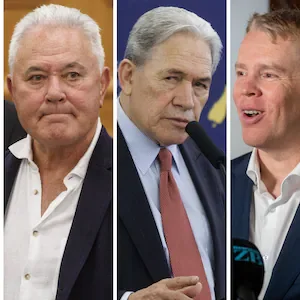
National deputy leader Nicola Willis, Te Pāti Māori president John Tamihere, NZ First leader Winston Peters and Labour leader Chris Hipkins all attended a meeting with iwi leaders in Queenstown.
Last week, iwi leaders from across the country met in Tāhuna (Queenstown), hosted by Ngāi Tahu.
The mood in the room was resolute. Senior iwi leaders called this the worst Government in living memory for its relationship with Māori, and there was clear agreement that the campaign to change itstarts now.
The past three years have delivered some of the worst policy outcomes for Māori in recent memory – from the language reforms and environmental repeals to local water reforms that make Māori participation optional rather than required; proposed council amalgamations that critics argue risk weakening Maori representation despite Treaty settlements largely hinging on iwi relationships with local government; climate policy walkbacks and the Treaty Principles Bill and the continuing review and removal of Treaty provisions from legislation. Māori have spent that time on the back foot, pushing back against regressive policy on every front.
As the election approaches, every party was invited to address the forum and set out its vision for Māori and Aotearoa. My takeaway: all political parties missed the memo on having a clear vision for Māori economically, socially, culturally and environmentally.
Winston Peters was taken to task on some of the anti-Māori reforms his party is driving: a binding referendum on whether Māori seats should remain – despite NZ First winning five Māori seats in 1996, pushing it into Government with National; removing general Treaty provisions in legislation; and opposing co-governance, an approach to Te Tiriti relationships with Māori that was introduced by National – echoing the “one law for all” framing once used by parties on the right, including Act.
With recent polling around 9% to 12%, it’s highly likely NZ First will be instrumental in the formation of the next government. Winston reminded the crowd of his investment into initiatives such as the Māori Women’s Welfare League and regional infrastructure, it’s clear NZ First’s vision for Māori is ongoing assimilation at best.
The Green Party made a valiant case, with Chlöe Swarbrick and Marama Davidson setting out alternative measures for tracking growth sustainably, fiscally and environmentally. But pressed on how restrictions on trawling would affect Treaty settlements, the answer was a vague nod to a “just transition” with no real modelling of the economic impact. A stronger answer would have named the cost to settlement value directly and committed to reinvesting it into sustainable industries for iwi.
In my view, Te Pāti Māori tanked. You could feel the room – packed with people waiting for a clear vision for te ao Māori – pull back. Instead they got, what sounded to me like, a defensive account of the party’s internal troubles from president John Tamihere, including a claim that no one but him had built an organisation serving Māori the way Waipareira Trust had.
The vision for Māori was a pitch that treated fashionable dress and haka in the House as the high-water marks of Māori aspiration. We tend to judge our own more harshly, but this was still one of the worst political performances I’ve seen. They lost the room completely.
National attended with one major omission: the party’s leader was not there. He was the only party leader among those who attended to decline the invite and sent Nicola Willis and Tama Potaka instead. This is a clear signal as to where Māori are on National’s agenda – we simply don’t make the cut.
The National Party members were challenged over the RMA reforms that will significantly impact Treaty settlements, their relationship with their coalition parties (essentially letting the tail wag the dog), their support for the repeal of generic Treaty provisions, the regressive approach to te reo Māori and retreating from important policies that embedded Māori into decision-making.
This includes Te Mana o Te Wai, Mana Whakahono ā Rohe and settlement-based co-management/co-governance arrangements that were used in Treaty settlements, including underthe previous National-led Government.
Nicola Willis was quite upfront. She stated this had been a difficult time for Māori-Crown relationships and also acknowledged that the room wouldn’t be where she gets the most votes this campaign trail. She was wise to do so. Her former Minister of Treaty Settlements, Chris Finlayson, has come out strongly rebuking the Luxon Government’s approach to the Crown-Māori relationship, walking back elements of the bipartisan Treaty-settlement approach associated with the Bolger settlements.
for its approach to Māori-Crown relations and walking back party positions held since the time of Jim Bolger and Doug Graham.
More than once, Willis had to rein in her less experienced colleague Tama Potaka, who appeared to be making up policy on the hoof, but overall, she did the best she could to navigate a crowd calling for her party to lead a one-term government only.
Labour fronted with Willie Jackson and Chris Hipkins. Asked beforehand how I thought they’d do, I said I was nervous. I’ve watched Chris struggle with Māori audiences before, and present were the country’s most influential iwi leaders, wanting change but unsure where to put their votes.
He was on fire. Backed by Willie, he set out the party’s commitment to Te Tiriti o Waitangi and noted the onslaught of reforms impacting Māori under the current Government. He committed to strengthening Māori rights in reforms like the RMA and upholding Treaty settlements. Willie argued Labour delivered record Māori-targeted investment in government. They read the room well.
However, there remained an elephant in the room – there was no cohesive plan to improve the lives of Māori.
This is a problem. Hipkins accepted Labour wasn’t ready to govern in 2017 and policies weren’t well developed by the time they took the helm. It felt like that same undercooked approach to Māori policy lingered in the room.
Act declined the invitation. No one in the room was surprised and the absence spoke for itself.
The Māori vote can’t be taken for granted or underestimated. Māori have often voted strategically, splitting tickets to reward whoever best serves Māori interests. But the real takeaway was this: no party has a genuine, worked-through vision for what Te Tiriti looks like in a modern Aotearoa, or how it translates into policy.
Every party recited the same high-level lines on housing, employment and health. With a Māori economy now worth $126 billion, a population set to comprise close to 20% of the country by 2038 and a hardened resolve for change, every party needs a real plan.
This should be to embed Te Tiriti in practice rather than rhetoric, to value te reo Māori in education, and to protect the environment Māori have always fought for.
Kiri Allan is a former Labour Party Minister who held the portfolios of Justice, Regional Development, Conservation and Emergency Management. She now runs the KLA consultancy firm.
Catch up on the debates that dominated the week by signing up to our Opinion newsletter – a weekly round-up of our best commentary.