If India is to realise the vision of ‘Viksit Bharat’ by 2047, it not only has to sustain but also accelerate economic growth for at least the next two decades. Rising consumption patterns across both rural and urban India are a natural consequence of rising incomes. India continues to follow a largely linear economic path: extract or produce, manufacture, consume and dispose, without dependable systems for waste management and resource recovery. The result is an extraordinary increase in the quantity and complexity of waste being generated.
The evidence of this waste is visible across the country. Rivers, lakes, mountain slopes, including high passes, national parks, pilgrim paths, beaches, valuable urban land, vacant plots and urban or rural roadways all bear testimony to mixed waste being discarded indiscriminately. Open burning occurs in urban and rural areas and contributes to air pollution, exposing people to harmful emissions.
The waste being dumped has various components. While some waste streams can be hazardous or inert, others are recyclable; organic waste is biodegradable and deserves special attention. It is potentially recoverable as compost, biogas, compressed biogas or biochar at the point of generation. Yet, when dumped and mixed with other waste, it not only contaminates recyclable waste but also creates odour, becomes an eyesore, attracts disease vectors and releases noxious fumes and methane, a greenhouse gas.
India does not suffer from an absence of laws. Its regulatory framework for solid waste has evolved since the first rules were notified in 2000. The Solid Waste Management Rules, 2026, have reinforced requirements for source segregation and local treatment of wet waste through composting or bio-methanation. The real challenge is translating regulatory framework and civic ambition into actionable outcomes.
Chain of custody
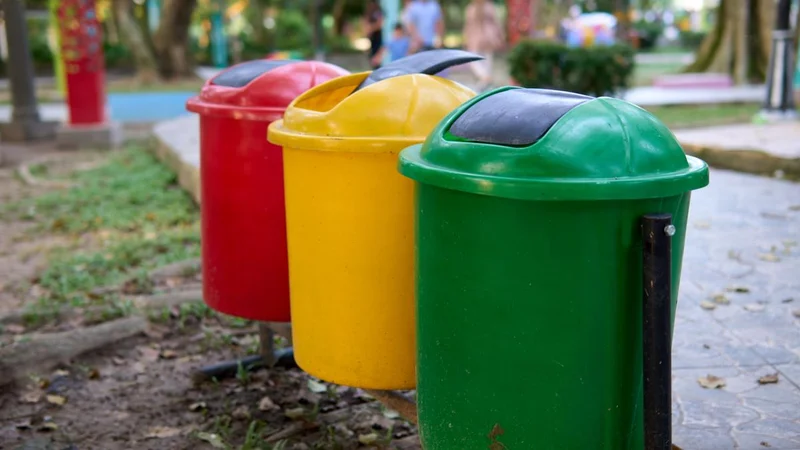
Waste management is frequently regarded as a behavioural problem. Civic responsibility is undeniably important, but citizens must ask themselves if they perfectly segregated their waste, would it lead to its appropriate processing and end-of-life treatment? Segregation must be followed by collection, transportation, processing and final reuse through a chain of custody. It has to be ensured that only that waste reaches the landfill which is non-recyclable, non-energy-recoverable, non-reactive and inert, or is pre-processing rejects and residual waste that cannot be processed or reused.
Organic waste lies at the intersection of sanitation, public health, agriculture, energy, climate and employment. However, without a single point of responsibility, it becomes a fragmented mandate. Unfortunately, the assets created under various schemes is measured while failing to measure the intended outcome: resource recovery.
Unknown accountability
As mentioned in a recent report by the Council on Energy, Environment and Water (CEEW), responsibility for managing organic waste is distributed across 16 Ministries and government bodies; accountability for the complete chain remains obscure. As an example, when a gram panchayat decides to make a community compost pit, the technical blueprint and targets are set by the Ministry of Jal Shakti (Swachh Bharat Mission-Grameen); the local village council or panchayat raj institution acts as the executor on the ground and the physical labour required to dig the compost pits can be funded using MGNREGS budgets, which come from the Ministry of Rural Development. There may be further schemes and subsidies targeting agricultural residue, horticultural waste and cattle dung; each intervention may be useful in isolation and may solve some problems. Together, however, they do not necessarily evolve into a coordinated local resource-management system and, in the process, miss the real objective, which should be resource recovery.
CEEW (2026) estimates that improved management of urban organic waste could unlock a market opportunity of nearly $51 billion by 2047, attract $24 billion in investments and create nearly 26 lakh direct jobs. At the same time, it could significantly reduce methane emissions, improve urban air quality, and strengthen India’s clean energy ecosystem through compost, biogas, and bio-CNG production.
The prevailing discussion remains centred on urban municipal waste. Rural India contributes a significant share of the country’s total waste generation. Moreover, agricultural residue, animal waste and biowaste in rural areas belong within a wider organic resource economy and therefore form the right substrate for resource recovery in the larger picture of waste management. The issue, however, is that the data, where it exists, is scattered across Ministries, resulting in lack of an integrated information source which acts as an impediment to a vision for a composite resource-recovery model.
The principle that “what cannot be measured cannot be managed” is relevant here. The mindset through which organic waste is viewed primarily as a sanitation issue, is a limiting thought process that is a barrier to unleashing the potential benefits in terms of nutrients, energy, climate mitigation and employment generation. We hypothesise that organic waste is a significant economic, environmental and social opportunity with great potential for multiple co-benefits. It is a valuable resource which, if tapped appropriately, can provide a nutrient base for agriculture, which is largely dependent upon imported fertilizer.
Data integration
There may be data, but it exists in silos and sits across different government systems. There is a need for data integration to formulate a systemic response to composite organic waste in the country. The cropping patterns of agricultural land is known and the agricultural waste that would be generated from it can be projected. The livestock census in each area could also provide an estimate of animal waste available for processing. From the waste-generation data of an area, estimates can be made of the organic waste expected to be generated. Collating this disparate data will help develop a vision for resource recovery at an appropriate geographical scale.
Three reforms suggested may be fundamental to bringing the scattered efforts into an integrated system.
First, there is a need to develop an organic-resource inventory that covers all sources of organic waste linked to a unit of governance. The inventory can have quantity, quality and seasonality of the materials, their existing users and competing claims over it. As an example, agricultural residue already used as fodder, fuel or soil cover can be classified as a well-utilised resource.
Second, to combine the benefits and co-benefits of numerous schemes and subsidies, the primary task should be to achieve a bigger purpose of resource recovery and establish a clear objective and accountability.
The third and final link is the development of a dependable market for recovered products. Quality compost and biochar help improve moisture retention and nutrient efficiency, it sequesters carbon and is also aligned with national climate priorities. This will reduce the imported fertilizer burden and abate local air pollution.
India already has laws, schemes, technologies and institutions. What it lacks is a unified view of the resource and a clear line of accountability from generation to productive use. The waste problem will not be solved by constructing more facilities in isolation. It will be solved by measuring the resource, protecting segregation throughout the chain, selecting locally appropriate technologies and rewarding verified recovery.
For a nation seeking to become a developed economy by 2047, continuing to dump, burn and neglect such a valuable resource is more than an environmental failure. It is a wasted economic opportunity.
Archana Vaidya is a natural resource management and environment law consultant
Published - August 13, 2026 12:06 am IST