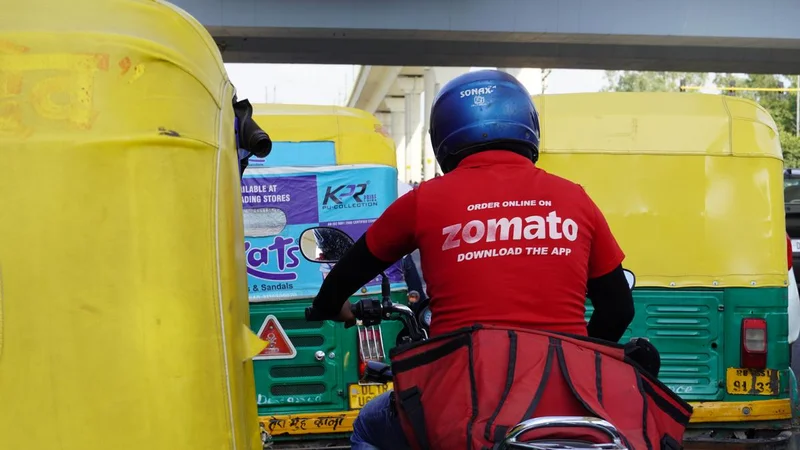
The Greater Chennai Traffic Police (GCTP) said as many as 43 accidents involving delivery personnel were recorded in the city in 2025, and four workers were killed in these accidents. Speeding, mobile phone use while driving, signal jumping, and rash driving were the main reasons for these accidents.
A senior police officer said that in Tamil Nadu, 536 people died in 2024 in such accidents, while the figure came down to 496 in 2025, marking a decline of around 40 deaths. A resource person of the Transport Department said there are no specific details on the deaths of gig workers. Union Road Transport Ministry guidelines stipulate that only the gender of the accident victim, the place and the vehicle involved be entered into the records of the State Crime Records Bureaux and not his or her profession, he said.
Speaking to The Hindu, the Salem District Assistant Commissioner of the Labour Department said that in the district there are 280 gig workers registered with the department and two workers received ₹20,000 each as a subsidy for purchasing an e-scooter. “No accidents involving gig workers were reported in past one year in the district,” he said.
In Madurai district, trade unions complain that the very nature of the job of food delivery boys attached to different aggregators poses a risk to their lives and limbs. “The risk is inbuilt as they are working for a meagre remuneration that is based on the number of deliveries made each day and within a short span of time,” says Centre of Indian Trade Unions (CITU) Madurai district secretary R. Lenin. Though traffic police in Madurai City say they come across accidents involving food delivery boys, there is no proper data available on this aspect. “Since two-wheelers are private vehicles, the police could not make any distinct differentiation of the vehicles of food delivery boys involved in accidents,” a police officer said.
Though CITU has a separate wing in Madurai -- the Tamil Nadu Food Delivery Boys Association -- only 10 of them have enrolled in it. “The aggregators do not allow them to have any affiliation with trade unions and the boys also do not have awareness on benefits of joining trade unions,” said its assistant district secretary, S. Senthamaraikannan.
The pressure to deliver food within the stipulated time keeps chasing the delivery boys. “How can someone travel 3 km to 5 km within 10 minutes given the traffic congestion,” he wonders. “They make all kinds of violations, from signal jumping to entering one-way roads. Over and above, they keep talking on mobile phones with the customers in their attempt to find the address even while riding on bikes,” adds the Police officer. Mr. Senthamaraikannan says that they could make both ends meet and could think of their safety only if their remuneration is increased.
In Erode district, police sources said no accidents involving gig workers were reported in the past year. All India Trade Union Congress (AITUC) district president S. Chinnasamy said the Gig Workers Welfare Board, constituted in 2023, has enrolled more than 220 workers in the district. “None of the registered members had met with an accident so far,” he added.
45-50 gig workers killed in 2025 in Andhra Pradesh
At least 45 to 50 gig workers lost their lives in road accidents across major urban centres in Andhra Pradesh between January and December 2025, with over 200 others sustaining injuries, according to CITU State General Secretary A.V. Nageswara Rao.
The alarming statistics, compiled through the support networks of the AP Gig Workers Welfare Unions in Visakhapatnam, Vijayawada, and Guntur, underscore the mounting perils faced by platform-based delivery personnel and cab aggregator workers associated with firms such as Zomato, Swiggy, Ola, and Uber.
Speaking to The Hindu from Vijayawada, Mr. Nageswara Rao noted that the victims are predominantly unemployed youth and college students undertaking gruelling shifts to make ends meet. Despite repeated representations to the State government and the Labour Department highlighting the precarious working conditions and lack of institutional safety nets, tangible legislative interventions remain absent.
Union leaders point out that intense algorithmic pressures, relentless delivery timelines, and the absence of comprehensive social security or statutory welfare measures leave grieving families and injured workers without adequate institutional support or compensation.
Deaths in Karnataka
According to data from Karnataka government sources, seven platform-based gig workers were killed in fatal road accidents in the State in 2025 (till November). The numbers show a rising trend, with three fatalities recorded in 2024 and two in 2023.
The number of non-fatal road accidents in 2025 stood at 13, a significant jump from no cases being reported in 2023 and three in 2024.
Unofficial figures, however, suggest a much higher number. “In the last year, at least 50 platform workers would have died on the road in accidents in Karnataka. From our union alone, 10 members lost their lives in such incidents over the past year,” said Mohamad Inayat Ali, President, Karnataka App-based Workers Union.
Poor roads riddled with potholes and prolonged civil work often prove to be a villain for the gig workers who are constantly rushing to fulfil the orders, notes Vinay Sarathi, United Food Delivery Partners’ Union President. “Work stress to deliver the orders quickly is a major factor leading to accidents,” he adds.
Many delivery personnel use low-speed electric vehicles (LSVEs) for fulfilling deliveries. The condition of some of these vehicles is questionable. “Some of the LSVE providers, who have partnered with the quick commerce platforms, tamper with the speed settings. While the legally mandated maximum speed of such vehicles should be 25 kmph, they set it to around 40 kmph to facilitate faster deliveries. Many times, this causes accidents for the workers who don’t have any protective gear,” alleges Mr. Ali.
Rash or negligent driving makes things worse. Mr. Ali points to the case of a quick commerce delivery worker who was killed on July 12 in a hit-and-run incident near Sarjapur, after being hit by a speeding water tanker. The Karnataka government’s insurance scheme for gig workers provides ₹4 lakh compensation for accidental death. While several insurance claims have been approved and disbursed, registration numbers remain relatively low, say industry sources. “Many workers are migrants living with friends or colleagues in the city. In the event of an accident, unions often find it difficult to contact their families or facilitate insurance claims because basic details are unavailable,” says Mr. Ali.
More than 30 died in Kerala
More than 30 gig workers, mostly food delivery personnel, have died in road accidents across Kerala in the past year, according to informal data compiled by the Kerala State Gig and Platform Workers Union (CITU). Thiruvananthapuram reported 16 such deaths and Ernakulam 11. The data was collected after a spate of fatal crashes, including two deaths on July 9 in Kochi and Thiruvananthapuram, according to the union.
The demise of the delivery workers, often the breadwinners of their families, leaves their kin in huge emotional and financial distress. The relatives of Sunilkumar, a 44-year-old delivery worker who was fatally run over by a bus in Kochi recently, say the company which employed him has claimed that it has initiated the procedures to get his insurance claim. Union leaders, however, say victims often don’t get fair compensation, including the life insurance sum.
The gig workers say they become compelled to compromise on road safety owing to multiple factors, including incentive-linked targets, dispatch delays and customer pressure.
About 1500 accidents in Telangana
Telangana-based gig worker unions say road accidents involving app-based drivers and delivery personnel have become a growing concern, with an estimated 1,300 to 1,500 accidents involving gig and platform workers reported in the State over the last one year.
According to Shaik Salauddin, founder-president of the Telangana Gig and Platform Workers Union (TGPWU), five to six of these accidents proved fatal, although the actual death toll could be higher as not all incidents are reported to the unions. Mr. Salauddin said that in the cases known to the unions, both the platform companies and the Telangana government provided compensation of ₹5 lakh each to the families of the deceased workers. He added that accidents continue to leave workers and their families vulnerable. Citing a recent case, he said a gig worker is undergoing treatment at a private hospital after a road accident, with medical expenses already touching ₹5 lakh, while alleging that the platform company had not extended any financial assistance.
The union estimates that Telangana has nearly 4 lakh gig and platform workers, around 90% of whom are concentrated in Hyderabad and its surrounding areas. Mr. Salauddin said worker safety concerns had also prompted unions to campaign against 10-minute delivery timelines introduced by some quick-commerce platforms. “Such delivery deadlines compel workers to speed through traffic, increasing the risk of road accidents. The issue was highlighted during nationwide protests by gig workers last year, following which the Union government took note of the concerns,” he said.
Meanwhile, the Telangana App-Based Drivers Forum (TADF) held a round-table meeting in Hyderabad on July 15, expressing concern over declining earnings, increasing deductions and the continued delay in implementing welfare measures for gig and platform workers. The forum announced a statewide flash strike on July 22 and warned of an indefinite strike after August 5 if its demands remain unresolved, stating that repeated representations to the Telangana government and platform companies had failed to yield concrete action.
Among its demands are an immediate revision of per-kilometre, per-minute and per-order fares, a fare hike to ensure sustainable earnings, an end to excessive commissions and deductions by IT companies and cab vendors, action against unauthorised vendors and commercial operations involving vehicles registered in other States, immediate notification of the Telangana Gig and Platform Workers Rules, constitution of the Gig and Platform Workers Welfare Board, and mandatory consultation with workers’ representatives before policy decisions affecting the sector
Lack of support for gig workers
Recently, the Parliamentary Committee on Labour noted that the Union Labour Ministry could not operationalise the Pradhan Mantri Suraksha Bima Yojana (PMSBY) until March 31, 2022. The ex-gratia module was later launched in August 2023, and the decision of approval or rejection was under the purview of State Governments. The Committee expressed its concern and noted that, as on February 18, 2025, out of 702 claims (474 in 2023-24 and 228 in 2024-25) approved by District Magistrate/District Collector, the payment has been made to only 501 (330 in 2023-24 and 171 in 2024-25) claimants and the remaining 201 claimants are yet to get ex-gratia payment due to administrative/procedural reasons. “The Committee feel that the very purpose of any social security scheme is defeated if the ex-gratia amount is not timely paid to the claimant,” the report had said.
(A.M. Jigeesh with inputs from Bureau)