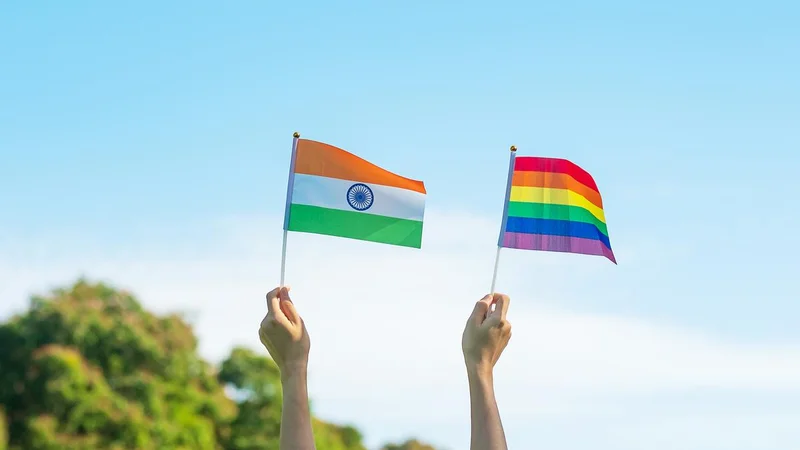
A new survey in Arunachal Pradesh has documented recurring experiences of widespread harassment of members of the LGBTQIA+ community in the State.
Also read | On India’s rainbow trail | Queer-focused walks are finding an audience in the country
According to the Itanagar-based HimKai Research Institute (HRI), the pestering or provocation has led to identity concealment, discrimination-related distress, and low confidence in institutional protection among the LGBTQIA+ respondents in the State.
LGBTQIA+ expands to Lesbian, Gay, Bisexual, Transgender, Queer or Questioning, Intersex, and Asexual.
The HRI conducted the anonymous online survey between June 2 and August 2. It received 62 submissions, one of which was excluded during geographic eligibility and data-quality screening because the self-reported home district could not be mapped in Arunachal Pradesh.
“Among the 61 respondents included in the analysis, 49.2% said they hid their gender identity or sexual orientation most of the time or always because of fear of discrimination or violence. Half of valid respondents said they felt accepted within their family rarely or never, while 44.3% said they felt safe in their local community rarely or never,” the HRI report said.
“Experiences of harassment and discrimination were reported across several settings. Some 91.8% of respondents reported verbal harassment at least rarely, while 52.5% reported physical threats or violence at least rarely. Among valid responses, 85.0% reported discrimination in school or college at least rarely, and 63.2% reported workplace discrimination,” it said.
The survey also found that 72.9% of valid respondents felt compelled to change their behaviour or appearance sometimes or more often to retain work or education. A further 57.9% said their identity affected access to employment or income opportunities at least rarely.
Religious, cultural exclusion
“Mental wellbeing emerged as a significant concern. Among valid responses, 76.7% reported experiencing stress, anxiety or emotional distress related to discrimination sometimes or more often, including 48.3% who experienced it most of the time or always. Access to mental-health or peer support was uneven: 41.0% said such support was available most of the time or always, while 36.1% said it was available rarely or never,” the report said.
The findings also point to a gap between awareness of rights and confidence in institutions. While 56.7% of valid respondents agreed that they were aware of their legal rights, 63.3% disagreed that laws and policies adequately protect LGBTQIA+ persons, and 66.7% disagreed that police and authorities respond sensitively to LGBTQIA+ issues.
Religion, culture and social belonging received particularly cautious assessments. Some 72.1% did not agree that religion or faith practices are accepting of LGBTQIA+ persons. More than half disagreed that their identity is compatible with their cultural or tribal background or that local traditions allow space for diverse identities, with 51.7% of valid respondents disagreeing that they feel a sense of belonging in society.
Healthcare emerged as a comparatively more positive area. Among valid respondents, 56.7% said that they felt comfortable accessing healthcare most of the time or always, and 75.0% said healthcare providers treated them with respect most of the time or always.
“Friends were the most frequently reported source of support, mentioned by 37 respondents, followed by LGBTQIA+ networks, mentioned by 12.
Six respondents mentioned. Awareness and sensitisation were the most common single priority identified for improving LGBTQIA+ lives in Arunachal Pradesh, followed by legal protection,” the report said.
HRI director Ranju Dodum said the study was intended to begin building locally grounded evidence on experiences that are often discussed without adequate data.
“LGBTQIA+ experiences in Arunachal Pradesh cannot simply be assumed from national conversations. Family, community, tribal identity, religion, education and employment all shape how people experience acceptance and safety here. This is a baseline study and its numbers must be read with methodological caution, but they point to questions that deserve deeper research and serious public discussion,” he said.
The report recommends sustained sensitisation programmes in schools, colleges, workplaces, healthcare institutions, police and public administration; confidential mechanisms for reporting discrimination; stronger mental-health and peer-support systems; safe community spaces; more inclusive education and workplace practices; and locally grounded engagement with families, community institutions and faith leaders.
The survey sample was predominantly young, with 90.2% of respondents between 18 and 35 years.
Published - August 13, 2026 10:13 am IST