Buying sports teams has long been considered a vanity investment - the domain of billionaires and publicity-hungry self-promoters, who love mixing it up with famous talented athletes.
By way of example, only this week former Disney chief Bob Iger and Jared Kushner’s brother Josh spent a cool $US12.5 billion ($17.7 billion) to snap up the LA Lakers.
And for the most part, Australia’s NRL team owners fit the bill - at least on a scaled-down basis.
Billionaires James Packer and Mike Cannon-Brookes co-own the South Sydney Rabbitohs alongside acting A-lister Russell Crowe. Bermuda-based media baron Bruce Gordon owns half of the St George Illawarra Dragons, and the Murdochs control the Brisbane Broncos. Across the ditch, New Zealand billionaire businessman Mark Robinson owns his country’s NRL team, the Warriors.
For years, owning NRL clubs wasn’t viewed as a commercial investment.
But the stratospheric amounts paid over the past decade for media rights to the big football codes is one of a number of reasons that these teams are now becoming little gold mines.
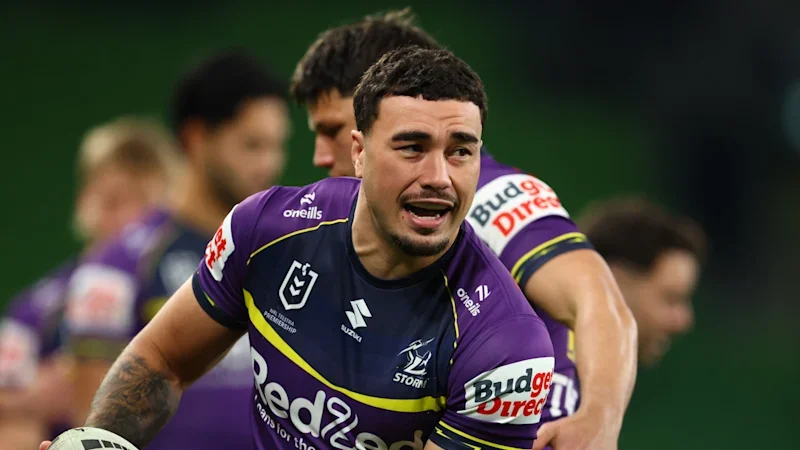
That a Swedish private equity firm is said to be cued up as a likely buyer [for the Melbourne Storm] marks a new era in the commercial coming-of-age for Australian sport.
This week’s news that a consortium led by gambling entrepreneur Matthew Tripp is close to selling a controlling stake in the Melbourne Storm for an estimated $130 million is eyebrow-raising enough. But that a Swedish private equity firm, EQT, is said to be cued up as a likely buyer marks a new era in the commercial coming-of-age for Australian sport.
For EQT, this is not about bragging rights, publicity or access to hang out in the sheds with Cameron Munster or Harry Grant. This is about making a financial return on its investment. (And then flipping the asset down the track for a tidy profit.)
The Swedes’ recent glamour-free forays into Australian business include a $9.4 billion offer for waste management group Cleanaway, and an unsuccessful bid for financial firm Perpetual.
Depending on the size of the ownership stake, the bid could value the Storm at as much as $200 million. The club reportedly turns over $60 million a year, which would support that kind of valuation.
This is a club that was also once owned by the Murdochs, who effectively gave it to Tripp & Co back in 2013. At the time, it was reported that Tripp paid zilch, and the change of ownership was considered something of a hospital pass. And to be fair, the team was said to be losing $7 million a year at the time.
Fast-forward to today, and the business of elite sport even in Australia has become way more lucrative.
Marquee sports like the NRL get the trickle-down fruits from these media rights, which become dearer each time they are negotiated. Thanks to a recent blockbuster deal signed with Foxtel and Nine, the NRL will receive $5.3 billion over seven years.
For TV broadcasters, whose audiences are in structural decline, paying up big for viewer-drawing sports is less optional and more existential.
Meanwhile, the clubs and its players benefit. Industry insiders expect the NRL’s blockbuster deal will increase the club player salary cap from just over $12 million to around $18 million from 2028 when the new agreement kicks in. Additionally, the amount paid to each club to cover expenses referred to as ‘football funding’ is expected to move up from around $5 million to about $7.5 million.
On top of all that, clubs get revenue from ticket sales, merchandise and sponsorships, and these can be big numbers if the club owns a stadium that can hold large crowds.
But the additional kicker comes when the licence fees paid by new club entrants such as the Perth Bears and the PNG Chiefs is distributed among the existing teams. The size of those fees varies, but the recent admission of the PNG Chiefs delivered the NRL a cool $60 million.
The financials of the privately-owned NRL clubs are largely opaque, except for the Brisbane Broncos which, although controlled by the Murdoch family, is publicly listed.
Earlier this year, it updated shareholders that its net profit in the 2025 calendar year was $7.8 million, well ahead of the 5.7 million it made the previous year.
Its 20 per cent jump in revenues was also turbocharged by its on-field success, winning both the men’s and women’s grand finals. And the Broncos’ share price reflected its position on the ladder, with its stock jumping more than 30 per cent as both teams progressed in the 2025 season.
Its 2026 season hasn’t been as stellar, but the club still boasts a market capitalisation of $117 million.
Not a bad score at all.
The Market Recap newsletter is a wrap of the day’s trading. Get it each weekday afternoon.