Latin America · Business
Key Facts
—The order. Grupo Abra selected 100 CFM LEAP-1A engines for 50 Airbus A320neo-family aircraft destined for Avianca.
—Fleet impact. The deal brings Abra’s combined LEAP-powered fleet across Avianca and GOL to more than 650 aircraft.
—Service scope. The package includes spare engines and a long-term service agreement covering both Avianca’s A320neo family and GOL’s Boeing 737 MAX fleet.
—No disclosed value. Neither Abra nor CFM International released a dollar figure for the engine order and services agreement.
—Existing base. Abra already operates CFM56-powered aircraft across its Avianca and GOL brands.
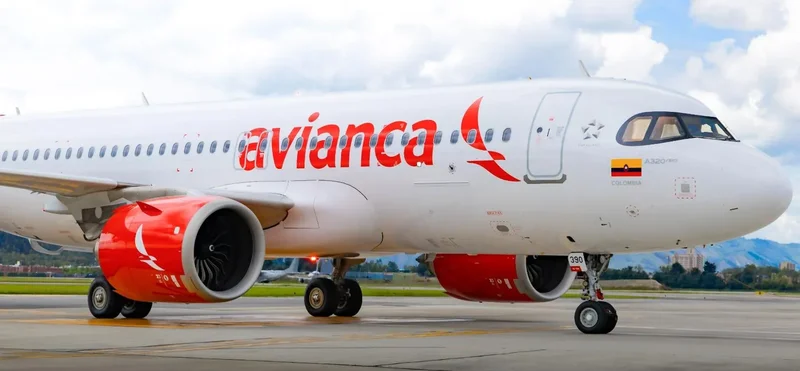
Grupo Abra, the holding company that controls Colombia’s Avianca and Brazil’s GOL Linhas Aéreas, announced on July 21 that it had selected 100 CFM LEAP-1A engines to power 50 new Airbus A320neo-family jets for Avianca.
Avianca and Gol are major Latin American airlines operating extensive fleets of passenger aircraft.
One-stop reference
Company Intelligence
Every listed company in Latin America — financials, ownership and structure for 1,450+ companies across 26 exchanges, in one place.
RTAsk Rio TimesMarkets, currencies and the economy›
RT
Ask Rio Times
Latin American markets, currencies and companies.
×
Markets todayThe currencyRates \& inflationEconomy outlook
What Grupo Abra Is and Why This Matters
Grupo Abra is the Latin American aviation holding formed to unite Avianca and GOL under a single strategic umbrella, also including Spain-based Wamos Air. The group is building the region’s largest and most standardized narrowbody fleet, though its path has included delays—our reporting has shown its planned New York Stock Exchange debut was recently pushed back amid market volatility.
By selecting a single engine type across both Airbus and Boeing platforms, Abra is betting that fleet commonality will drive down maintenance costs, simplify crew training, and give it stronger negotiating power with suppliers.
Inside the Engine Deal
The agreement covers 100 CFM LEAP-1A engines plus spare units and a long-term service package. The engines are destined for 50 previously unallocated A320neo-family aircraft drawn from Avianca’s remaining 134-plane Airbus backlog.
CFM International, a joint venture between GE Aerospace and Safran Aircraft Engines, confirmed the deal but did not disclose a dollar figure. Industry estimates for such orders typically run well into the billions of US dollars at list prices, though large customers negotiate steep discounts.
Fleet Consolidation at Scale
Once the new engines and aircraft are delivered, Grupo Abra will operate more than 650 LEAP-powered aircraft across its brands. The group also flies older CFM56-powered planes, making it Latin America’s largest operator of CFM engines.
This scale matters. A unified engine family across Avianca’s A320neo jets and GOL’s Boeing 737 MAX fleet means shared spare-pool inventories, streamlined overhauls, and predictable per-hour maintenance costs.
For an airline group operating in high-inflation economies, that predictability is a hard financial advantage.
What It Signals for Latin American Aviation
The order is a clear signal that Grupo Abra intends to grow, not just survive. While much of the industry has focused on post-pandemic restructuring, Abra is locking in long-lead engine contracts that will shape its cost structure for the next two decades.
It also reflects a broader regional trend. Latin America’s largest carriers are investing in fuel-efficient narrowbodies for both growth and fleet replacement, even as global engine supply chains remain tight and maintenance slots are scarce.
What This Means for Expats, Investors, and Travelers
For foreign residents and frequent flyers across Latin America, a consolidated and modernized fleet typically translates into more reliable schedules and a more consistent onboard experience. The LEAP engine is known for significantly better fuel efficiency and lower noise levels compared to older CFM56 powerplants.
Investors watching the region’s aviation sector should see the deal as a long-term cost-management play. By locking in a single engine family and long-term service agreements, Grupo Abra is building a more predictable operating-cost base, which can support steadier financial performance even when local currencies weaken or fuel prices spike.
What Happens Next
The 50 aircraft covered by this engine order are part of Avianca’s existing 134-plane Airbus backlog, meaning deliveries will likely be spread over several years. No specific delivery timeline was announced, but engine contracts of this size are typically structured to align with the airframer’s production slots.
In the near term, the group will continue integrating Avianca and GOL operations where regulators allow. The long-term service agreement covering both the A320neo family and GOL’s 737 MAX fleet suggests that maintenance planning and spare-engine pooling are already being coordinated across the two airlines.
Frequently Asked Questions
What is Grupo Abra?
Grupo Abra is the holding company that owns Colombia’s Avianca and Brazil’s GOL Linhas Aéreas, as well as Spain’s Wamos Air. It was created to build a unified, cost-efficient aviation platform across Latin America, combining two of the region’s largest carriers under one strategic umbrella.
How many engines did Grupo Abra order?
Grupo Abra ordered 100 CFM LEAP-1A engines to power 50 Airbus A320neo-family aircraft for Avianca, plus spare engines and a long-term service agreement covering both Avianca and GOL fleets. No dollar value for the deal was disclosed.
Why is fleet commonality important for Grupo Abra?
Fleet commonality lowers maintenance costs, simplifies pilot and mechanic training, and gives the group stronger bargaining power with suppliers. It also makes spare-part logistics far more efficient across multiple countries, which is especially valuable in Latin America where currency volatility and inflation can quickly erode margins.