Social media trends to blame? Why Malaysia is tightening hiking rules and what it means for hikers
Malaysia is tightening hiking rules after a rise in search-and-rescue cases, and experts have linked these to people underestimating the risks of mountaineering while pursuing aesthetic content for social media.
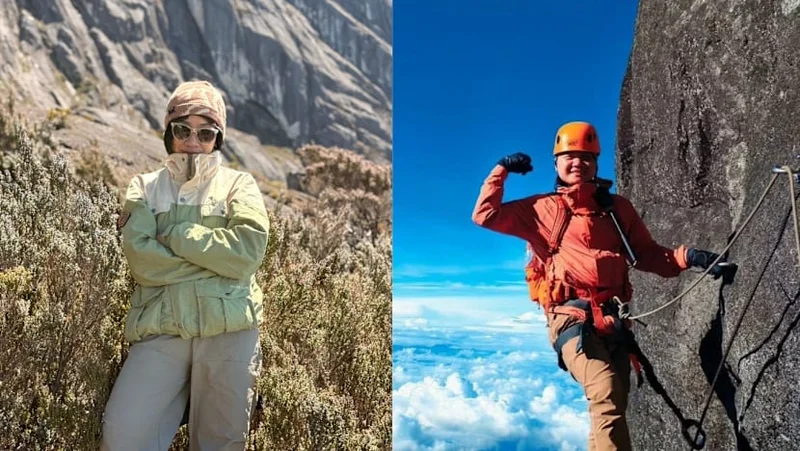
SINGAPORE: For 29-year-old Nur Fatin Amira, planning to scale Malaysia’s mountain trails will now require more careful logistical planning after authorities introduced new rules aimed at tightening safety measures.
This comes after a spike in the number of costly search-and-rescue (SAR) operations that have been linked to hikers following social media trends to venture onto unauthorised trails or speed through multi-day hikes.
What could have been “day hikes” have now been expanded to multi-day trails to account for safety - something that Fatin said would impact how often she would be able to go on such adventures.
“The new rules do affect me. Planning around my annual leave gets harder and (the) cost goes up too, since longer hikes usually mean higher expenses,” Fatin, a Sabahan who works in the industrial manufacturing industry, told CNA.
Even so, members of the hiking community - including Fatin - have welcomed these tighter measures even as they expect higher costs and changes to their hiking itineraries.
These measures include restrictions on "day hikes" or compressed hikes, the mandatory use of mountain guides at 189 high-risk locations as well as pre-climb screening procedures for hikers.
“There may be a slight increase in package costs … but this is a small and necessary price to pay for enhanced safety,” said Yeo Ching Khee of Singapore-based X-Trekkers, which organises hiking expeditions, including to Malaysia.
Last month, Syed Ibrahim Syed Noh - a deputy minister at Malaysia’s Natural Resources and Environmental Sustainability (NRES) Ministry - said in parliament that some hikers are inadequately prepared and that this has increased the risk of emergencies.
In June, local media reported Syed Ibrahim as saying that a total of 1,059 hiking accidents - including 63 fatalities and 87 injuries - were recorded in Malaysia between 2021 and 2025.
Separately, Malaysia recorded 52 cases of lost hikers involving 114 people in the first five months of this year, an increase of nearly 30 per cent compared to the same period in 2025, according to data from the Malaysian Fire and Rescue Department.
‘HIGHER COSTS, LONGER ITINERARIES’
Compressed hiking involves condensing a trek that would typically take several days into a much shorter timeframe, sometimes within 24 or 36 hours, according to Mohamad Azuan Abdullah, chairman of the Malaysia Forestry Mountain Guides Association (PMGP).
Some states have already begun tightening their rules.
In June, the Perak Forestry Department prohibited day and compressed hikes on seven high-risk routes, amid heightened attention on hiking safety following the high-profile incident involving a 49-year-old hiker, Jaslinda Saludin, who went missing for nearly two weeks in the jungle.
Jaslinda was attempting the Trans Spencer Chapman Trail, one of the seven trails now covered by restrictions enforced by Perak authorities.
The Trans Spencer Chapman Trail - covering Mount Bah Gading, Mount Kak and Mount Batu Putih in Perak - must now be completed over a period of at least five days, according to the state’s forestry department.
Hikers typically take between two and four days to complete the demanding trail known for its dense jungle terrain, although some have attempted it in just over 24 hours, according to local media.
Other routes identified as high risk by the Perak Forestry Department include Trans Beratih covering Mount Berapit, Mount Rayu and Mount Batu Putih which now require at least four days to complete, and Trans Slim which requires a minimum of three.
Hiking operator X-Trekker expects some itineraries to change.
Yeo, its director, said point-to-point "trans" hikes or multi-peak challenges that were previously squeezed into a single day may likely have to be restructured into two-day, one-night itineraries.
Yeo cited the Trans CBR Trail in Kluang, Johor - which covers Mount Chemendong, Mount Belumut and Mount Gua Rimau - as an example of a hike that may have to be tweaked according to updated regulations. The trail was typically completed as a day hike.
“There may also be a slight increase in package costs if stricter guide-to-hiker ratios are enforced or if overnight accommodations become mandatory for specific peaks,” Yeo added.
Beyond hiking durations and guide requirements, the government is also strengthening pre-climb screening procedures by requiring health declarations, medical history checks and insurance coverage, NRES deputy minister Syed Ibrahim said.
It is also considering screening for symptoms of High Altitude Sickness and Acute Mountain Sickness, especially for those attempting Mount Kinabalu in Sabah and Mount Tahan in Pahang, he added. Mount Kinabalu is Malaysia’s highest mountain reaching an elevation of 4,095m above sea level.
Azuan of the mountain guides association said these measures would mean additional costs and administrative requirements in the initial stages.
“Authorities could consider providing greater flexibility for experienced hikers through special applications or conditional permits for these high-risk locations,” he said.
While Perak authorities have identified seven high-risk hiking routes in the state, it is unclear which locations make up the 189 identified nationwide by the NRES ministry.
CNA has reached to the ministry for more details on the locations and how the tighter measures will be implemented and enforced.
From an organiser’s perspective, what constitutes a high-risk trail can depend on a range of factors, Yeo of X-Trekkers told CNA.
These would include unmaintained or “wild trails” with severe overgrowth, unofficial side trails where hikers could easily get lost and a lack of clear signage, he said.
Highly technical terrains - including steep scrambles requiring ropes, mossy ridges or multiple river crossings prone to flash floods - can also increase the risk, he added.
Yeo further noted that remoteness is another factor, especially on routes with no mobile network coverage or where hikers are a significant distance from the nearest medical facility.
SOCIAL MEDIA TRENDS AS A CHALLENGE: GUIDES, ORGANISERS
But beyond the technical difficulty of hiking routes, Azuan of the mountain guides association said the influence of social media has emerged as another challenge for guides.
State news agency Bernama previously reported that experts have linked the rising number of hiking emergencies to people underestimating the risks of mountaineering while pursuing aesthetic content for social media.
The report highlighted the trend of “express hikers” seeking to conquer or tick off multiple peaks for the fear of missing out.
Azuan told CNA that the trend has become increasingly apparent, especially among newer hikers.
“Many hikers want to replicate experiences they see on social media, whether that means chasing a particular view, trying to record the fastest time or conquering as many peaks as possible within a short period,” he said.
Azuan noted that some of these hikers are driven by the desire to create content on social media without having adequate physical preparation, skills or experience.
“At times, they also ignore warning signs from their own bodies and fail to follow the instructions of mountain guides.”
Khor Phor Xiang, founder of local hiking community So Hikers Malaysia, said that while social media has encouraged more people to explore nature and become active, he has also encountered hikers who become “too focused on getting the perfect photo or video”.
“We have seen hikers climbing over safety barriers, standing too close to cliff edges, or becoming distracted while filming content,” Khor told CNA.
Another concern Khor highlighted is the misconception that a trail is “easy” simply because someone on social media described it as such or because others appeared to complete it without difficulty.
“In reality, every hike is different depending on the weather, trail conditions, fitness level and hiking experience,” he said.
For Sabahan hiker Fatin, creating content should not come at the expense of safety.
An active hiker since 2023, she has climbed several peaks across Sabah and Peninsular Malaysia including Mount Kinabalu, Mount Sinsing, Mount Yong Yap, and Mount Yong Belar.
“I don’t go near ledges or dangerous spots just for a photo or video and I stick to the buddy system, even when I am hiking with strangers,” said Fatin, who is also a content creator.
“I follow the guides closely and don’t wander off on my own and for hikes longer than five hours, I also bring a walkie talkie.”
Before each hike, Fatin said she would study the route, check the weather and ensure that she packs a first-aid kit, sufficient food and emergency supplies.
Beyond the influence of social media, trip operators also have to manage what X-Trekkers director Yeo described as “summit fever”, when hikers become so determined to reach the peak that they are reluctant to turn back even when conditions become unsafe.
For groups travelling from Singapore, even an hour-long delay at immigration could eat into the daylight available for a climb, he said, forcing guides to strictly enforce cut-off times.
“Hikers invest time and money into a climb and are highly motivated to reach the top. When a local guide calls for a retreat due to fading daylight or weather, hikers often perceive this as the guide being ‘lazy’ or unwilling to do their job,” Yeo said.
Managing this tension while ensuring hikers respect safety boundaries is a challenge for operators, he added.
‘SAFETY AS A SHARED RESPONSIBILITY’
Ultimately, hiking safety is a shared responsibility between the authorities, organisers, mountain guides and hikers themselves, members of the hiking community told CNA.
“Authorities can provide the framework, organisers can promote good practices and hikers themselves must make responsible decisions,” said Khor.
Among the improvements they called for were better trail infrastructure, including standardised directional signage and regular cleaning of fallen trees.
“This would drastically reduce the number of hikers straying into dangerous, unofficial animal trails,” said Yeo.
They also proposed for Malaysia’s hiking permit and information systems to be further centralised and digitalised. Hiking permits in Malaysia are typically handled by the relevant state forestry departments.
Azuan said that a centralised digital platform could more accurately record and track hikers’ movements, facilitate monitoring and assist SAR operations during emergencies.
Yeo similarly said that a centralised portal could provide real-time information on trail closures and official standard operating procedures.
In addressing parliament on the stricter regulations, NRES deputy minister Syed Ibrahim had said that the government is developing technology-based solutions, including a Geographic Information System-based hiking trail management platform.
Trials are also being conducted on the use of GPS tracking devices for climbers, Bernama reported.
Those whom CNA spoke to also stressed that the regulations should be accompanied by greater public education on hiking safety.
“This should cover areas such as physical preparation, health checks, mandatory equipment, risk management and proper conduct in forest areas,” said Azuan.
Khor of So Hikers Malaysia said more public awareness campaigns on hiking preparation, “Leave No Trace” principles, emergency procedures, and responsible outdoor behaviour would help reduce preventable incidents.
The “Leave No Trace” principles refer to guidelines for enjoying outdoor activities responsibly, while minimising environmental impact such as disposing of waste properly, staying on designated trails and respecting wildlife.
Meanwhile, Fatin called on organisers and guides to provide hikers with proper briefings on what to do in an emergency.
“The responsibility should also fall on the organisers to properly vet participants for harder trips and ensure everyone gets in and out (of the trails) safely,” she added.
For Khor, his advice to hikers is to gradually build experience by starting with easier trails before attempting more technical or higher-risk mountains.
“Hiking is not a race, there is always another mountain to climb,” he said.
“No photo or video is worth risking your life. Always prioritise safety, follow your guide’s instructions, and remember that you’ll only be able to create more adventures if you return home safely.”