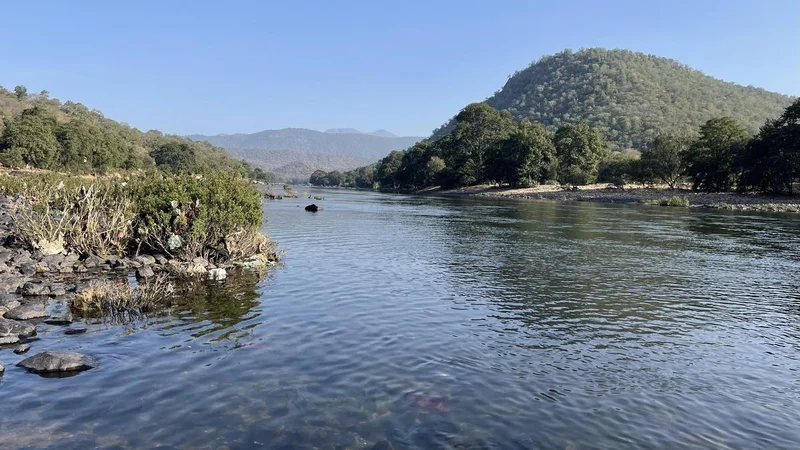
The story so far: The Cauvery Water Management Authority (CWMA) chairperson Saumitra Kumar Haldar has called for the establishment of a river board that will “own, operate, manage, and regulate” reservoirs in the entire Cauvery basin to resolve the vexatious dispute between Tamil Nadu and Karnataka over the sharing of the water resource.
In essence, he favoured the idea of treating the Cauvery river as one unit and managing its resources accordingly, instead of going by political boundaries of territories through which the river flows.
What is a river board?
A river board is a body of officials and specialists who approach the river concerned as a single hydrological unit and deal with the issues of utilisation, management, protection, improvement, and sustainable use of water resources across the river basin.
In Australia, the Murray–Darling Basin Authority, one of the widely discussed river basin organisations internationally, also studies complex connections among climate, river flows, and river-related outcomes for communities, industries, and the environment.
In 1956, when the re-organisation of States on linguistic lines was carried out and the Inter-State River Water Disputes Act was formulated for adjudication of inter State river water disputes, the country came out with the River Boards Act. Under this law, the Union government, when approached by a State government or otherwise, can establish such an organisation for advising the State governments interested in relation to such matters concerning the regulation or development of an inter-State river or river valley or any specified part thereof.
How many river board bodies have been set up under the 1956 law?
None.
However, river boards and commissions have been constituted through the Union government’s resolutions and executive orders; laws based upon interstate agreements or states’ re-organisation, and awards of tribunals.
As the successive governments at the Centre had realised that the River Boards Act remained only as a dead letter, they had been mulling over replacing the law with legislative measures such as the River Basin Management Act and the permanent inter-State river water disputes tribunal law.
M. S. Menon, veteran water expert and former Member-Secretary of the Indian National Committee on Irrigation and Drainage, in an article in The Hindu on August 30, 2009, criticised the Union government for not promoting the idea of inter-State cooperation in this regard and taking the stand that “‘water’ is a ‘State subject,’” whenever confronted with water disputes among the States.
Also read | A year on, no headway in implementing river boards’ purview
Which are the river board bodies that have been established, independent of the River Boards Act?
- Damodar Valley Corporation (DVC) - Constituted in July 1948; States concerned: West Bengal and Jharkhand
- Tungabhadra Board - Formed in October 1953; States concerned: Andhra Pradesh, Karnataka and Telangana.
- Bhakra Beas Management Board - Originally established as Bhakra Management Board in October 1967 and later acquired the present title in May 1976 with the merger of the Beas Construction Board (BCB); States concerned: Haryana, Rajasthan, Himachal Pradesh, and Punjab
- Betwa River Board - Constituted in 1976; States concerned: Uttar Pradesh and Madhya Pradesh.
- Narmada Control Authority - Established in December 1980; States concerned: Madhya Pradesh, Gujarat, Maharashtra, Rajasthan
- Upper Yamuna River Board - Set up in March 1995; States concerned: Himachal Pradesh, Haryana Uttarakhand, Rajasthan, and National Capital Territory of Delhi
- Krishna and Godavari River Management Boards (two bodies) - Formed in May 2014; States concerned: Andhra Pradesh and Telangana.
- Cauvery Water Management Authority - Established in June 2018; States concerned: Karnataka, Kerala, Tamil Nadu and Puducherry.
- Mahadayi PRAWAH (Progressive River Authority for Welfare And Hannony) - Constituted in May 2023; States concerned: Goa, Karnataka and Maharashtra
What has been the experience of intra-State river boards?
Not encouraging.
Tamil Nadu, in January 2001, constituted Palar and Tamiraparani River Basin Management and Development Boards. Headed by the Public Works Minister, the Boards included offiiials and three representatives each from industry and NGOs, including eminent persons in the respective areas.
The bodies were to take all decisions regarding the development and management of water resources in the two basins. Barring holding a few meetings, the two boards became defunct in due course of time.
Kerala’s Home Minister Ramesh Chennithala, as Mavelikara’s Member of Parliament In April 2002, called for the constitution of a river basin authority to acilitate the smooth implementation of the Pampa River Action Plan for pollution abatement and conservation. Two years later, at an event organised in Palakkad by the Centre for Water Resources Development and Management (CWRDM), Kozhikode, a strong demand for the formation of the Bharathapuzha River Basin Authority was made for integrated management of land and water resources.
In August 2021, Water Resources Minister Roshy Augustine told the Kerala Assemblly that a river basin management plan would be prepared for the Bharathapuzha. But, not much was heard about the plan since then.
How has the failure of the River Boards Act been handled by experts bodies in recent years?
The Commission on Centre State Relations (2010), headed by former Chief Justice M.M. Punchhi, analysed the issue and pointed out that the reasons for this had generally been ascribed to the “reluctance of States to politically come to an understanding.”
The Commission, while recommending a standing tribunal for all inter-State river water disputes, had also suggested the establishment of inter-State River Boards charged with an integrated watershed approach towards inter-State rivers. It also made it clear that any reference to the proposed tribunal should be invariably linked with the river boards and the initiating party must indicate the efforts made by it in resolution of its grievances before the river board in question.
What is the way forward?
The Union government’s attempt to amend the Inter-State River Water Disputes Act, by providing for a single tribunal with different benches along with fixation of strict timelines for adjudication, has not been successful.
If the Centre announces a huge package of financial assistance for inter-State river boards, there is every chance that the States may evince interest. It can take the initiative to this effect at zonal council meetings.
Published - August 13, 2026 03:11 pm IST