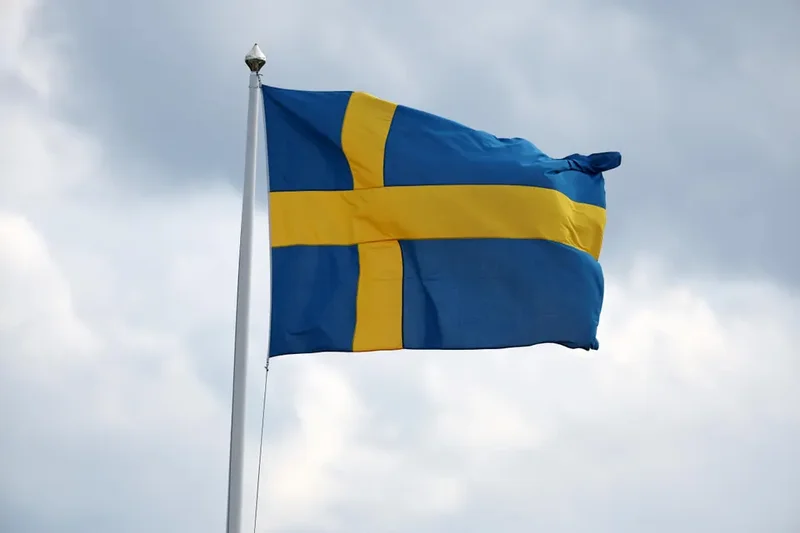
America’s far left doesn’t know—or wouldn’t want to know—the truth about Sweden. U.S. socialists are seizing control of the Democratic Party, and they hope to take over the entire country soon. To reassure voters, they routinely hold up Sweden as proof that generous socialism and prosperity can coexist. That image, though, is decades out of date, as noted historian Rainer Zitelmann points out in his eye-opening, pathbreaking documentary What Sweden Got Right. In fact, a strong case can be made that Sweden is currently more capitalist than the U.S. It ranks 10th in the world for economic freedom, ahead of the U.S. and Britain. The interesting thing is that Sweden got there only after a near-catastrophic descent into a welfare state that started in the 1960s.
Previously, Sweden’s largely free-market policies made it a vibrant, prosperous country. Then starting in the Sixties, the country made a sharp turn to the socialist left. Spending as a proportion of GDP surged to an astronomical 70%, about twice that of the U.S. today. Taxes rocketed. Pensions and welfare benefits mushroomed. Zitelmann points to a welfare system that had grown so generous that it discouraged work altogether. Numerous “workers” earned more by staying home. For decades, Sweden held the OECD record for non-working adults in its labor force. Its economy became lethargic, and its socialist excesses became increasingly unsupportable.
The bursting of a massive real estate bubble in the early 1990s made painfully clear that Sweden’s socialist economy was unsustainable. The real estate crisis was severe. Commercial occupancy rates fell, asset prices collapsed, and the country’s largest banks faced insolvency. Unemployment surged, and the broader economy fell into deep recession.
The crisis forced a reckoning that most other European welfare states have never faced. Sweden moved decisively away from socialism, doing something that seems inconceivable today: It shrank the size of the state. The corporate tax rate was slashed; today it is less than that of the U.S. The country eliminated wealth, gift and inheritance taxes. Individual tax rates were whacked, though more needs to be done. Sweden’s finance minister, Elisabeth Svantesson, has cut taxes three years in a row, quite a contrast to what you hear from American socialists. Spending was sharply curbed. Unemployment and housing benefits were cut. Total government outlays for welfare, education and healthcare are now about the same proportionately as those in the U.S.—and far lower than in Germany, Italy and France. Sweden’s national debt is 36% of GDP vs. more than 120% in the U.S.
Sweden introduced school vouchers, letting families choose where their children will be educated. That’s right—the education money follows the student.
The result is a dynamic, creative and growing economy with an exciting entrepreneurial, risk-taking culture. During the past decade, Sweden has had more IPOs than Germany, France and the Netherlands combined. Its labor force participation rate is higher than that of the U.S. Household incomes, adjusted for inflation, have more than doubled since Sweden abandoned its socialist experiment.
Sweden has more billionaires per capita today than the U.S. has. American progressives won’t like that inconvenient truth.