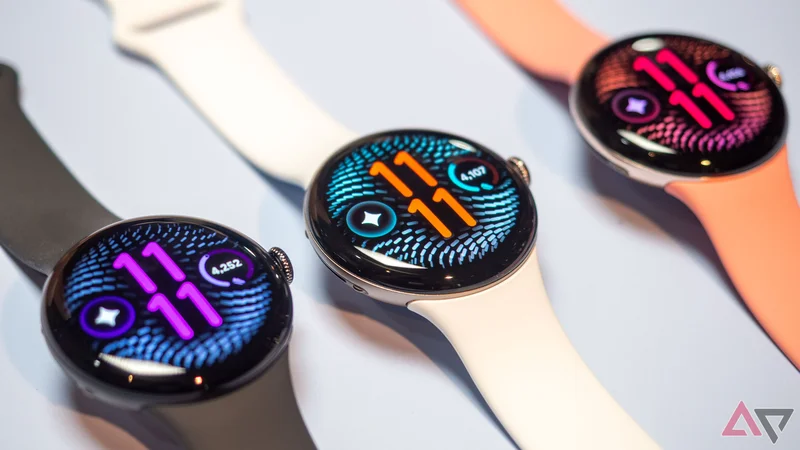
Amid the many, many Pixel 11 and Watch 5 announcements Google made yesterday, there's one small and very important tidbit that went under the radar: the Pixel Watch 5 ships with a "2nd gen" Active Band.
In my hands-on with the Watch 5, I didn't notice any difference between that band and the one that I've been wearing for years on my Pixel Watch 4 — or my Watch 3, or 2, or 1. So what's new about it, and why is it a second generation model?
After digging in, I discovered that Google has finally made its default Pixel Watch band safer for everyone to wear, and I can't be happier about that decision. Meanwhile, Apple is still shipping their watches with bands made of dangerous materials.
The dangerous problem with existing Sports and Active bands
Apple, Google, and other watches had this issue
For many years, smartwatches have shipped with a default band in the box that some companies call "Active" or "Sport" made of a very silicone-like material. I can't describe it to you if you've never felt touched it before, but it's soft and sturdy at the same time.
These bands are rubbery and slightly elastic, do not attract dust, resist wear and tear and oil, dry very fast after a swim or a sweaty exercise, don't discolor easily or stain from creams or sunscreen, and typically don't cause a lot of itching or irritation.
Perfect, right? Yes, except most of them are made of fluoroelastomers, which contain a high level of "forever chemicals" (PFAS) as shown by a study in 2024. Worse, those chemicals were leaching out of the band under simulated sweat and skin conditions.
That 2024 study did not look at the long-term effects of wearing those watch bands in humans, but it raised very valid concerns around daily wear, especially considering that other studies had proven that PFAS can cross the skin barrier.
So, you and I, we wear this watch band all day long, it's in direct contact with our skin, and we're likely to sweat while wearing it (that's the whole point!), and thus, the risk of trace PFAS getting absorbed from this strap into our skin is not negligible.
And we know that even trace amounts of PFAS cause long-term damage to the body. They can suppress the immune system, disrupt hormones and the endocrine system, and increase the risk of certain cancers (kidney and testicular).
Of the big smartwatch makers, here are the watch band models that do contain fluoroelastomers:
- Google's first-gen Active / Sport Watch Band.
- Apple's Sport Band, Ocean Band, and Solo Loop.
- Most Withings watch bands (they're made from FKM, which contains PFAS).
- OnePlus' Watch Strap for the Watch 2 and 3.
Notably, Samsung switched away from fluoroelastomers on its default Sport Band with the Galaxy Watch 7 and doesn't seem to have any concerning bands on sale now (the materials are not always listed, so it's tough to guarantee that). Most of Garmin's straps seem to use silicone and nylon.
From fluoroelastomers to a nitrile rubber composition
The new band is as safe as nitrile gloves
The second-generation of Google's Sport Band, which ships out of the box with the Pixel Watch 5, finally switches away from fluoroelastomers to HNBR, a nitrile-based compound that is safer and non-fluorinated.
HNBR, short for Hydrogenated Nitrile Butadiene Rubber, is a medical-grade safe compound. It's widely recognized as biocompatible and skin-safe, and is used in many products and food-contact materials and wearables, like Samsung's Galaxy Watch bands now.
Think of it a bit like a thicker and tougher version of the nitrile gloves you can use when cooking. It also has a soft-touch skin coating and goes through rigorous skin-contact safety standards to guarantee it doesn't cause skin irritation.
I'm very, very happy about this change from Google. It won't get any headlines or pats on the back, but for a device that's supposed to care about my health and safety, and save my life, I'm glad it not longer ships with a band that can harm me.
As far as I can tell, there's no downside to the switch, either. The new Sport Band feels very similar to the older one I've been wearing with my Pixel Watch 4 for a year. It's just as thick, soft, and twisty, and it seems to be as durable.
A quick comparison between fluoroelastomers and HNBR tells me the new material should also have higher tear and scuff resistance, dry just as fast, not absorb stains or dyes, resist creams and oily lotions, all while being a little softer to the touch, and more lightweight.
And unlike materials like soft silicone, it should not attract dust like a magnet. I'll be able to judge it better when I wear it for a longer period of time, but I feel like it's already won me over by the mere fact that it's safer on my skin.
Google has done the right thing, and Apple should catch up
Smartwatches are supposed to be helping us get healthier — be more active, sleep better, monitor our vitals, detect accidents and health issues, etc. The entire goal of wearing one is to elongate your life, not shorten it.
Samsung understood the message a few years ago and switched away from the problematic fluoroelastomers to HNBR, and Google is finally following suit with the Pixel Watch 5's band. It's now on Apple and the few remaining outliers to do the same thing.
In the meantime, if you have an older Pixel Watch, the attachment mechanism is the same, and the new band is compatible with every Pixel Watch going back to the first mode. So you can buy one of the new second-gen Active or Sports bands to replace your older one.
All the other first-party straps the company sells are made from other safe materials like metal, nylon, silicone, and leather so you can also switch to those if you prefer something less rubbery and more breathable.