A goat herding business facing higher payroll costs from a legislative bill turned to prediction market platform Kalshi to hedge and help offset the possible expense.
Tim Arrowsmith, owner of Western Grazers in California, estimates that he pays at least $70,000 per year for each herder when factoring in workers' flight tickets and visa costs. The company, whose goats eat vegetation to help prevent wildfires, has about 4,000 animals and eight herders, who are each paid $60,000 a year.
Arrowsmith was concerned that his annual labor costs could rise to as much as $240,000 per herder after a California wage exemption expired on June 30. This means goat herders must abide by a 2016 assembly bill instead and be paid a set wage for being on-call 24 hours a day, which comes out to about $20,000 a month for each worker. That could cost upwards of $240,000 a year per herder, according to estimates from the California Farm Bureau.
The 2016 bill excludes sheep herders from higher wages, despite stakeholders finding the working conditions for both sheep and goat herders overlap, according to a 2026, state-mandated study from the University of California, Davis.
"The legislature has their study. They have the data. It's simply the lack of will to do the right thing and to make a simple fix," Arrowsmith said.
New-York based startup called Castle learned of Arrowsmith's situation after the company's AI tool was scraping the news to find new businesses to support. Founded by four Stanford graduates, the company is backed by Ribbit Capital and helps businesses of any size to protect itself against financial risks traditional insurances may not cover.
Hedging is a management strategy that helps companies and investment funds offset losses by taking opposing positions in an existing investment. Hedging can include using derivatives like options and futures, along with short selling and inverse ETFs. In this case, a goat herding company hedged on the outcome of California's legislature.
Castle sent out a cold email to Arrowsmith to see if he was interested in structuring a hedge.
"We were fortunate enough to get a response, and then we got on a call with him, and we were really, really moved," said Lucas Cavalieri, co-founder and CEO of Castle. "We really put in the effort to try to provide some sort of coverage for him."
Before Castle reached out, Arrowsmith had no idea what prediction market platform Kalshi was and that a hedge for his business could even exist. That didn't stop Arrowsmith from agreeing to the deal, who is at risk of selling his goats and laying off his herders.
"[Hedging] wasn't something we went looking for," Arrowsmith said. "This is a whole new education for me."
Castle declined to comment on how much it profited from arranging the hedge for Western Grazers.
After Castle identified the risks for Arrowsmith and his company, the startup worked with Susquehanna to make the hedge a reality.
Led by Susquehanna senior trader Eric Passmore, the firm established pricing and the contract terms on Kalshi. Constructing those provisions came after deep research on California's goat herding business, speaking with industry professionals and connecting with Arrowsmith, Passmore said.
The contract has a $500,000 payout that Arrowsmith paid a 10% premium or $50,000 on. That means Arrowsmith receives the payout if California does not "authorizes an alternative wage or provides qualifying relief from goat herder wage and overtime obligations before Oct 1, 2026," according to the Kalshi contract.
The contract can resolve in a multitude of ways with several requirements, including if there is a written order from a state court or federal court on goat herder wages, or if a new law on overtime payment is signed by the governor. Goat herders falling under the same wage criteria as sheep herders is another way for the contract to resolve, according to Kalshi's market rules.
If California does provide regulations that modify goat herder wages by Oct. 1 and align with the contract's conditions, Western Grazers will not receive the six figure payment. This is what Arrowsmith wants.
"The idea that you can trade a specific, minimum wage provision within the California state legislature, it's just something traditional products like wheat futures or corn futures can't handle," Passmore said.
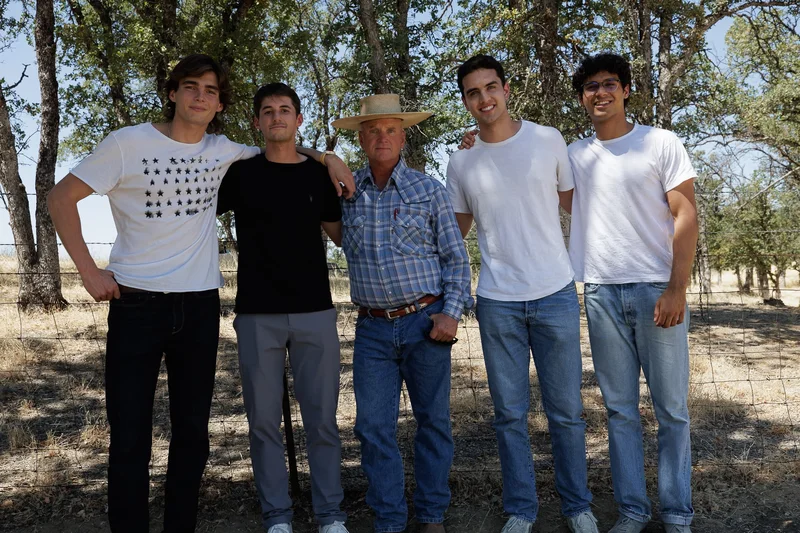
Castle's four founders and Passmore visited Arrowsmith on Aug. 6, after the hedge was fleshed out. The entire process, from reaching out to Arrowsmith to building out the contract, took two and a half weeks, said Castle co-founder and President Bruno Felix Castillo.
Kalshi took a "backseat" in facilitating the hedge, said Nicolas Hull, director of business development at the prediction markets company, who also manages hedging there.
"We went to the markets team, ensured that we had a verifiable data source to pull this from, and we were able to list the market," Hull said.
This isn't the first time the platform's facilitated a hedge. After the Knicks beat the San Antonio Spurs in the first match, a small bar in the Upper East Side ended up covering its customers' tabs since it placed a $5,000 trade on Kalshi that the Knicks would win. The bar won over $13,000 from the Kalshi contract.
For now, Kalshi is more focused on spreading awareness on how hedging works.
"I think for right now, I don't see it being a huge revenue driver short term," Hull said. "Right now, we're focused on building out awareness, getting people to understand how they can use this platform to hedge."
Hedging is still a foreign concept for businesses and traders, but that's likely to change in the coming years, said Castle's co-founder and chief technology officer Arjun Pandey. Like Hull, Pandey added that the public needs exposure on how a hedge on a prediction market works.
"Ten years from now, everyone's gonna know about [hedging]. It's gonna be a whole massive thing. For now, someone has to kickstart that process of educating people," Pandey said.
Disclosure: CNBC and Kalshi have a commercial relationship that includes customer acquisition and a minority investment.