The good news: Qualcomm is trying to assure us weâll soon see even more cheaper laptops that it promises won’t suck. The bad news: Qualcommâs touted Snapdragon C chips, built for low-end laptops, may not win on price or performance.
The chipmaker first debuted the Snapdragon âComputeâ platform prior to Computex 2026, though without any specs to go on. On Wednesday, Qualcomm finally dropped details about its upcoming processors, and itâs about what we expected. For starters, Snapdragon C is built on a 6nm process node and contains eight of Qualcommâs Kryo CPU cores, not the latest Oryon microarchitecture built for Snapdragon X2. Those CPU cores are running at a 3GHz clock speed with a 2MB cache. Additionally, the chips contain Qualcommâs Adreno GPU running at a bare 900MHz. This is explicitly a low-power processor for âentry-tier laptopsâ with âaccessible price points.â
These latest ARM-based laptops are supposed to be even cheaper than devices containing an Intel Core 3 chip, dubbed “Wildcat Lake.” Weâve seen the performance of an 8-core Intel Core 7 350 on a $900 Lenovo IdeaPad Slim 3i and an Intel Core 5 320 on an ultra-slim $800 Dell XPS 13 (the version with 16GB of RAM). Both chips couldnât quite beat Appleâs class-leading $700 MacBook Neo on all fronts, but theyâre still the best that lightweight PCs currently have at that sub-$1,000 price point.
But instead of combating Intelâs latest, Qualcomm suggests its chips are capable of beating… an older Intel “Twin Lake” chip, namely the N250. Thatâs one of Intelâs designs, first debuted in 2025, built around four E (efficiency) cores. They were created for systems that could operate on an extremely tight power budget, but we only saw a few budget-end laptops and mini PCs use it. Qualcomm claims its Snapdragon C chip with twice the core count beats an N250 by 44% in Cinebench 2026 single-core settings and around 24% in multi-core rendering tests. Qualcomm also says laptops with the Snapdragon C will have more than 2x better power efficiency than Twin Lake. It’s hard to say if that matters considering so few people ever used a PC with those chips.
Itâs clear now that Snapdragon C is built for the absolute minimal laptop experience. Based on the chip specs, these laptops will max out at FHD+ resolution, around 1200p. They will support a single external display at 4K and a 60Hz refresh rate. Connectivity-wise, theyâre limited to Wi-Fi 6E and Bluetooth 6.0. When it initially launched these devices, Qualcomm said it was a chip built for systems costing â$300 and up.â
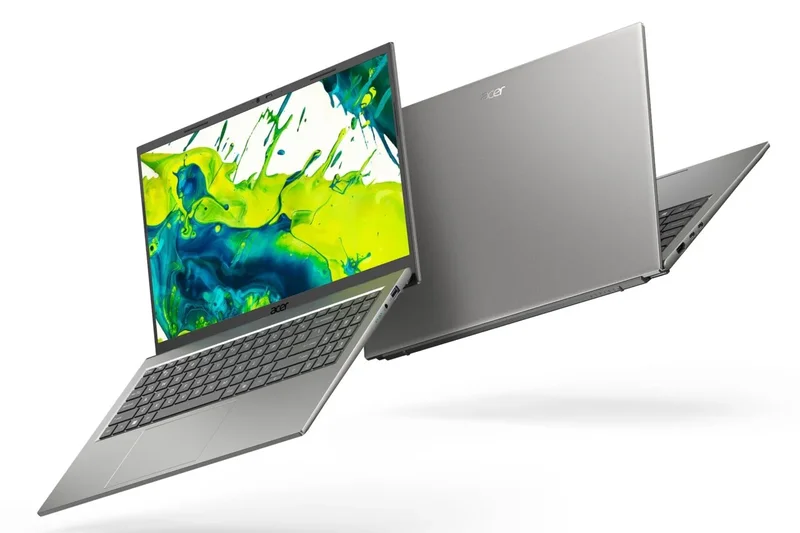
If thereâs any rule for 2026, itâs that you should not set down a price and expect it to hold up for even a few months. The first Snapdragon C PC to hit the scene, the Acer Aspire Go 15, didnât come with a price point back at Computex. However, VideoCardz first spotted a U.K. Amazon listing showing the laptop could cost 499 euros, or around $562. If youâre spending that much, you may start considering a laptop with more power for a little more money.
Acerâs configuration also comes with 512GB of storage and a measly 8GB of RAM. Even if Snapdragon C performs well, that memory spec is its Achilles’ heel. Windows 11 is notoriously not built for less than 16GB of RAM. Microsoft is working to change that, though work is still ongoing. In the meantime, we canât argue that anybody should buy a PC that can barely handle both the OS and a browser with a dozen tabs.