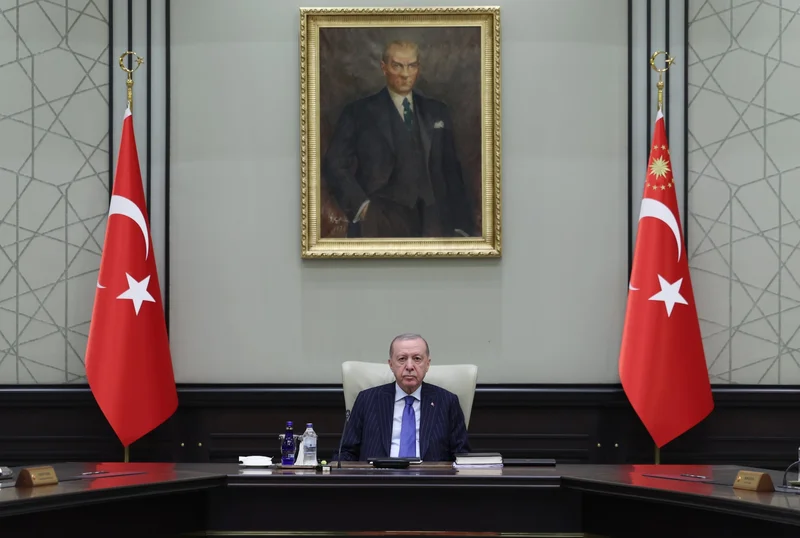
Türkiye has transformed from a regional power into a global actor during the Justice and Development Party’s (AK Party) 25-year political journey, the party’s deputy chair, Efkan Ala, said as the ruling party prepares to mark the anniversary of its founding.
Speaking to Ihlas News Agency (IHA), Ala said Türkiye’s foreign policy had shifted from what he described as a largely passive approach before the AK Party came to power to one based on active diplomacy backed by growing economic and defense capabilities.
“With the AK Party, this evolved into an active foreign policy,” Ala said. “Türkiye became a global actor through its achievements in the defense industry and economy and through reforms that strengthened both politics and institutions.”
Ala pointed to Türkiye’s growing domestic defense industry, saying the country now manufactures unmanned aerial vehicles and other systems that it previously struggled to procure from abroad. Türkiye has also emerged among the world’s defense exporters, he added.
He cited Ankara’s involvement in developments in Syria and Karabakh, as well as its diplomatic efforts surrounding the Russia-Ukraine war, as examples of Türkiye’s expanding international role.
“Türkiye has reached a point where its opinion is sought on any issue in the world,” Ala said, adding that President Recep Tayyip Erdoğan is among a small number of leaders who have an influential voice on major global issues.
The AK Party, founded under Erdoğan’s leadership in 2001, came to power roughly a year later. Ala described its quarter-century in politics as a period of major political and institutional transformation.
He recalled a series of challenges faced by the party, including military interventions in politics, attempts to shut down the party, the 2013 Gezi Park protests, the December 2013 investigations and the failed July 15, 2016 coup.
He said the dispute ultimately led the AK Party to pursue a constitutional amendment allowing presidents to be elected directly by voters. The change was approved in a referendum, paving the way for Erdoğan to become Türkiye’s first directly elected president in 2014.
Ala also highlighted changes introduced during the AK Party’s rule, including reforms in civilian-military relations and the lifting of restrictions on women wearing headscarves in public institutions.
He said the party’s 25-year record reflected what he described as a political journey shaped by public support and efforts to strengthen civilian politics and Türkiye’s role abroad.