Fungi are everywhere and anywhere, seemingly at any given time. For scientists, studying fungi has led to key insights in medicine, paleontology, astrobiology, and more. But they still arenât sure how to do this seemingly simple thing: find out how old they are.
Researchers investigated this long-overlooked biological mystery in an opinion paper published today in Trends in Microbiology. To be clear, the paper doesnât solve the mystery, nor does it purport to do so. Rather, the team examined the biological and logistical reasons behind why itâs so difficult to gauge fungal age. Based on its analysis, the team proposed some action plans to systematically study fungi, which are among the most ancient and widespread organisms throughout Earthâs history.
To put the issue in context, we âdonât really know if 10 years or 500 years is âoldâ for a fungus or how much it differs between fungal species and lifestyles,â Kristin Aleklett, the studyâs senior author and a biologist at Lund University in Sweden, said in a statement. âThere is this large kingdom of organisms living alongside us that we still know so little about.â
Where does a fungus start?
According to the paper, the way scientists study living organisms is very simple and intuitive. To the best of our ability, we observe the creatures from birth to death and clock various behavioral patterns regarding their ecology, life cycles, adaptation, and interactions with other organisms. As for fungi, however, the challenge starts immediately at the first stepâwhere does âoneâ fungal individual physically begin, and where does it end?
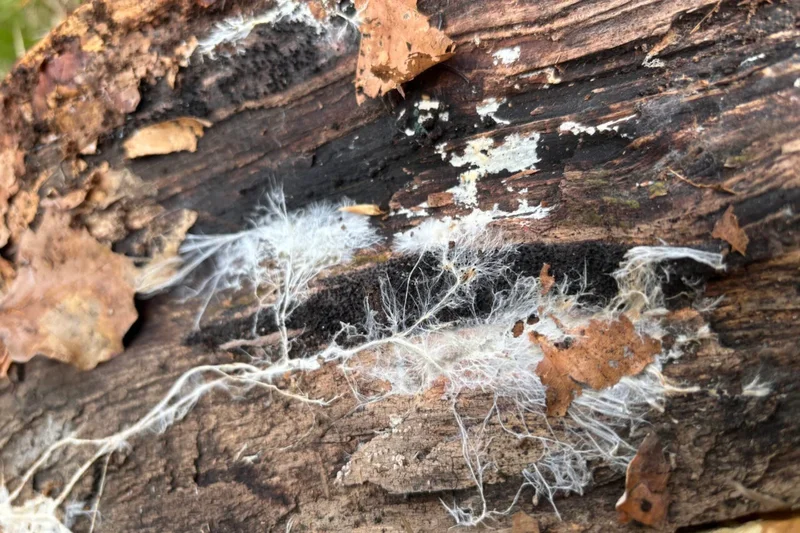
Fungi are modular organisms, the team explained in the paper, which means that they have an âindeterminateâ body with identical modules. The fungal myceliumâan ever-changing network of fungal coloniesâbecomes embedded in soil or wood and grows continuously. At a certain point, some parts are disposed of or recycled. In other words, theoretically, scientists have posited that this could lead to âextended longevity, approaching immortality,â according to the paper.
âThat raises a series of questions,â the team said in the statement. âDoes a fungus’ age begin when its underground network first forms, even if much of it is later replaced? If the underground network breaks apart into separate pieces that still share the same DNA, are they still one individual?â
From one fungus to another
Some models see the germination of a spore as the âbirthâ of a fungus, but the perception of a cyclical life cycle grossly undermines the âcomplexity, plasticity, and modularity of fungal life,â the researchers added. This becomes an even bigger problem given the sheer diversity of fungal species, each with different aging patterns and lifestyles.
There wonât be simple solutions to these challenges. However, the team offered some starting points. In addition to comparing known genetic techniques for tracking fungi, the researchers suggested potential experimental designs to gauge fungal age, at least for the same species. For instance, when studying the physiology of plants, scientists focus on the way genetic mutations, if any, show up differently in âlong-livedâ and âshort-livedâ specimens.
Similar tests for fungi could take this approach in tandem with genomic sequencing of the mycelium, the team explained. Looking ahead, upcoming microscopic technologies like âfungi-on-a-chipâ could enable more high-resolution monitoring of tiny fungal changes, the researchers concluded.
âI think it is thrilling that there is still so much basic research about fungi left to discover,â Aleklett said. âIf we want to be able to preserve fungal biodiversity and ecosystem services, we need to better understand what their life cycles look like, including how or when their lives end.â