GM Puts Paraguay at the Center of Its Regional Strategy
Paraguay · Business
Key Facts
- Who and what:Thomas Owsianski, General Motors’ president and CEO for South America, has publicly ranked Paraguay among the fastest-growing car markets in the region — “and, I think, the world.”
- Not a factory:This is a sales-and-distribution push, not a new plant or an assembly hub. GM builds its regional vehicles in Brazil (Gravataí); Paraguay remains an import market.
- The bestseller:The Chevrolet S10 pickup is Paraguay’s single best-selling vehicle, at roughly 4.5% of the market, powered by the country’s farm boom.
- Footprint:Chevrolet runs about 20 showrooms and 19 service centers in Paraguay; across South America GM counts around 1,000 dealers and 1,500 service points.
- Shift to SUVs and hybrids:SUVs now make up more than 60% of GM’s Paraguay sales; hybrid sales rose about 65% over three years, versus 25% for petrol models.
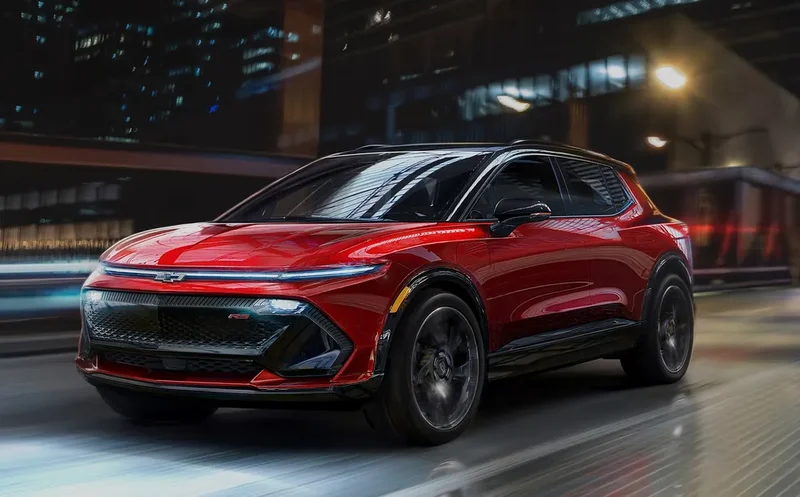
- New metal:In one year Chevrolet went from two petrol SUVs to five options, including its first electric model, the Captiva EV.
A global carmaker just put one of South America’s smallest markets on its weekly radar. Here is what GM actually said — and what it does not mean.
The GM Paraguay regional strategy is getting louder, and the message is simple: a small, low-cost country is punching well above its size. Thomas Owsianski, General Motors’ president and CEO for South America, told local outlet ABC Color this week that Paraguay is “one of the markets with the highest growth in South America and, I think, the world.”
What GM actually announced
Let’s be precise, because the headline can mislead. GM is not building a car plant in Paraguay. It is not moving its regional headquarters to Asunción, and there is no new maquila factory in this story.
What GM is doing is elevating Paraguay inside its commercial playbook. Owsianski, who took the regional top job on 1 February 2026, said GM now holds weekly sales meetings with its country managers for Brazil, Paraguay, Uruguay and Bolivia. A market of roughly seven million people is being managed alongside Brazil, a giant of more than 200 million. That is the real signal here.
Why the GM Paraguay regional strategy leans on pickups
Follow the farms and you find the cars. Paraguay is a soy and beef exporter, and its agribusiness sector is expanding fast — which means strong demand for tough, load-carrying pickups.
The Chevrolet S10 is the payoff. Owsianski said it is Paraguay’s best-selling vehicle at about 4.5% of the market, a share that beats the model’s standing in several larger South American countries. “The segment is important, agribusiness is growing very strongly, and we have a very successful performance here,” he said.
A test track for hybrids and EVs
Paraguay is also becoming a shop window for GM’s newest technology. In the space of a year, Chevrolet went from two petrol SUVs on sale to five options, adding the S10 Trail Boss, the Onix Activ, the Sonic, the Spark and the fully electric Captiva EV.
Buyers are responding. SUVs now account for more than 60% of GM’s Paraguay sales, and hybrid sales climbed roughly 65% over three years while petrol models grew about 25%. The compact Sonic, an SUV with coupé styling built in Brazil, arrived on 1 June 2026 priced from about G 118.7 million (US$19,990).
Why a global carmaker elevates small, low-cost Paraguay
Paraguay has quietly built a reputation as one of the cheapest places to do business in South America. It offers low taxes, cheap hydroelectric power from the giant Itaípu and Yacyretá dams, membership of the Mercosur trade bloc, and a maquila regime that lets exporters assemble goods at a flat, low tax rate.
To be clear, GM did not cite those incentives as the reason for this move — its executives framed the growth around agribusiness demand and a young, dynamic market. But the wider backdrop matters. Manufacturers from textiles to auto parts have used Paraguay’s maquila rules to serve Brazil and Argentina from a low-cost base, and GM’s enthusiasm fits a broader pattern of companies discovering that this landlocked country can do a lot with a little. The South American car market as a whole is on track for around five million units this year, a level not seen in roughly a decade.
Why you should care
If you live in or invest in Latin America, this is a small but telling data point. When a company the size of GM starts managing Paraguay week by week alongside Brazil, it is a vote of confidence in a market that expats, nomads and investors have long treated as an afterthought.
For anyone on the ground, it means more choice and better service — more showrooms, hybrids and EVs, and a bigger parts-and-service network as GM competes hard against fast-arriving Chinese brands. For investors, it is a reminder that Paraguay’s low-cost, pro-business model is pulling in blue-chip names, even if the cars themselves are still stamped out across the border in Brazil.
Frequently Asked Questions
Is General Motors building a factory in Paraguay?
No. Based on what GM has announced, this is a sales and distribution move, not manufacturing. GM builds its regional cars in Brazil, chiefly at the Gravataí plant, and Paraguay remains an import market served by Chevrolet showrooms and service centers.
Did GM move its South America headquarters to Paraguay?
No. There is no announcement of a headquarters move. GM’s regional leadership remains centered on Brazil, and Paraguay is one of several countries — alongside Brazil, Uruguay and Bolivia — managed under the same regional team.
What did GM’s regional chief actually say about Paraguay?
Thomas Owsianski, GM’s president and CEO for South America, called Paraguay one of the fastest-growing car markets in the region and possibly the world. He highlighted the Chevrolet S10 pickup as the country’s bestseller and the strength of agribusiness-driven demand.
Why is Paraguay attractive to carmakers and investors?
Paraguay offers low taxes, cheap hydroelectric energy, Mercosur trade access and a maquila regime for exporters. GM did not name these as its reasons, but they form the broader business case that keeps drawing companies to the country.
Sources: ABC Color (interview with Thomas Owsianski, 12 August 2026; Chevrolet Sonic launch, 16 May 2026); GM Authority (GM South America leadership, February 2026); Última Hora and InfoNegocios (Chevrolet dealer network, Paraguay). Guaraní converted at US$1 = PYG 5,939.
This article was produced by The Rio Times’ automated newsroom system. How we use AI · Report an error