In this week’s On Background, growing pains at Foxtel, a makeover at Guardian towers and News24 hits new heights on YouTube.
Buy now, pay later
Buy now, pay later
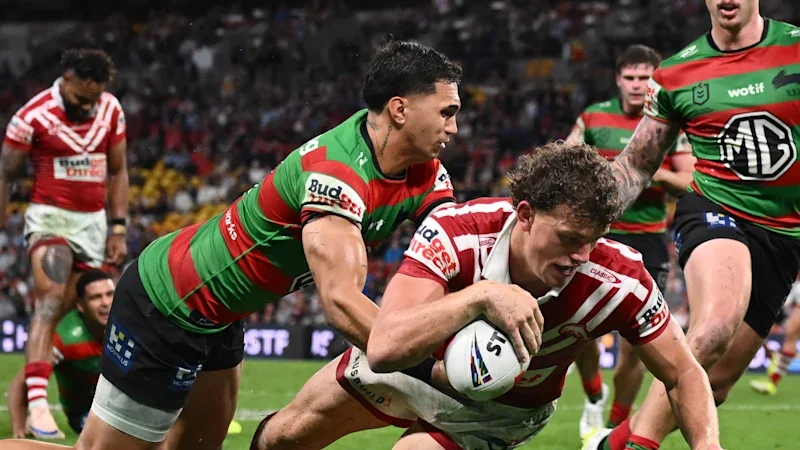
Back in April, as Foxtel geared up to bid for the NRL broadcast rights, its outgoing boss Patrick Delany called executives to Sydney for an off-site, aimed at uncovering “big ideas” to grow the business.
The key issue was canvassing staff on where Foxtel was going to find new revenue. Kayo subscriptions have plateaued, Binge is offering bargain bin sign-ups, and its cable business is in a slow but terminal decline. In June, Foxtel agreed to stump up $520 million a year over seven years to retain the rights to the code, doubling the cost of its current deal.
It was the biggest sports broadcast deal ever inked in Australia, with Nine, the owner of this masthead, also increasing its free-to-air deal to $145 million annually (up around 25 per cent).
Where Foxtel plans on finding the extra $250 million a year to pay the NRL has left outsiders baffled. Fans of the Perth Bears or PNG Chiefs aren’t going to deliver hundreds of thousands of extra subscribers.
While a series of different solutions were presented and continue to be explored, there is one prevailing lever to be pulled: price rises.
Two months ago, NRL boss Peter V’Landys and Delany made it clear that access to the sport would remain affordable, despite the league filling its pockets with cash. Two weeks later, Foxtel hiked the cost of its cable service. Foxtel sources say it’s a sign of things to come.
Since signing its AFL broadcast deal in 2022, the price of Kayo’s previously named ‘basic tier’ has been upped four times, rising from $27.50 to $45.99. Kayo didn’t wait for the AFL deal to kick in last year to raise prices, and they likely won’t wait for the NRL deal to begin in 2028 either.
It is not uncommon for a new deal to come with a price rise for fans. When Stan Sport secured the English Premier League rights in 2025, it came with a $5 price rise. But for fans paying for the same product on Kayo, more price rises might be harder to stomach.
When Delany successfully repositioned Foxtel as a streaming-led company, they landed the sale to DAZN. But “growth” has all but stopped. Kayo added only 20,000 subscribers over the past year, missing its target of 120,000, according to company figures with knowledge of the plans, not authorised to speak publicly. The company no longer publishes those figures publicly. Heading into both the NRL and AFL finals in September, they’re offering one month for just $1 to get fans in the door.
A spokesperson for Foxtel said: “Kayo has more subscribers in 2026 than we’ve ever had”.
Foxtel is also in late-stage negotiations to retain its output deal with NBCUniversal, On Background can reveal, delivering shows like NCIS and The Day of the Jackal for Binge and cable customers. When that deal ends next year, it’ll come back in at a much higher price, two sources told On Background. Like the NRL, much of the same, for much more money.
NBC recently signed Yellowstone creator Taylor Sheridan with plans to create 20 new shows, though he doesn’t arrive until 2029.
Foxtel will present its annual showcase to advertisers in three weeks. It isn’t just a bid for more money, but a way to show they’re on the right track. It’s likely to be Delany’s last, expected to start as global chief operating officer next month.
It could be his most crucial yet.
Munk-over
Munk-over
A month into taking on the gig full-time, editor of The Guardian’s Australian outpost David Munk is full steam ahead reorganising his newsroom.
With deputy editor Patrick Keneally now living in Korea, national news editor Josephine Tovey going on maternity leave later this year and a suite of other editors and reporters including Nick Miller and Josh Nicholas also leaving, the daily news conference is beginning to look thin. Of course, churn is part and parcel of newsrooms.
Munk is doing away with the dual deputy editor structure, instead advertising for an executive editor overseeing news, politics and sport. So … er … everything?
The role will essentially be the same, just easier to differentiate, sources say. Other changes to the senior team are being finalised.
The other hot topic in the newsroom is the hunt for a drawcard Canberra columnist, potentially in the mould of this masthead’s Sean Kelly. Though those don’t grow on trees.
New filings published with the corporate regulator last week show The Guardian managed to increase its profits to a modest $2.2 million for the year ending March 31, helped by a $3 million increase in membership subscriptions. The profits were in spite of revenue falling by $2 million. The Guardian said its result was down to “careful cost management”.
Some of that may include its management of contract workers and freelancers, which On Background has previously reported on, including the decision to move reader favourites First Dog on the Moon and Fiona Katauskas onto six-month contracts, and then the latter, out the door.
Two’s a party
Two’s a party
Readers of The Australian were deprived of another standalone scoop promoting the newly rebranded News24 this week, having secured exclusive interviews with fellow News Corp employees Paul Whittaker and Rita Panahi in the past month.
Not to fear, The Oz’s Media Diary roared again about News24‘s “unabated” growth in “prestige and audience” since its forced rebrand last month. Last week, a 20 per cent audience spike in its first week as News24 was presented without any other numbers.
News24’s new “members only” section on its famed YouTube page recently launched, asking for paid sign-ups to watch the channel’s live stream on the digital platform. It makes sense to try and turn some of those 6.2 million YouTube subscribers into paying customers. But On Background was shocked last Friday afternoon to see only two viewers had taken up the offer. Well, it’s better than one.
When On Background checked back in this week, viewer count was suspiciously scrubbed.
What a shame.
Tel-exodus
Tel-exodus
Days after News Corp’s annual report showed an exodus of paying subscribers (11,000 over the year) at its Sydney tabloid, The Daily Telegraph, the masthead is now facing an exodus of its own staff, with at least six on their way out of its Surry Hills newsroom.
Those now departing includes state political reporter Madeleine Bower, on her way to the Financial Review, senior reporter Nathanael Cooper, head of news Zac McLean, head of digital and audience Oliver Murray, urban affairs editor Jake McCallum and digital editor Emily George.
With its editor Ben English’s own future a current hot topic, the News Corp recruitment team must be in overdrive. It is approaching a year since its former federal political editor Clare Armstrong joined the ABC, and still no replacement.
With journo jobs in increasingly short supply, it’s a wonder no one has put their hand up. Good luck!
The Market Recap newsletter is a wrap of the day’s trading. Get it each weekday afternoon.