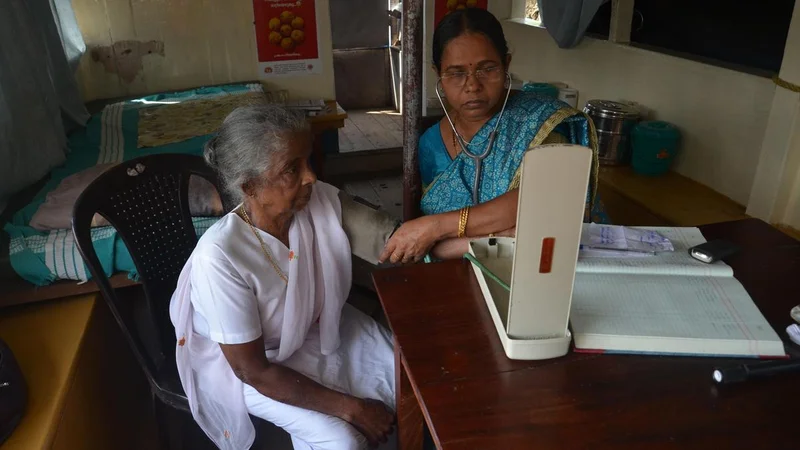
India marked Doctors’ Day on July 1, but the occasion demands that we continue to look beyond well-deserved expressions of gratitude and reflect on the structural foundations that sustain public confidence in health care. Trust in medicine is frequently thought of as a sacred, isolated bond between patient and doctor. In reality, that trust is forged much earlier — within the institutions that regulate care, the systems that deliver it, and the transparency that connects them.
The limitations of this system are readily observable. This writer tried the simple exercise of verifying a doctor’s credentials on the Tamil Nadu Medical Council (TNMC) website. What should have been a straightforward search turned out to be unexpectedly challenging. The system required specific details, such as the doctor’s exact registration number, which are not easily available to the public. Whether something obvious was missed or the website was simply not designed with the public — or even a colleague concerned — in mind, the experience pointed to a larger question: how much does institutional transparency shape public faith in medicine?
How institutions build trust
In many western countries, public trust is maintained through highly accessible regulatory frameworks. For example, the United Kingdom’s General Medical Council hosts a publicly searchable register where anyone can quickly verify a doctor’s qualifications, registration status, and any history of regulatory restrictions. Similarly, the provincial Colleges of Physicians and Surgeons in Canada require minimal identifying information to view a physician’s professional profile. These organisations explicitly signal that professional standards are being ensured through peer review, continuing education, and clear processes for handling complaints. This transparency does more than just share data. It reassures people that medical practice is open to independent scrutiny, creating a safe environment where individual doctor–patient relationships can thrive.
India’s clinical landscape is evolving admirably, with a workforce that is known for its excellent clinical acumen despite working under considerable constraints. While the National Medical Commission has taken steps to improve medical education and professional standards in recent years, public-facing regulatory transparency remains uneven. State Medical Councils, including the TNMC, hold digital registers, but the ease with which a regular patient can navigate them varies. As India continues its digital transformation, making these regulatory portals genuinely user-friendly is a low-hanging opportunity to reinforce public trust at its foundation.
Beyond individual blame
Between regulatory bodies and individual consultation rooms lie the systems of care — hospitals, clinics, and their organisational processes. These daily workflows heavily influence patient satisfaction, shaping perceptions of fairness long before a clinical outcome is reached.
System transparency requires clear communication about medical costs, operational processes, and pathways to register a grievance. Crucially, it also means having an internal culture of medical auditing. Rather than placing blame entirely on individuals when things go wrong, modern health-care systems — following World Health Organization guidelines — are moving toward analysing the systemic design flaws that allow mistakes to occur in the first place.
This approach requires a formal culture of “Open Disclosure”. In advanced medical jurisdictions, being honest when things go wrong is a professional requirement, not an option. It involves a structured, honest conversation with the patient or their family, acknowledging the incident, explaining how it occurred, and detailing the steps being taken to prevent recurrence.
Formalising open disclosure in India, right from the ground level of clinical care, would be transformative. When hospitals support their doctors to be transparent about clinical uncertainties or complications, they reduce the emotional burden on the practitioner and prevent potential friction with families. A lack of clear information breeds suspicion. When processes are opaque or difficult to navigate, public dissatisfaction builds rapidly — even if the actual clinical care delivered was appropriate. Much of this friction arises not from malice, but from a mismatch between patients’ expectations and their actual experience.
India has seen a worrying rise in violence against health-care workers. The Indian Medical Association reports that over 75% of doctors have faced some form of workplace violence. While the root causes are multifactorial, deep-seated systemic mistrust is often the spark that escalates conflict. In these high-stress settings, transparency is a protective shield, not an administrative burden. A system that is completely honest about limitations and constraints within clinical care makes it less likely that individual frontline doctors will become the sole targets of a family’s anger and resentment.
At the ground level, the doctor–patient relationship remains the ultimate test of the profession — a space where high-stakes decisions are made in moments of profound human vulnerability. Here, transparency transitions from policy into a purely human interaction.
Modern patients increasingly expect clarity regarding who is treating them and why specific clinical decisions are chosen. This means explaining a diagnosis in plain language, detailing the rationale behind investigations, discussing therapeutic alternatives, and being transparent about costs and complications. Providing proactive, periodic updates on a patient’s progress — or lack thereof — is often the single most effective way to ease a family’s distress.
This shift toward shared decision-making recognises that transparency in treatment is about relationships, not just data. However, if transparency is to be a core part of modern medicine, it must be integrated into medical training. This cannot be taught in a lecture hall alone; it must be actively modelled by senior doctors during everyday clinical practice and teaching. By embedding this culture of communication early, we prepare the next generation of physicians to navigate increasing public expectations.
In my experience, the majority of conflicts in health care do not arise from the medical decisions themselves, but from how those decisions were communicated and understood. When patients feel genuinely heard and informed, the bond is strengthened. When communication is poor, even appropriate care may be perceived as inadequate.
A final reflection
Doctors need safe, respectful, and dignified environments in which to work. Patients require reassurance that the care they receive is both ethical and competent. These are not competing demands; they are mutually reinforcing traits.
Trust in medicine is built collectively by what our institutions make visible, how our clinical care systems function, and how doctors and patients talk to one another. When transparency runs through all three layers, it stops being an abstract ethical principle and becomes part of everyday practice.
Doctors’ Day has passed, words of appreciation are important. But the days after also invite a structural look at our systems. At a time when the medical profession is practising under unprecedented strain, enhancing transparency in regulatory frameworks, clinical corridors, and individual consultation rooms is the most meaningful way to protect the integrity of the profession. Trust is not an entitlement to be claimed; it is a professional pact that must be continuously renewed through transparency.
Dr. Vincent Arockiasamy, FRCPC, is Clinical Assistant Professor of Paediatrics, and former Director, Student Assessment, Undergraduate Medical Education, University of British Columbia, Canada, and is also involved in medical professional regulation
Published - August 14, 2026 12:16 am IST