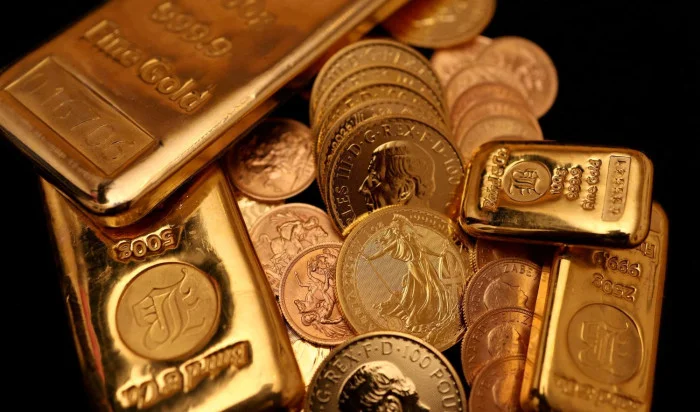
Gold prices face renewed pressure as rising oil prices and persistent tensions in the Middle East revive inflation concerns, increasing the likelihood that the US Federal Reserve may delay monetary easing despite continued demand for the precious metal.
Spot gold traded in a range of US$4,356-4,434 an ounce in early trade on Thursday, after closing $42 higher at $4,391 on Aug 10. The metal briefly broke above $4,400 on Aug 11 before retreating below that level as investors took profits following its recent rally.
In Thailand, the Gold Traders Association adjusted prices twice yesterday morning, with a combined increase of 100 baht from the previous day, bringing gold bars to 69,150 baht per baht-weight.
Warut Rungkham, head of analysis at YLG Bullion & Futures Co, said the latest buying momentum was supported by continued purchases from central banks and funds.
China's central bank bought 19.9 tonnes of gold in July, extending its buying streak to 21 consecutive months. SPDR Gold Trust, the world's largest gold-backed exchange-traded fund, increased its holdings by another 3.42 tonnes.
However, the rally faces stronger headwinds as developments in the Middle East push oil prices higher and complicate the outlook for US monetary policy, he said.
MAJOR RISKS
Uncertainty over the Strait of Hormuz remains a major concern. President Donald Trump said the US will seek compensation from Iran and instructed representatives to include the issue in future negotiations, potentially extending the time frame for a resolution.
For its part, Iran said shipping through the strait will be subject to fees and that a full reopening of the strait depends on the US lifting conditions imposed on Tehran, including ending its maritime blockade.
The uncertainty has kept Brent and West Texas Intermediate crude prices under upward pressure, raising concerns that higher energy costs could feed into inflation.
For gold investors, this creates a difficult backdrop. Higher inflation could reduce the Fed's room to ease monetary policy, while higher US Treasury yields and a stronger dollar would put additional pressure on the non-yielding metal.
Areerat Murachai, head analyst at GCAP Co Ltd, said gold fell below $4,400 after reaching its highest level since June 5, with investors taking profits after the recent gains.
She said the market shifted its focus to inflation risks from higher oil prices, which could prevent the Fed from easing policy quickly despite weak US non-farm payroll data. The July US consumer price index is being monitored, and CME Group's FedWatch tool shows expectations for a Fed rate hike and a hold at the next meeting are close to evenly split.
Gold's short-term technical structure remains positive, and Ms Areerat sees $4,280-$4,300 as the key support zone. If prices hold, gold could retest $4,400 and $4,465. A break below support would increase the risk of a deeper correction.
She recommends investors avoid chasing prices and wait for pullbacks.
Thai gold holders may consider taking partial profits around 69,000 baht, with the next target at 70,200 baht.
The outlook remains a tug-of-war between strong central bank demand and rising inflation risks, with oil prices and the Fed's policy direction likely to determine gold's next move, said Ms Areerat.