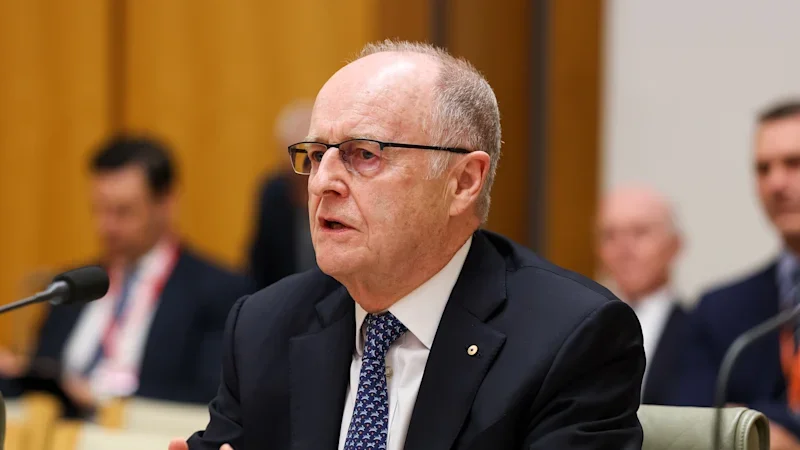
Former RBA governor and Macquarie chairman Glenn Stevens said he expects to get answers soon that will help the $100 billion finance giant determine whether KPMG should still be handed lucrative audit work.
Macquarie last month revealed it was reviewing whether KPMG should keep a prized Macquarie audit tender it won last year, after it was revealed the accounting firm had misused confidential client data.
The audit contract at Macquarie is worth about $70 million a year. Macquarie’s current auditor, PWC, has held the contract since the early 1990s, but Macquarie has committed to reviewing the contract every ten years, making it worth about $700 million over the next decade.
At a parliamentary hearing into the KPMG scandal on Friday, Stevens made clear that the core allegations of senior KPMG executives accessing confidential client information to win fresh work, is top of mind.
“I expect that we’ll be able to get the information that we need pretty soon, and the board will then have an opportunity to review that and come to a conclusion,” Stevens said.
“What we’re focused on is, ‘in your pursuit of our tender, is there any evidence that any of our info, or more problematically, perhaps other people’s, was misused? And how can we be confident that that is a reliable conclusion’,” he said.
“So that’s why we’ve asked for that work to be externally reviewed.”
Optus chairman John Arthur and chief executive Stephen Rue are also due to appear at the probe into the spiralling scandal that has purged the most senior ranks at KPMG over the misuse of confidential clients’ information for commercial gain.
Earlier, former Lendlease chair and current Westpac board member Michael Ullmer told the committee how the only warning of the KPMG whistleblower allegations relating to the bank was made to fellow director Peter Nash, who did not tell the rest of the bank’s board.
The board did not hear of the allegations until Labor Senator Deborah O’Neill read them out in parliament in March this year. Nash, a former KPMG partner, resigned due to perceived conflicts last month. He stayed at the home of KPMG chairman Martin Sheppard as the firm was preparing its pitch for the $25 million-a-year audit contract. KPMG had told Nash there was no issue to be concerned about.
“He resigned because of the fact of those social contacts that we became aware of, when at the beginning of the process we made it very clear to members of the subcommittee and to people involved that there should be no form of social contact during the tender process,” Ullmer told the committee.
“I believe he did fail because that was clearly something that should not have occurred during the process.”
Ullmer told O’Neill that is was not until May 13 that “our general counsel at Westpac got the first comprehensive explanation of what the allegations were at that time. But it was conveyed again as something that had been fully investigated, and they were not substantiated.”
Ullmer revealed the frustration over the drip feed of information which slowly revealed just how serious the matter was.
“That has been one of the most challenging aspects of this matter because you think you have your arms around it, and then more information is revealed,” Ullmer said.
Ullmer was chairman of Lendlease when senior KPMG executives accessed sensitive board documents about the tender of its lucrative audit business. KPMG was later awarded the audit work for Westpac.
He ridiculed a statement O’Neill read out from internal KPMG communications on the matter stating that there was no such thing as “Chinese walls”, the so-called ethical walls meant to protect sensitive client information from wrongful exploitation.
“I think that’s a ridiculous statement to make because there obviously have to be Chinese walls or ethical walls,” he said.
“You expect that the confidential information, the secrets that they gain access to, will remain confidential.”
Dexus chairman Warwick Negus also appeared before the committee and refuted KPMG claims that it was allowed to use sensitive information it possessed from conducting the company’s internal audit work to pitch for its external audit.
“I think when we denied Miss (Eileen) Hoggett participation in the internal audit meeting, where she wanted to learn more about Dexus to inform their bid, when we said that was inappropriate, I think that that was a pretty obvious signal,” Negus said.
Hoggett, KPMG’s former chief operating officer, was expelled last month after the firm said new evidence had been identified to support the whistleblower’s allegation that sensitive Lendlease board documents were kept in a locker in KPMG’s Sydney office.
Law firm Allens did not talk to Dexus about any of the allegations when it conducted an investigation and Negus did not see the law firm’s report until it was published this week.
More to come
The Business Briefing newsletter delivers major stories, exclusive coverage and expert opinion. Sign up to get it every weekday morning.
More: