TAMPA, Fla. — CesiumAstro is acquiring semiconductor specialist Jariet Technologies, adding more in-house capabilities behind the phased-array antenna specialist’s plans for a future communications constellation.
The Austin, Texas-based company announced the acquisition for an undisclosed sum Aug. 12, bringing in about 100 employees across the fabless semiconductor company’s operations in the United States and Switzerland.
Founded in 2015, Redondo Beach, California-headquartered Jariet designs radio-frequency chips used in satellite communications, electronic warfare and radar systems, including technology for digital beamforming and wideband signal processing.
“The team and capabilities will be integrated into CesiumAstro to support all their offers from ground, air to space,” a spokesperson for CesiumAstro said.
“This acquisition is a big part of enabling CesiumAstro’s future satellite constellation.”
CesiumAstro has released few details about its proposed Synchronicity low Earth orbit network after filing plans with regulators last month, covering 737 satellites that would use Ku-, Ka- and V-band spectrum to provide reconfigurable connectivity for fixed and mobile enterprise and government users.
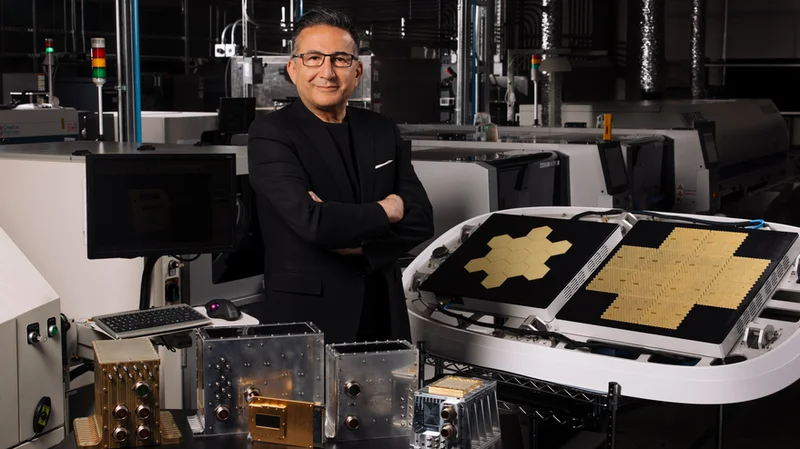
After building a business around software-defined, multi-beam phased-array technology, the nine-year-old company recently branched out into providing a satellite platform called Element to integrate those capabilities.
The first Element is slated to launch in October 2026, with more scheduled on seven additional SpaceX rideshare missions booked over the following several years.
“This acquisition brings a foundational semiconductor capability into CesiumAstro,” CesiumAstro founder and CEO Shey Sabripour said in a statement.
“Integrating advanced mixed-signal semiconductor design in-house gives us greater control over performance from the RF front-end through complete mission system, while enabling us to field new capabilities faster.”
In late 2025, CesiumAstro acquired AI startup Vidrovr to embed machine learning across its payloads and satellites, which it said would help enable autonomous RF optimization, tasking and edge processing.