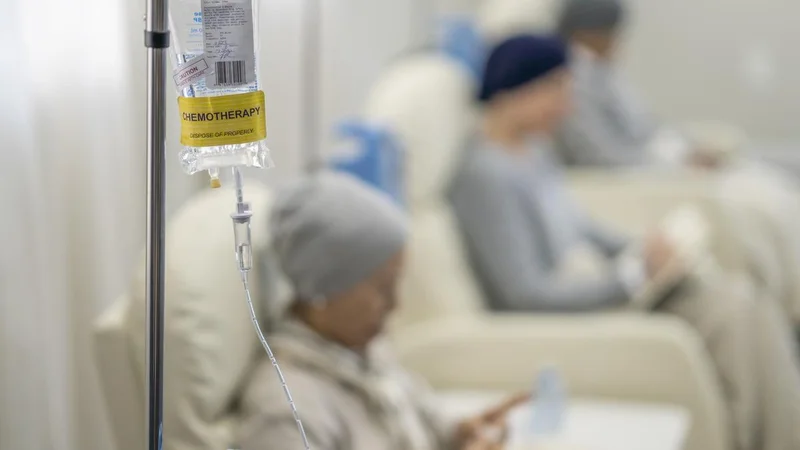
India is facing a critical nationwide shortage of two key chemotherapy drugs, cisplatin and carboplatin, driven by soaring global platinum raw material costs, West Asia shipping route disruptions, and domestic price caps. While government hospitals in several States have managed to stabilise supplies, private hospitals in many parts are still facing a crunch. For patients, this has meant interruptions or delays in life-saving treatment. In response, the government last month raised temporarily ceiling rates for the two drugs by 50%, to help restart halted domestic manufacturing lines.
What’s happening?
Cisplatin is a chemotherapeutic agent used in the treatment of solid tumors as well as certain blood cancers. Carboplatin is a second generation platinum compound that is also used to treat solid tumours. Both are among the most widely used chemotherapy drugs in India and are indispensable in the treatment of several cancers, including ovarian, head and neck, lung, gall bladder, urinary bladder, breast and testicular cancers.
Prices for platinum—the core raw material used in cisplatin and carboplatin—more than doubled, making old price-controlled manufacturing rates financially unviable for companies. Additionally, geopolitical conflicts and shipping constraints through West Asia have restricted raw material imports from primary global suppliers. This resulted in several generic makers temporarily slowing or stopping production of these drugs, says Sayoni Bhanja, consultant, medical oncology at HCG Cancer Centre, Kolkata.
Impact on hospitals, patients
At the Cancer Institute (WIA), Adyar, in Chennai, Kalpana Balakrishnan, chief executive officer and medical director, said that the shortage has been ongoing for nearly seven months due to the war and has had significant impacts. “The cheapest drug, cisplatin, a first-generation platinum drug, is not available. Carboplatin and oxaliplatin, which are second and third generation platinum drugs, are considerably more expensive.”
Sujith Kumar Mullapally, senior consultant - medical oncology, Apollo Proton Cancer Centre, Chennai said that the hospital has not received cisplatin and carboplatin from its regular companies for a long time now and was depending on companies which are Indian generic companies. He added that they have managed up until now with available stocks, and that through medical oncology forums, significant efforts have been made to inform the necessary authorities.
In Karnataka, some hospitals reported stocks sufficient for only six to eight weeks.
Amit Rauthan, head of medical oncology, immunotherapy and precision medicine at Manipal Hospital, Old Airport Road, Bengaluru, said cisplatin and carboplatin are also critical in treating childhood cancers such as neuroblastoma, hepatoblastoma, germ cell tumours and retinoblastoma, and that their therapeutic role cannot be easily replaced by alternative medicines.
Vijay Kumar Srinivasalu, senior consultant in medical oncology at Sakra World Hospital, Bengaluru, said platinum-based chemotherapy continues to be the backbone of treatment for several solid tumours despite advances in targeted therapies and immunotherapy. Treatment delays or substitution with less effective regimens could compromise outcomes, particularly in curative-intent cancers. This is especially significant in concurrent chemoradiation for cervical and head and neck cancers, where weekly cisplatin plays a vital role in enhancing the effectiveness of radiation therapy, he noted.
For patients, this has meant delays and interruptions in treatment, additional stress, as well as increased costs.
The immediate fallout, said, Sandeep Nayak, chairman of oncology, MACS-Renova Oncology Institute, KIMS Hospital, Bengaluru lands directly on cancer patients: while alternative treatment regimens exist, they are generally less effective, non-standard, and can carry higher costs or different toxicity profiles.
The disruptions are leading to treatment delays, changes in chemotherapy regimens and additional financial and psychological stress for patients and their families, warned Smitha Saldanha, consultant in medical oncology at HCG Cancer Hospital, K.R. Road, Bengaluru.
Bhawna Sirohi, medical oncologist and medical director of Vedanta Medical Research Foundation, Raipur, Chhattisgarh, said for patients this may mean a compromise on curative cancer treatment.
How the government sector is faring
The government sector seems to be doing better in several States.
At the Regional Cancer Centre, Kerala in Thiruvananthapuram, treatment was not disrupted as the hospital had adequate stock of platinum-based drugs to tide over a few months, said director, R Rejnishkumar. “We were beginning to get worried too, as we could not get any response for the purchase tenders we floated. But now that the government has revised the prices, our purchase process is going forward and I am told that we will get new stock soon,” Dr. Rejnish said.
The Karnataka government-run Kidwai Memorial Institute of Oncology in Bengaluru has said it currently has adequate stocks and multiple procurement channels to ensure continuity of care. “We have annual tenders in place and procure medicines through the Central Medical Store as well as the Kidwai Cancer Drug Foundation (KCDF). We also have multiple vendors, and non-governmental organisations support us by supplying these drugs,” said KMIO director (in charge), R. Krishnappa.
At the Delhi State Cancer Institute, both cisplatin and carboplatin injections are currently available and chemotherapy services are continuing as per clinical schedules, said Pragya Shukla, head of clinical oncology.
Sources in the T.N. government said that cisplatin was in the essential drugs list of the Tamil Nadu Medical Services Corporation and hence, its supply was ensured. However, carboplatin, a speciality drug, was unavailable for bulk purchases but hospitals were managing through local purchases.
In Telangana, however, the Mehdi Nawaz Jung Institute of Oncology and Regional Cancer Centre in Hyderabad, the State’s largest and only government tertiary cancer care hospital, has been grappling with a shortage of both cisplatin and carboplatin for the past two months, with supplies falling well short of its monthly requirement. Sadashivudu Gundeti, Director of MNJ Institute of Oncology, said the institute requires thousands of vials of the two chemotherapy drugs every month but is currently able to procure only a few hundred vials. Suppliers have informed the hospital that they were currently unable to meet its full requirement, he said. He expressed hope that supplies could become adequate by the end of August.
What the government has done
On June 12, the National Pharmaceutical Pricing Authority (NPPA) invoked special clauses to raise the price cap of cisplatin from ₹7.26 to ₹10.89 per mL, and carboplatin from ₹60.49 rupees to ₹90.74 per mL, citing public interest. The increase is a one-time revision and will be reviewed after six months, the NPPA said. India is heavily dependent on imported platinum, and the measure was aimed at boosting domestic manufacture to restock depleted supply chains.
Boben Thomas, a consultant medical and paediatric oncologist in Thiruvananthapuram said companies have now resumed manufacturing these drugs. However, doctors have pointed out that short-term measures are not a permanent solution.
Long-term strategies
With more than 1.5 million new cancer cases diagnosed annually in India, Dr. Saldanha said uninterrupted access to essential oncology medicines must be treated as a national healthcare priority.
While describing the recent revision of ceiling prices as a useful short-term measure, Dr. Srinivasalu said India requires a long-term oncology drug security framework, including strategic reserves of essential cancer medicines, diversified domestic manufacturing, stronger active pharmaceutical ingredient supply chains, centralised procurement and an early-warning system for anticipated shortages.
Dr. Saldanha called for coordinated action involving manufacturers, regulators, healthcare providers and policymakers to strengthen domestic production, build strategic buffer stocks and ensure equitable distribution of essential chemotherapy drugs across the country.
A Union Health Ministry official said the Central government has taken all steps to ensure that the supply chain stays stable. In case any State or patient faces any issue regarding availability or access to the drug, they may approach the concerned department, the official said.
(With inputs from Afshan Yasmeen in Bengaluru, Shrabana Chatterjee in Kolkata, Serena Josephine M. in Chennai, C. Maya in Thiruvananthapuram, Bindu Shajan Perappadan in Delhi and Siddharth Kumar Singh in Hyderabad.)
Published - August 14, 2026 07:30 am IST