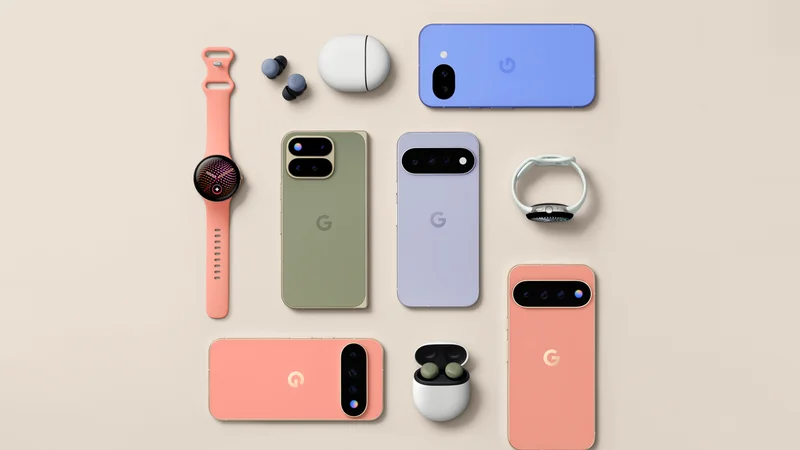
Scroll back through your camera roll from the last three years, and a pattern emerges: faces evenly lit, skies intact, shadows gently raised and highlights pulled down. Every photograph has arrived, by slightly different routes, at the same image, competent, clean and looking rather more assembled than taken.
The Pixel 11, launched in India this week alongside the Pixel 11 Pro, Pixel 11 Pro XL and Pixel 11 Pro Fold, offers a way out. Its most interesting camera feature, Camera Looks, works by giving up control rather than accumulating more of it.
Apple and Samsung sell at enormous scale, so their cameras are built to get every picture right: the family shot against a bright window, the receipt, the child at a recital. That produces a very specific kind of ‘polished image’. Google, with the Pixel a smaller, more niche business, has spent that freedom letting you make a mistake on purpose.
Camera Looks intervenes at the point of capture, with four base looks including Natural, Shadows and Vanilla, alongside creative presets such as Editorial, Velvet, Classic, Digi and Black Tie, roughly ten in all and each adjustable. Google says they change how the phone stacks frames for HDR and how it handles sharpening, rather than applying a filter afterward. Digi captures fewer frames, letting highlights blow out and shadows fall away much like a cheap digital camera from 2005. For a generation hunting down old point-and-shoots for precisely that imperfect texture, Google has built the escape route into the camera
There is a trade-off: the Pixel decides when you press the shutter, while Apple’s editing remains non-destructive. For anyone who has shot film, that is less a limitation than the appeal.
Magic Capture addresses the moment that happens half a second after you decide to take a picture. The phone records a short burst of video, analyses around 400 frames in real time using on-device processing and Gemini models, then pulls out 12-megapixel stills, cropping and de-blurring them. Anyone who has photographed a toddler or a baraat in motion will understand the appeal.
The phone finally takes creators seriously
Creator Suite, available on the Pro models, may be the most useful addition of all. It offers social-media grid lines, an audio visualiser, automatic clip organisation and, most usefully, a teleprompter that scrolls a script at the pace you are speaking as you record on the selfie camera.
For the small-business owner filming a product video, or the freelance social-media manager shooting eight client reels in an afternoon and re-recording each one because the third line keeps escaping, that removes the need for a second phone, a paid teleprompter app or brute memorisation. The automatic folders matter too. The first obstacle to becoming a creator is rarely talent or equipment, and far more often, a camera roll of thousands of takes that nobody wants to sort through.
Small AI, working
Google’s other additions are similarly modest and useful. Rambler is a Gemini-powered voice-input tool that strips out ums and false starts, returning clean text. HiLight brings back something phones once did well: a ring around the camera flash glows when a favorite contact calls or when you are speaking to Gemini hands-free.
There was a decade when the most useful thing on a phone was a single blinking dot. The BlackBerry face down on a desk, red light pulsing, told you the world wanted something before you had touched it. The early Android years turned the notification LED into a small personal craft, green for one contact, purple for the one message you would leave a dinner table for. Somewhere between edge-to-edge screens and always-on displays, we let it go.
HiLight brings that instinct back, replacing the temperature sensor that sat on last year’s Pro. It does exactly two things at launch, which is thin for a piece of hardware. It also changes something socially interesting: turning your phone face down is a gesture with meaning, an announcement that you are present and the device is not. A light on the back edits that announcement, and whether it reads as considerate or intrusive depends on who is sitting across the table.
All four phones run the Tensor G6 with Titan M3 security and Gemini Nano on-device. The Pro and Pro XL add a 50MP main camera, a redesigned 48MP telephoto with 120x Pro Zoom and a 3,600-nit display; the Pixel 11 gets a 48MP sensor with 30x Super Res Zoom and Instant Night Sight. Storage starts at 256GB.
The Pixel Watch 5, launched alongside, adds blood pressure and insulin resistance trend summaries drawn from at least seven days of passive data, framed as early warnings rather than diagnoses.
The Pixel 11 Pro Fold is nearly 1mm thinner, about 10% lighter and three times more durable than its predecessor, with a composite back Google says is designed to be impossible to crack. The crease, though, is more visible than on some rivals. At ₹1,86,999 for 512GB, that is a trade-off buyers will have to make.
Prices start at ₹89,999 for the Pixel 11, ₹1,19,999 for the Pro and ₹1,34,999 for the Pro XL, with the Watch 5 at ₹42,900. Pre-orders opened on August 12, and retail begins August 20, alongside cashback, EMI and upgrade offers.
The Pro models now cost upwards of a lakh, which raises the fair question of how long they ought to last. Google’s answer is seven years of OS and security updates, along with Pixel Drops, still the most honest form of value a phone can offer.
Which brings us to the comparison nobody at Google will make out loud. Apple demonstrated a contextual, screen-aware Siri in June 2024, marketed a phone around it, and then took roughly 18 months to deliver the personalized features. Google spent that time shipping a teleprompter, a voice recorder that removes your filler words, a camera that lets you pick your own color science, and a watch that tells you to get your bloodwork done.
None of it dazzles, and all of it works on a Wednesday morning.
Published - August 14, 2026 11:36 am IST