Foreign Investment
Key Facts
—The fund. Mubadala Capital closed its Brazil Special Opportunities Fund III at about US$900 million, beating a US$750 million target.
—The education bet. Early targets include a medical university, alongside Rio de Janeiro’s metro, a toll road and a gym chain.
—The platform. Since 2022 Mubadala has controlled two Bahia medical schools, UniFTC Salvador and Unesulbahia, plus Imepac in Minas Gerais.
—The scale. Mubadala Capital has committed roughly US$7.3 billion in Brazil across education, energy and infrastructure.
—The backer. Mubadala Capital is the asset-management arm of Mubadala, an Abu Dhabi sovereign wealth fund.
Abu Dhabi’s sovereign-wealth arm is turning Mubadala medical schools into one of its most distinctive bets in Brazil. Its newest fund has just closed at about US$900 million, and a medical university sits close to the centre of where that money is going.
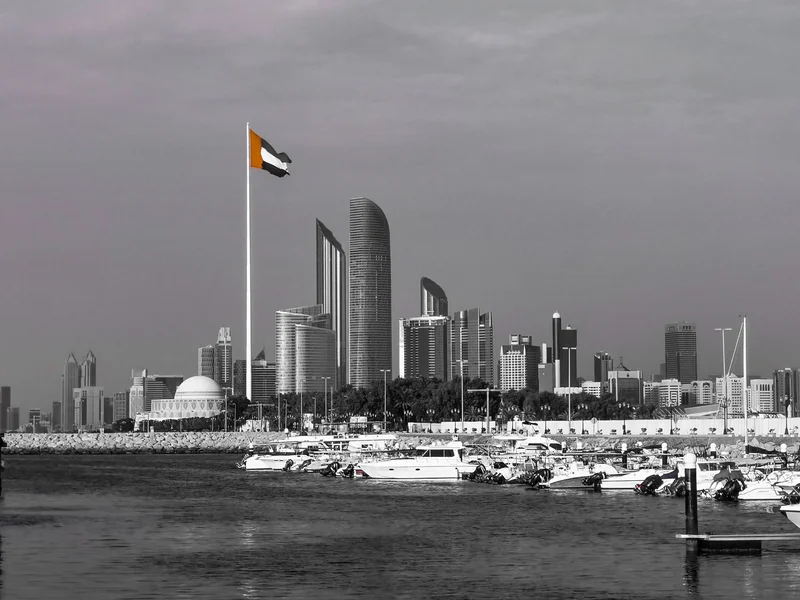
Abu Dhabi’s skyline; its sovereign-wealth arm, Mubadala Capital, is expanding its Brazilian education holdings. (Photo: Clint Ian Pinto / Wikimedia Commons, CC BY-SA 4.0)
RTAsk Rio TimesMarkets, currencies and the economy›
RT
Ask Rio Times
Latin American markets, currencies and companies.
×
Markets todayThe currencyRates \& inflationEconomy outlook
Mubadala Capital is the asset-management arm of Mubadala, one of Abu Dhabi’s sovereign wealth funds. Over the past decade it has turned Brazil into its single largest market outside the Gulf.
In April 2026 it closed its third Brazil-only vehicle, the Brazil Special Opportunities Fund III, at roughly US$900 million — comfortably above its US$750 million target.
What stands out is where the money is heading. Alongside Rio de Janeiro’s metro, a toll road and a gym chain, one of the fund’s early targets is a medical university.
A US$900 Million Bet on Distressed Brazil
The fund raised more than planned. Mubadala Capital anchored it with about US$250 million of its own money, and the rest came from international pension funds, family offices and other private investors.
It is the largest of three Brazil-dedicated vehicles Mubadala Capital has now raised, a sign of how central the country has become to its strategy.
Around a third of the fund is already committed. Its approach is what the industry calls “special situations” — buying troubled or undervalued Brazilian assets cheaply and then fixing them.
Brazil has been fertile ground for that style of investing. Years of high interest rates, a weak currency and tight domestic credit have left otherwise sound companies short of capital and willing to sell control cheaply.
What Mubadala Medical Schools Already Own in Brazil
The education push is not new. In 2022 Mubadala Capital took control of two medical schools in the northeastern state of Bahia — Medicina UniFTC Salvador and Unesulbahia — from the for-profit group Rede UniFTC.
Together they teach roughly 2,000 medical students. The founding family kept a minority stake in the new company that Mubadala now controls.
The fund also bought Imepac, a medical-focused university centre in Araguari, in the state of Minas Gerais. The medical university now in Fund III’s sights would extend that platform further.
The bet reflects a wider shift. Brazilian for-profit education, long dominated by listed groups such as Cogna and Yduqs, has drawn a wave of private-equity and now sovereign-fund buyers chasing steady, regulated cash flows.
Why Brazilian Medical Schools Are Such a Prize
Medical education is one of Brazil’s most reliable businesses. The number of places is tightly capped by the federal government, tuition is high, and demand from would-be doctors rarely fades.
A licensed medical-school seat works almost like a protected annuity. That mix of scarcity and steady cash flow is exactly what a patient investor hunts for.
Brazil has expanded medical training over the past decade, yet new places are still rationed through government tenders. That scarcity keeps established schools valuable and hard for newcomers to copy.
It also explains why for-profit groups — and now a Gulf sovereign fund — compete so hard for these assets rather than for ordinary campuses.
Part of a US$7.3 Billion Brazil Push
The schools are one piece of a far larger footprint. Mubadala Capital has committed around US$7.3 billion in Brazil across education, energy and infrastructure.
Its best-known asset is the Acelen refinery in Bahia. It is also building a would-be rival to Brazil’s dominant stock exchange, B3, and recently put Rio de Janeiro’s metro concession up for sale.
Mubadala is not alone. Gulf funds from Abu Dhabi, Saudi Arabia and Qatar have all widened their Latin American bets, drawn by hard assets and returns they struggle to find at home.
The medical-schools bet fits the pattern: unglamorous, cash-generating businesses that a sovereign fund is content to own for years rather than months.
What It Means for Foreigners
For investors, the signal is that Gulf money is now a structural feature of Brazilian dealmaking rather than a passing visitor.
For expats and students, it is a reminder of how much of Brazil’s private higher education — including the schools that train its doctors — now sits with financial owners, some of them foreign.
For Brazil’s government the arrangement cuts both ways. Foreign capital keeps struggling companies alive and preserves jobs, yet it also hands strategic sectors — energy, transport and the training of doctors — to investors answerable to Abu Dhabi rather than Brasília.
Whether that lifts or squeezes those institutions is the open question. Mubadala says it backs its companies for the long term; critics of financialised education worry about cost and quality. Both claims will be tested as the fund spends the rest of its US$900 million.
Frequently Asked Questions
What is Mubadala Capital?
Mubadala Capital is the asset-management arm of Mubadala, an Abu Dhabi sovereign wealth fund. It invests worldwide and treats Brazil as its largest market outside the Gulf, with about US$7.3 billion committed there.
Which Brazilian medical schools does Mubadala own?
Since 2022 it has controlled two Bahia medical schools, Medicina UniFTC Salvador and Unesulbahia, which teach around 2,000 students, plus the Imepac university centre in Minas Gerais. A further medical university is among the early targets of its new fund.
How big is Mubadala’s new Brazil fund?
The Brazil Special Opportunities Fund III closed in 2026 at about US$900 million, above its US$750 million target. Mubadala Capital anchored it with roughly US$250 million, and international pension funds and other private investors supplied the rest.
LatAm Markets: Live Signals → — real-time movers, turnover leaders and FX across Latin America.
Read More from The Rio Times