Peru · Business
A third boss in eight months inherits the same broken balance sheet, and the churn tells its own story.
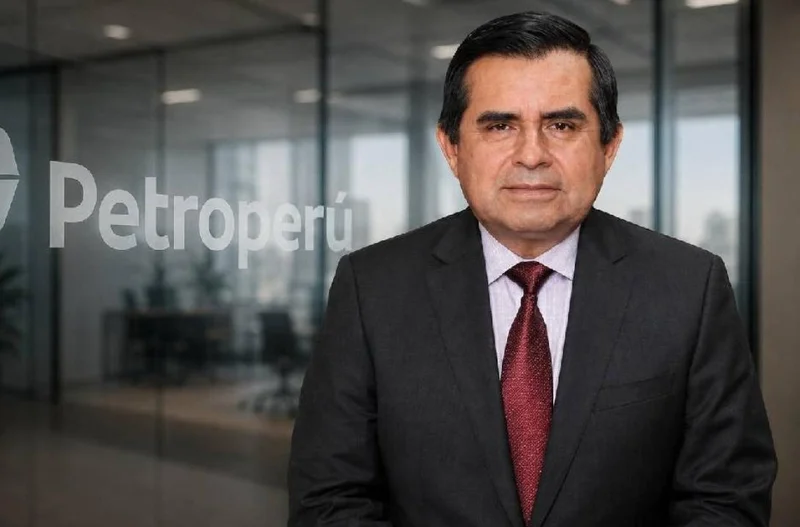
Petroperú has a new general manager, and the appointment says as much about the company’s turmoil as it does about leadership. On 15 August 2026, the board of Peru’s state oil company named engineer Luis Alberto Suárez Carlo acting general manager.
Who Is Petroperú’s New General Manager?
Suárez Carlo is an engineer with more than 40 years of experience across the energy sector. His background covers hydrocarbons, industrial maintenance, asset management, corporate planning, and project management.
The board fixed his start date at 15 August 2026, moving fast after a broad shake-up. It approved the decision through a formal resolution, Acuerdo de Directorio N.
° 087-2026-PP. Officially, he takes the job in an acting capacity rather than as a permanent appointment.
In Spanish, his title is gerente general encargado, meaning acting general manager.
How Suárez Carlo Reached the Top Job
He replaces Gustavo Adolfo Villa Mora, who had run the company as general manager since 21 February 2026. Because the board itself was overhauled, the leadership reshuffle followed almost at once.
Before Villa Mora, Rita Lorena López Saavedra briefly led the company. She had served as acting general manager from 8 January 2026.
So Suárez Carlo is already the third person to hold the role this year. Meanwhile, the deep crisis he inherits has shown no sign of easing.
Why Petroperú Keeps Changing Bosses
The company has churned through leaders for years, not just months. Since July 2021, Petroperú has cycled through 11 board presidents alone.
Because each new team meets the same mountain of debt, few of them stay long. As a result, strategy keeps resetting before any plan can take hold.
Political pressure and shifting government priorities add to the instability. Therefore constant turnover has become the company’s normal state, rather than the exception.
The Talara Refinery Debt Explained Simply
Much of the trouble traces back to a single, giant project on Peru’s northern coast. Petroperú rebuilt its Talara refinery to modernize how the country makes fuel.
The overhaul was meant to be a national showcase for cleaner production. However, it is widely reported to have cost around US$6 billion by the end.
That figure is several times the original budget of roughly US$1.3 billion. Because the firm borrowed heavily to finish it, the debt still crushes its balance sheet.
How Much Does Petroperú Owe?
The numbers are staggering for a single state company. Moody’s put Petroperú’s adjusted debt at around US$6.3 billion as of 30 September 2025.
Some later reports placed the total burden even higher than that. Still, every estimate points to a firm living far beyond its own means.
Roughly US$2 billion of the load sits in international bonds. As a result, looming repayment schedules hang over the company’s daily operations.
The Losses Behind the Crisis
Petroperú has been losing money heavily for several years running. It reported a net loss of about US$468 million in 2025.
That came after an even deeper loss of roughly US$774 million in 2024. Although the gap narrowed, the company remains firmly in the red.
Unpaid bills to suppliers have also stacked up over time. By late 2025, Petroperú owed its suppliers more than 2,569 million soles.
Ratings Downgrades Pile Up
Credit-rating agencies have steadily lost patience with the company. On 28 January 2026, Moody’s cut Petroperú to Caa1 from B3.
It also attached a negative outlook to that new rating. In practice, such a grade signals a very real risk of default.
Fitch went a step further and simply walked away. On 9 January 2026, it withdrew its ratings, citing insufficient information.
How the Government Keeps Petroperú Afloat
The Peruvian state has stepped in to rescue the company again and again. Because Petroperú is treated as strategic, the government keeps writing large checks.
In 2026, a decree cleared fresh support worth up to US$2 billion. It channels that aid through a special-purpose vehicle set up for the rescue.
Earlier bailouts had already added capital injections and state guarantees. Even so, the company keeps coming back to the treasury for still more help.
The Push to Bring in Private Money
Peru also wants outside cash, but without calling it privatization outright. In 2026, a decree let Petroperú transfer up to 144 million soles to ProInversión.
That agency arranges public-private deals on the state’s behalf. Because the word privatization is politically toxic, officials carefully avoid using it.
Still, the underlying goal is not hard to read. The state clearly wants private partners to help shoulder the enormous burden.
What the New General Manager Must Fix
Suárez Carlo inherits a daunting list of problems from day one. First, he must steady the shaky finances around the Talara refinery.
He also has to keep fuel flowing reliably to Peru’s domestic market. Meanwhile, he must reassure lenders who are already deeply nervous.
His acting title, though, gives him limited room to manoeuvre. Therefore quick and visible results are likely to matter most.
What It Means for Peru
Petroperú is far more than just another company to the country. It supplies fuel nationwide and carries a strong measure of national pride.
Because taxpayers keep funding the rescues, the stakes are very public. For example, every bailout ultimately competes with money for schools and roads.
The new general manager’s core test is simple to describe. In short, he must somehow make Petroperú stand on its own two feet.
Frequently Asked Questions
Who is Petroperú’s new general manager?
Engineer Luis Alberto Suárez Carlo. Petroperú’s board named him acting general manager effective 15 August 2026.
Who did Suárez Carlo replace?
He replaced Gustavo Adolfo Villa Mora, general manager since 21 February 2026. Rita López Saavedra held the role before Villa Mora.
Why is Petroperú in financial trouble?
The costly Talara refinery overhaul left it deeply indebted. Losses and repeated bailouts have followed for years.
Is Petroperú at risk of default?
Moody’s cut its rating to Caa1 in January 2026 with a negative outlook. That signals a real default risk.
This article was produced by The Rio Times’ automated newsroom system. How we use AI · Report an error