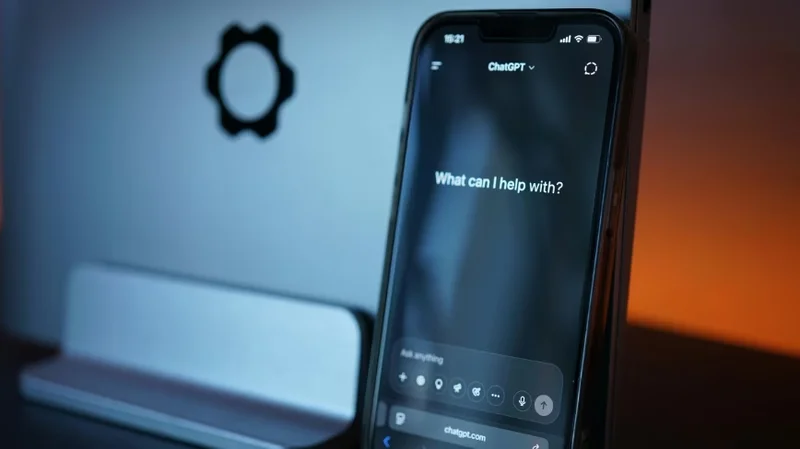
A 17-year-old in Massachusetts has been charged with murdering his mother and younger brother, and prosecutors say that in the period before the deaths he had used ChatGPT to explore what they described as fantasy scenarios about killing his family.
It is among the most disturbing in a growing line of cases in which an AI chatbot surfaces at the edge of a violent crime.
Arjun Aravind, of Acton, about 30 miles northwest of Boston, has been charged as an adult with murder and related counts over the deaths of his mother, Sudha Venkatesan, 45, and his 14-year-old brother, Siddharth.
He was arraigned on 13 August, a not-guilty plea was entered on his behalf, and he is being held without bail ahead of a probable-cause hearing set for 11 September.
The reference to the chatbot came from the prosecution as district Attorney Marian Ryan told the court that the teenager had been “demonstrating some concerning behavior, including using the internet and ChatGPT to make searches for theoretical ideas or fantasy stories regarding the killing of his family.”
Prosecutors have not alleged that the chatbot instructed him, and the specific exchanges have not been made public.
His lawyer, Debra DeWitt, requested a psychiatric evaluation and described a young man in shock who “did not realize they were dead,” adding that the family had recently relocated to Acton and that “the father just wants help for his son.”
Court documents suggest the warning signs had been noticed at home, with the father said to have grown worried about his son’s behaviour and internet use and to have begun putting kitchen knives out of reach.
For all the caveats, the case lands on a question the industry has yet to answer, which is what an AI system should do when a user probes it about harming other people.
Chatbots are built to be endlessly accommodating, and although they are trained to refuse overt requests for violence, “theoretical” or “fictional” framings have long offered a way around those guardrails.
It echoes an earlier case in which OpenAI was criticised for not flagging a user who went on to carry out a school shooting.
It also feeds a fast-growing legal and political backlash. A wave of lawsuits now accuses AI companies of harming vulnerable users, cases that some compare to the industry’s Big Tobacco moment, and individual states have begun to move, with Florida suing OpenAI over child safety and Pennsylvania suing Character.AI.
The through-line is a demand that the makers of these systems be held responsible for what their products encourage, not just what they are asked.
In Europe, ChatGPT has been placed among the platforms facing the strictest obligations under the Digital Services Act, and lawmakers on both sides of the Atlantic have fixed on how AI products treat minors in particular.
A case like this one, whatever a court eventually concludes, tends to sharpen that scrutiny rather than soften it.
OpenAI, which did not comment on the Massachusetts case, has said it is strengthening its safeguards, particularly for teenagers and users in distress, with measures such as parental controls and better detection of crisis language.
Whether protections of that kind would catch a user who frames violence as fiction is precisely the sort of question that prosecutors, regulators and grieving families are now pressing.
It will be for a court to determine what happened in Acton, and what role, if any, the technology actually played. The teenager has pleaded not guilty, and the hardest facts remain unproven.
Yet the very fact that a chatbot now turns up in cases like this one, cited by prosecutors almost as routinely as a browser history, is itself a measure of how completely these systems have woven themselves into daily life, including its darkest corners.
Get the TNW newsletter
Get the most important tech news in your inbox each week.