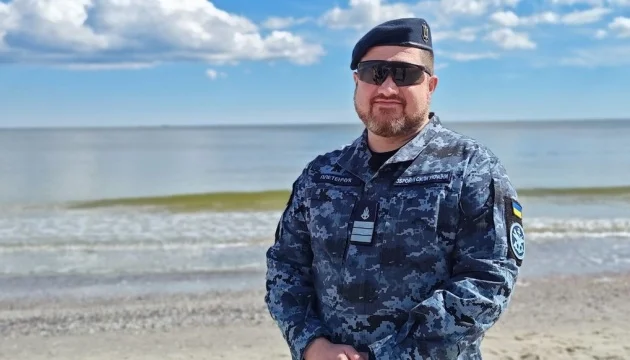
He made the statement in a television interview, Ukrinform reports.
"There is nowhere to run in the Azov-Black Sea region. They have two options: either go to the bottom or leave the waters. As you can see, they don't want to leave the waters," the spokesman said.
In his opinion, the Russians are more likely to simply lose their ships in another attack than make another "goodwill gesture" by withdrawing them.
Commenting on the vulnerability of Russian warships in Novorossiysk, Pletenchuk said the latest strike was a complex operation that combined attacks using different means and involving different units that had to avoid interfering with one another while keeping the operation and its preparations secret and preventing leaks.
Read also:Pletenchuk calls Novorossiysk last outpost for Russia’s Black Sea Fleet
He stressed that the enemy had drawn conclusions from the attack and would try to reinforce its vulnerabilities.
"However, as you can see, a massive attack still produces results, no matter how you defend yourself. This tool works both ways," he added, explaining that Russia has begun carrying out mass attacks on civilian vessels in Ukrainian waters, and that it is difficult to counter such attacks when they reach a certain scale.
Pletenchuk said three surface warships and two submarines remain in Novorossiysk.
"But, of course, the damaged vessels were the key ones. And, by the way, this isn't the first time they have come under attack. We destroyed them several times before, but, as you can see, they continued to operate them despite that," he said.
As reported, Ukrainian forces struck four Russian warships in Novorossiysk, Krasnodar region, overnight on August 12.
According to preliminary information, four warships sustained varying degrees of damage: two Project 11356 frigates, the Admiral Makarov and Admiral Essen; the Project 21631 Buyan-M small missile ship; and the Project 22160 Vasily Bykov patrol ship.
Photo: Dmytro Pletenchuk / Facebook