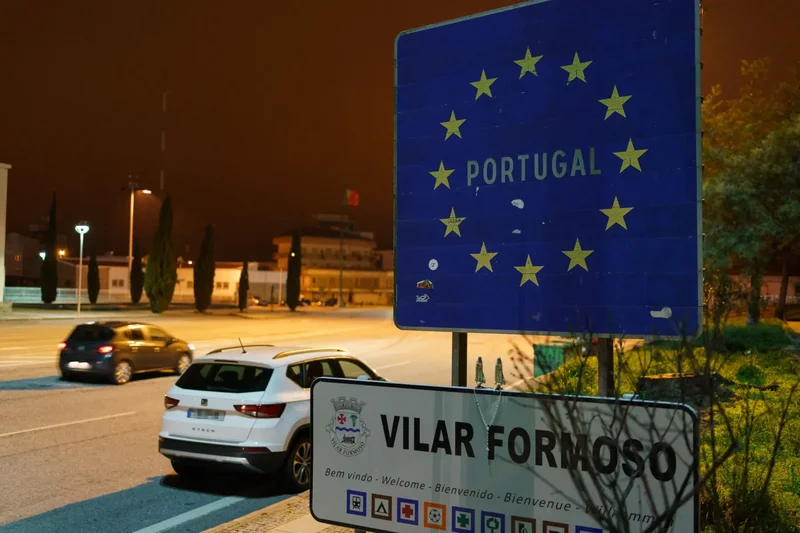
For many people in Spain, neighbouring Portugal is a fairly short drive away, making it perfect for a summer holiday short break during any long weekend or holiday period.
Before you set off, though, know that just because it's just next door and the similarity of the languages mean many road signs are decipherable (if you speak Spanish) does not mean the rules of the road are the same.
Like Spain, Portugal is part of the Schengen Area, which means that it has no internal borders and that the free movement of people, goods and services is permitted.
The documents you must carry in your car to drive normally are therefore the same as in Spain and in any other Member State of the European Union, including, for example, a National ID card or passport, your driving licence, vehicle registration document, ITV document and up-to-date insurance.
What are Portugal's speed limits?
Although speed limits are, of course, signposted on the various roads, it is always worth bearing in mind the different limits that apply to each type of road: 50 km/h on urban roads; 90 km/h on secondary roads; and between 100 and 120 km/h on motorways and dual carriageways.
As for driving regulations in Portugal, bear in mind that, just as in Spain, you must wear a seatbelt and, if you are travelling with children, child restraint systems.
The use of mobile phones is also prohibited whilst driving, and the legal blood alcohol limits are set at 0.5 g/litre for most drivers, and 0.2 g/litre for new drivers and professional drivers.
How do tolls work in Portugal?
This is where things differ a little more. The fact that there are two different toll systems in Portugal (one with and another without barriers) means that it's the aspect that can be most confusing and generates the most enquiries from Spanish drivers.
In reality, it’s simpler than it seems, so make sure you follow the rules so you don’t end up receiving a fine at your home address.
According to advice from Spain's Real Automóvil Club de España (RACE) for toll booths with barriers the rules are the same as at home.
"This system is identical to the one in Spain, so you will come across machines or booths where you make the relevant payment, either in cash or by bank card. Furthermore, if your vehicle is fitted with an electronic toll system (such as Via-T or Vía Verde), you can use the dedicated lanes, just as you would in Spain," it says.
However, in Portugal there are also roads with barrier-free tolls which you need to be aware of to avoid committing any offences that might later get you fined.
"Vehicles travelling on these roads pass through a series of lanes fitted with cameras that record number plates, and each charge is automatically debited from the bank account linked to that number plate," RACE explains.
"The simplest option is for your car to already be fitted with an electronic toll device, as the Portuguese systems are compatible with devices from Spanish banks" without risking a fine when you get home.
What happens if you don’t have an electronic toll device?
In that case, there are several ways to make the necessary payments:
Easytoll: this is one of the simplest systems, as it works by linking a bank card to your number plate and is valid for 30 days. However, to activate it, you must cross the border via the motorways connecting to Galicia, Huelva or Salamanca, which include:
- A28 – Viana do Castelo
- A24 – 3.5 km from the border via Chaves/Verín
- A25 – Alto de Leomil service area (Vilar Formoso)
- A22 – Vila Real de Santo António
Tollcard: prepaid cards that can be purchased online, at Portuguese post offices or in shops. These are linked to your vehicle registration number, and amounts range from €5 to €40.
Tollservice, for cars, motorbikes and vans. There are two types of prepaid cards: one with a flat rate valid for three days, and another for Spanish users travelling from Spain to the airports in Porto or Faro.
Via-T/Bip&Drive: the most widely used payment system in Spain, which is compatible with the Portuguese system.
Temporary Vía Verde device: this can be purchased on the Portuguese company’s website, and the corresponding charges will subsequently be debited from your bank account.
Where are the tolls in Portugal in 2026?
The following map shows the roads exclusively with electronic tolls in red, roads with manual tolls in black, the location of EasyTolls with exclusively electronic tolls (green icon of card with wheels) and the points of sale for TollCard prepaid cards (white car with blue background).
Anything else I should know about driving in Portugal?
Portugal has fairly strict roundabout rules. If you are taking any exit after the first, you must enter the inner lane, stay inside, and only move to the outer lane right before your exit. Passing an exit while remaining in the outside lane can result in an on-the-spot fine of €60 to €300.
Unlike Spain, Portugal’s Data Protection Authority (CNPD) strictly prohibits the use of dashcams on public roads due to privacy laws. Using or even mounting a dashcam in your car can lead to severe fines.
Fuel is almost always cheaper on the Spanish side of the border, so it's best to fill up before crossing over to Portugal.
If you're renting a car in Spain to drive into Portugal, keep in mind that most rental agencies require prior notification and charge a "Cross-Border Fee" for insurance coverage outside Spain. Remember as well that rental cars in Spain often do not include a Portuguese-compatible Vía Verde transponder by default; so you should either ask for one at the rental counter or opt for Easytoll.
Although Spain has now introduced the mandatory V-16 light for emergencies, Portugal still requires drivers to have reflective Vests (must be kept inside the passenger cabin, not in the trunk) and at least on warning triangle for breakdowns or similar.