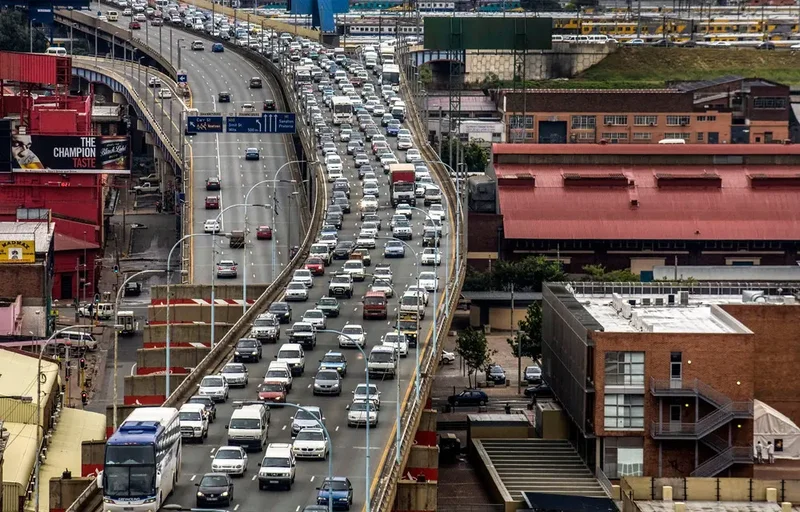
The Gauteng Department of Roads and Transport is stepping up efforts to make the province’s roads safer, with road repairs, bridge upgrades, stronger law enforcement and public awareness campaigns being rolled out across the province.
The department is accelerating the rehabilitation of Gauteng’s provincial road network, which stretches for about 5 600km. The work includes repairing road defects and improving both surfaced and gravel roads as part of efforts to improve the condition of roads used by thousands of people every day.
The work forms part of the department’s Road Safety Strategy, which focuses on improving road infrastructure, strengthening law enforcement and educating the public about safer road use. The department said particular attention would be given to areas where crashes were more common.
Ageing bridges in Tshwane, Mogale City and Sedibeng are also being upgraded to improve their safety and structural condition while helping keep traffic moving. Construction has also started on a new pedestrian bridge along the R59 in Meyerton, which will provide pedestrians with a safer way to cross one of the province’s busy transport routes.
Gauteng MEC for Roads and Transport Kedibone Diale-Tlabela said road safety could not be left to government alone; road users must take responsibility for their actions.
“Every life lost on our roads is one too many,” Diale-Tlabela said.
She said the department remained focused on practical measures to reduce crashes and protect vulnerable road users. The department was working with municipalities, law enforcement agencies, traffic authorities and communities to address road safety concerns, particularly in areas with high crash rates.
Technology would also be part of the department’s efforts, with smart transport systems introduced to improve traffic monitoring, incident management and traffic control. The systems were expected to help authorities monitor traffic conditions and respond to incidents more effectively.
The department urged motorists to be patient and cautious as traffic volumes increased.
It reminded drivers to obey the rules of the road, keep a safe following distance and avoid reckless or negligent driving.
Public transport operators were warned against picking up or dropping off passengers on freeways. Taxi and bus drivers were expected to use designated areas, such as taxi ranks, bus stops and other approved safe zones, instead of stopping on freeways.
The department urged pedestrians to take greater care when crossing roads. People should use designated crossing points where possible and cross at controlled intersections, such as those with traffic lights or stop signs.
Law enforcement officers would be deployed along major routes to monitor traffic flow and enforce compliance with road rules.
The department said motorists, passengers and pedestrians should take greater responsibility for their own safety and for the safety of others. It said cooperation from all road users would be important in reducing crashes and helping people reach their destinations safely.