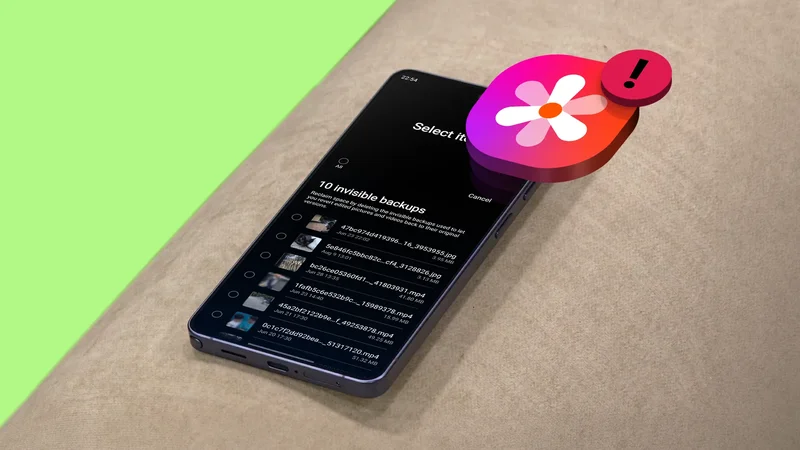
I opened the new Device Care, and Samsung was already waiting with a suggestion: Review files to free up storage.
I said sure, and got a receipt for around 12GB of storage, which I had no memory of using. It's the deleted files, I thought.
Something in a deep folder is waiting for its retention timer to expire. That's how we all picture it working. Your phone holds rubbish for 30 days just in case.
But no. Most of that 12GB was a hoard of invisible backups that Samsung Gallery had been generating and stashing away for who knows how long.
Samsung photo backups
Trivia challenge
From Gallery to the cloud — how well do you really know Samsung's photo backup features?
Which Samsung service is the primary built-in option for backing up photos directly from a Samsung Galaxy device?
How much free storage does Samsung Cloud offer to users for photo and video backups?
Which third-party cloud service does Samsung's Gallery app natively support for photo syncing, in addition to Samsung Cloud?
Where in the Samsung Galaxy settings can you find options to enable or manage Samsung Cloud photo backups?
What Samsung feature lets you store sensitive photos in an encrypted, password-protected space separate from the regular Gallery?
In 2021, Samsung made a significant change to Samsung Cloud photo storage. What happened?
Which Google service do many Samsung Galaxy users rely on as an alternative photo backup solution?
When backing up photos via Samsung Cloud, which file formats are fully supported for backup and restoration?
Your Score
Thanks for playing!
Every edit you make leaves a body behind
The safety net you never asked for
Every crop, every trimmed 4K clip, every filter applied inside Samsung Gallery leaves behind a duplicate of the original file. That's by design. Samsung wants you to be able to revert an edit whenever you like.
You won't find these originals anywhere in the Gallery app. Now think about what happens when you switch phones. Smart Switch moves your data across, invisible backups included.
That's gigabytes of invisible baggage on a new device, and how you spend money you don't need to spend.
A 256GB phone that mysteriously runs tight makes 512GB the safe call, even though 256GB is the sweet spot for almost everyone.
How to reclaim the space, and what you give up
Clearing them out takes about thirty seconds
You can free all of this up in about 30 seconds, but after the backups are gone, so is any chance of reverting an edited photo or video to how it originally was. If you're fine with that, here's the process:
-
Open **Settings**and tap**Device care**. -
Select **Storage**. -
Tap the **Review files suggestion**. - Select the pre-edit backups you want gone.
-
Tap **Delete**.
Three more corners worth checking
The backups have company
The pre-edit backups were my biggest offender, but they have company.
One UI stashes deleteable files in a few corners that may never surface in normal browsing. Might as well check them all in one go while you have the gloves on.
Pending and uncategorized files
The same storage review that exposes invisible backups sorts the rest of your opaque leftovers into two more piles.
The Other files breakdown in storage arrived in One UI 8.0 with three categories: invisible backups, pending, and uncategorized files.
Pending files are anything caught mid-process, like a download you abandoned halfway or an upload that never finished.
Uncategorized is the junk drawer, holding whatever My Files can't sort, and a lot of it tends to be app debris.
Neither pile gets a delete button, which is probably for the best. Some of these files have jobs to do in the system, so tread carefully.
Tapping a file only shows you its path, so removing anything means hunting it down in My Files.
My Files runs its own sweep
My Files runs its own sweep, which is easy to miss because it's buried at the bottom of the app.
Tap Analyze storage for a breakdown of the device, plus anything flagged as duplicate, large, or unused.
Duplicates are the easy win. That PDF you downloaded three times finally gets cleaned up here.
A warning before you go all in. If you tick every copy, the original goes down with them, so always leave one standing.
Secure Folder hoards separately
Secure Folder users have one extra thing to check. The Gallery there keeps a separate recycle bin, untouched by anything you empty on the outside.
The only way in is through the front door. Open Secure Folder, go to its Gallery, and empty the bin yourself.
The cheapest storage upgrade you'll ever get
I keep circling back to this. The used-storage number on an older phone is partly inflated by files nobody chose to keep.
Again, the number argues for the pricier storage tier, and it argues convincingly. Run the sweep before paying the gap for the capacity you may already own.
Nothing here went wrong. The revert system did exactly what Samsung built it to do, and doing it out of sight was the whole idea.
I'd argue a safety net should announce what it costs, but this one doesn't.