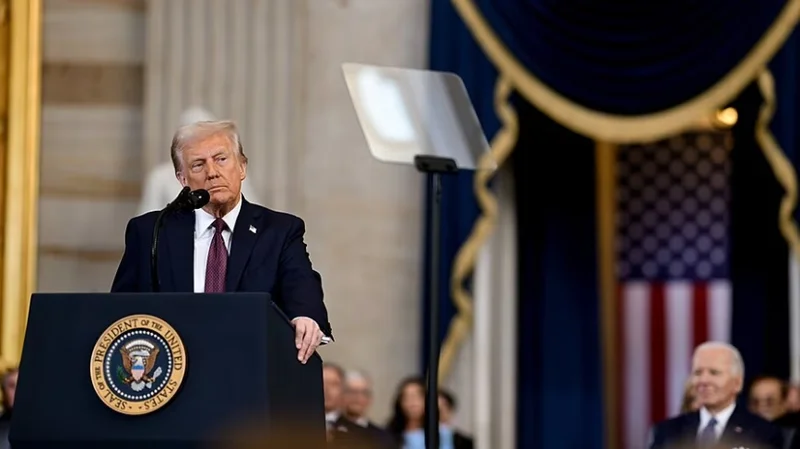
Donald Trump signed the proclamation on 13 August. It carries the title Adjusting Imports of Unmanned Aircraft Systems and Unmanned Aircraft Systems Components into the United States.
It rests on Section 232 of the Trade Expansion Act of 1962, the national security clause, and on Section 604 of the Trade Act of 1974.
The rates, and what counts as sensitive
Two tiers apply from 3 September. The 100% rate covers drones with a maximum take-off weight above 25kg, drones with thermal imaging, docking stations for them, and a list of critical components.
Everything else lands at 25%. That covers drones of 25kg or less and the other components the annexes name.
The weight line does most of the work. It separates the machines armies buy from the ones film crews and surveyors buy, and it puts them two tiers apart.
A third tranche waits. A further set of components attracts 25% from 9 February 2027, a 180-day delay.
The proclamation also leaves the door open. The Secretary of Commerce may “subject additional UAS components to the tariffs… on a rolling basis”.
What Europe actually gets
The allied cap is the part that matters on this continent. EU member states, Japan, South Korea, Taiwan, Switzerland and Liechtenstein face a maximum of 15%, and the United Kingdom a maximum of 10%.
The cap is conditional rather than automatic. It applies where “substantially all the critical components and technology are certified… to be products of” approved countries.
That certification is the whole negotiation. A European drone assembled in Europe from Chinese motors and batteries does not obviously qualify.
Nor is the wording narrow. It reaches technology and software, not only the parts a customs officer can weigh.
The proclamation names that dependency directly. It finds that US manufacturers rely on foreign sources for critical components including motors and batteries.
The case the document makes
The Commerce Secretary ran the Section 232 investigation and reported the finding. Drones and their components “are being imported into the United States in such quantities… as to threaten to impair the national security”.
The reasoning has three strands. Drones are essential to military operations, import penetration creates strategic vulnerabilities, and domestic capacity cannot meet national security needs.
A fourth strand is about data. The proclamation finds that foreign drones pose an information technology security risk by transmitting to foreign governments.
The accompanying fact sheet runs under the heading Securing American Drone Dominance. It calls drones “a key technology in modern armed conflict”.
The carve-outs are where the policy lives
Two mechanisms soften it for approved suppliers. Companies on the Department of War’s Blue UAS Cleared List, the Blue UAS Framework or the FCC Conditional Approval List get 180 days before the tariffs reach their listed products.
The second is an onshoring programme. Approved companies may import covered products duty-free while they build US facilities.
That approval runs through the Department of War and Homeland Security, with monitoring attached. Non-compliance can trigger “rescission of tariff benefits”.
The FCC is drawing the same line
The definitions here match another proceeding almost exactly. The FCC has proposed retroactively banning DJI drones it already approved, treating lidar and thermal cameras as military-grade.
Its list covers thermal imaging, docking stations, swarming, aerosol dispersal and drones above 55 pounds. That weight is 25kg, the same threshold the proclamation uses.
The two instruments are also linked in the text. Being on the FCC Conditional Approval List is one of the routes to the 180-day delay.
Comments on the FCC proposal close on 2 September, one day before the tariffs start.
The overlap is worth stating plainly. One instrument taxes the capability at the border, the other can strip its authorisation to operate on American airwaves.
Which European companies this reaches
Three names come up first, per Euronews. Parrot in France makes the ANAFI range. Germany’s Quantum Systems carries a valuation above €1bn, and Portugal’s Tekever above €1.1bn.
None of them is the target. The proclamation takes aim at Chinese supply, and DJI dominates the global market.
European makers still pay, at 15% or 10%, and only if they clear certification. The desk has covered Quantum Systems on drone swarms and the sector’s turn at the Berlin airshow.
European capital has been arriving in the meantime. Cambridge Aerospace raised $300m at $3.4bn for drone interceptors.
The tariff changes the calculation for those companies rather than ending it. Selling into the US now carries a duty, and building there carries an incentive.
What the market did
American drone shares rose in premarket trading. AeroVironment, Kratos Defense and Security, and Red Cat all gained, Forbes reported.
Unusual Machines rose 14% to $31.13. Donald Trump Jr joined its advisory board in November 2024 and received 200,000 shares, having earlier bought 66,000 shares and 66,000 warrants in a private placement.
The proclamation names no company as a beneficiary of any provision. The share move followed the announcement.
The pattern this belongs to
This is the third proclamation of the summer with the same title formula. Commercial aircraft, jet engines and parts came in July, and polysilicon followed on 7 August.
The shape repeats each time. A national security finding, tiered rates, allied caps and a domestic build-out programme attached.
For European suppliers the practical question is the same in each case. The headline rate matters less than whether their supply chain clears certification.
What happens next
Three dates now sit in the calendar. The tariffs start on 3 September, the FCC comment window closes on 2 September, and the second component tranche arrives on 9 February 2027.
The rolling clause means the annexes can grow without a new proclamation. Commerce decides what else counts as a critical component.
No European government or Commission response existed at the time of writing. The certification standard is the thing to watch, because it decides whether the 15% cap amounts to a concession or a formality.
Brussels has a second question to answer as well. European makers buy many of the same Chinese motors and batteries the proclamation objects to, and the certification test reaches into those supply chains rather than stopping at the border.
Get the TNW newsletter
Get the most important tech news in your inbox each week.