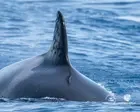
Spanish officials have launched an investigation after the matriarch of an orca pod known for jostling and ramming boats off the Iberian Peninsula was spotted with wounds suggesting she had been shot by a pellet gun.
On Friday, Spain’s environment ministry said Toñi, the oldest living member of the pod, had been seen swimming in the Strait of Gibraltar with markings on her dorsal fin that were “consistent with shots from a pellet gun”.
A source from the ministry told El País that some of the projectiles remained lodged in her fin, posing a risk of infection. The ministry was in touch with officials in Portugal, the source added, as the markings were detected after the orcas had travelled from the waters off the Portuguese city of Faro.
The orcas of the Iberian Peninsula burst into headlines in 2020 after sailors shared stories of rudders that had been rammed and boats that had been spun 180 degrees or tipped sideways. Since then, a small group of orcas from the pod have been blamed for damaging scores of vessels and sinking at least four boats, leaving scientists scrambling to explain the baffling behaviour.
Scientists have long pushed back against the assertion that the orcas are attacking vessels, instead suggesting that the behaviour could be a form of play or a means of practising their hunting skills.
In the days since Toñi’s injuries came to light, the WeWhale and Iberian Orca Guardians (IOG) association have been closely tracking the animal for any sign of weakness. “We know Toñi. We were with her a few weeks ago and these wounds were not there,” the IOG co-founder Janek Andre said.
“Seeing Toñi, la abuela [the grandmother], like this is devastating,” he added. “If someone has deliberately fired a shotgun at her, this is not only an act of extreme cruelty against an individual animal. It is an attack on one of the last remaining members of a critically endangered population.”
Researchers have long sought to highlight the many stressors faced by this population of orcas as they navigate life in a major shipping route. Food scarcity, injuries and pollution have left the population on a knife’s edge, reduced to between 30 and 40 individuals.
In 2023, video emerged that appeared to show people launching firecrackers into the sea as orcas rammed the rudder of their vessel, hinting that the animals were now facing another threat as sailors push back against their actions.
“There has been enormous public discussion about Iberian orcas and their interactions with vessels,” said Andre. “Whatever someone’s opinion about those interactions may be, shooting at these animals can never be an acceptable response. These orcas need protection, not retaliation.”