From Trump to Lebanon: Delusion of decision-making
TEHRAN – When politics loses touch with reality, facts can quickly give way to fiction. The Trump model offers one example; its echoes in Lebanon offer another.
The disconnect between political decision-making and truth is a growing subject of debate. This goes beyond media criticism but specifically, how officials in positions of power can transform the public sphere into one where political narratives replace facts.
It is unclear whether observers anticipated that matters would reach the point they have today, in which U.S. President Donald Trump takes this tendency so far through his political conduct. The decisions he makes, and the statements he issues, all of which, have a far-reaching impact because they come from the president of supposedly the world’s most powerful state.
This style of political engagement is no longer confined to Trump. It has gained many followers and imitators around the world. The influence of and identification with Trump has not been limited to adopting far-right or racist ideas. It has also extended to adopting the same style of political performance, the management of political discourse, the handling of facts, and the construction of political narratives.
Under Trump, this approach has evolved into a complex process in which many elements intersect, most notably an exaggerated assessment of one’s ability to influence events, deliberate lying, a refusal to accept facts, and reliance on post-truth logic.
This approach is accompanied by a fully integrated political and media apparatus that works to produce perceptions contrary to the facts, reshape them, and continuously reinforce them, in addition to repeatedly circulating the narratives and ideas that are intended to take root in the public mind.
Trump’s record appears full of examples consistent with this mixture, making his political experience a case worth examining.
Trump insists that he won the 2020 presidential election. The U.S. president has never stopped promoting the idea that the election was “stolen” despite failing to provide evidence of widespread fraud that could have changed the outcome.
He also insists that the domestic economic situation is good, recently claiming that he was the “lowest of the last 10 presidents on inflation,” and falling grocery prices. This is while consumer price index data shows a higher rate of inflation than is being claimed.
As for the military victory over Iran, the reopening of the Strait of Hormuz, and the overthrow of the Islamic Republic, that is a false narrative whose chapters are still unfolding.
From the early days of the illegal war, Trump adopted an extremely decisive tone in describing the results of military operations. He did not just speak of weakening Iran’s capabilities; he quickly moved to declaring Iran’s complete military defeat, and then to presenting the war as a decisive American victory.
In the first weeks, Trump declared that Iran had been “completely defeated,” saying, “We have already destroyed 100 percent of Iran’s military capability.” He also described Iran as having been defeated and destroyed “militarily, economically, and every other way.” He further said that the United States had “basically defeated Iran” and that the Iranian military had been “literally wiped out.”
The false narrative did not stop at the military assessment. Trump said that he had already won the war and that regime change had been achieved. By the end of the first month, he asserted that the U.S. military was achieving “rapid, decisive and overwhelming victories,” stressing that the United States was approaching the achievement of all its military objectives.
These statements attracted extensive attention in the American press and were subjected to criticism and scrutiny. United States media outlets sought to distinguish between military achievement and political outcome, and between allegedly inflicting major damage on Iran’s military capabilities and the ability to translate that damage into lasting political and strategic results.
American analyses discussed the paradox separating “tactical success” from “strategic victory.” Political analysts argued that inflicting severe military damage on Iran does not necessarily mean achieving the political objectives for which the war was launched.
They criticized Trump’s insistence on achieving Iran’s complete surrender, making the very definition of “victory” a subject of political and media conflict within the United States.
They also pointed to the paradox of Trump declaring victory in the war despite Iran continuing retaliatory operations, the closure of the Strait of Hormuz, and incomplete negotiations, all of which make declaring “final victory” more complicated than the political rhetoric suggests.
Trump appears to be continuing the same pattern, albeit without the same momentum, insisting on presenting outcomes according to the narrative he wants, even when the facts are far more complicated. Worse still, instead of prompting world leaders and officials to reconsider this approach and learn from its mistakes, the experience appears to be encouraging some of them to identify with it and imitate it.
Lebanon appears to have its own share of this phenomenon.
Looking at statements by President Joseph Aoun, one can observe elements of this Trump model, even if the circumstances and contexts are different.
Aoun insists that “the scale of Israeli attacks on Lebanon has declined since the signing of the framework agreement,” a claim that contradicts the facts concerning the continued aggression, destruction of villages, and bombings, as well as the escalating destruction of the urban and environmental fabric of southern Lebanon.
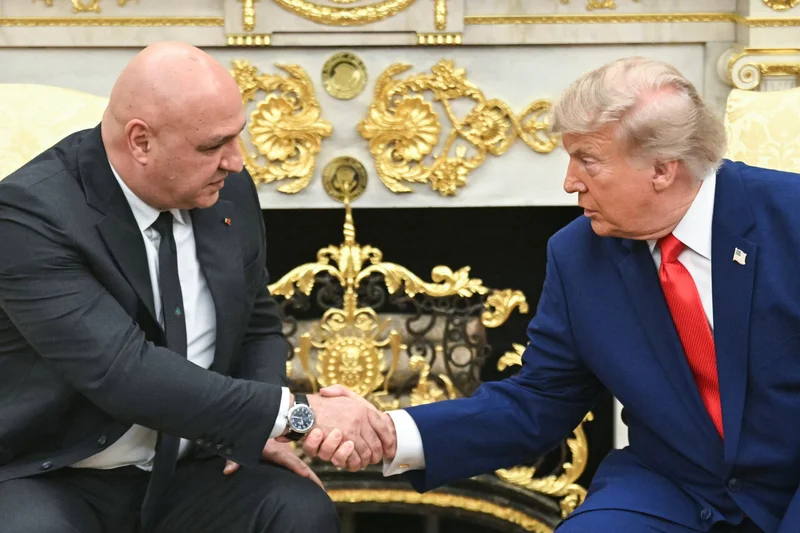
Before that, several people who met with Aoun are reported to have said that his insistence on visiting Washington and meeting the U.S. president stemmed from his conviction that he could persuade Trump to adopt his point of view.
This reflects a degree of overestimating his ability to influence American decision-making. The same exaggeration was evident in the way the visit was handled and portrayed as a major achievement capable of changing the facts on the ground.
By contrast, the circumstances and developments surrounding the visit point to a tougher American stance in support of the Israeli regime at Lebanon’s expense and to the detriment of its interests.
Nor does this detachment from reality appear to have stopped there. Those around the president seem to have convinced him that Lebanon can pursue direct negotiations with the Israeli regime without even a minimum of domestic consensus, or emerge from its deep crisis without national dialogue. They also appear to believe that Lebanon’s interests require handing the Americans 99 percent, even 100 percent, of its cards, abandoning friends, and creating an inexplicable rupture with influential countries such as Iran.
They have also promoted the claim that President Aoun’s popularity among Lebanese, including Shia, is rising. At times, figures are cited that appear to be wildly removed from the political and social realities on the ground, in an obvious attempt to manufacture an “alternative reality for the decision-maker.”
At this point, detachment from truth becomes a direct threat to the national interest. No country can protect its interests through a decision-making process built on delusion. Delusion erodes the shared foundation of facts on which healthy political life depends, and without that foundation, states and societies cannot properly identify risks, protect their interests, or safeguard their people.
However, there is a slim possibility that the reality is starting to sink in. Aoun and Prime Minister Nawaf Salam have held a meeting on the latest developments in southern Lebanon.
According to a statement shared on the Lebanese presidency’s social media account, Aoun met with Salam to discuss the Israeli regime’s aggression, as well as the destruction of homes and infrastructure across towns and villages in the south.