There are certain lines of dialogue that become so famous they almost stop belonging to the movies and TV shows that produced them. “May the Force be with you.” “I’ll be back.” “You're gonna need a bigger boat.” You don't need to know the context because the words have long since transcended their original context.
Star Trek: The Original Series has plenty of those. Spock’s wish that everyone to “live long and prosper” is arguably the franchise's signature phrase. He also turned the simple word “fascinating” into a catchphrase simply by raising one eyebrow before saying it. Dr. McCoy (DeForest Kelley) spent three seasons reminding everyone, “I'm a doctor, not a…” and, at least in our collective memory declaring, “He's dead, Jim” while standing over the latest redshirt who wandered a little too far from the landing party.
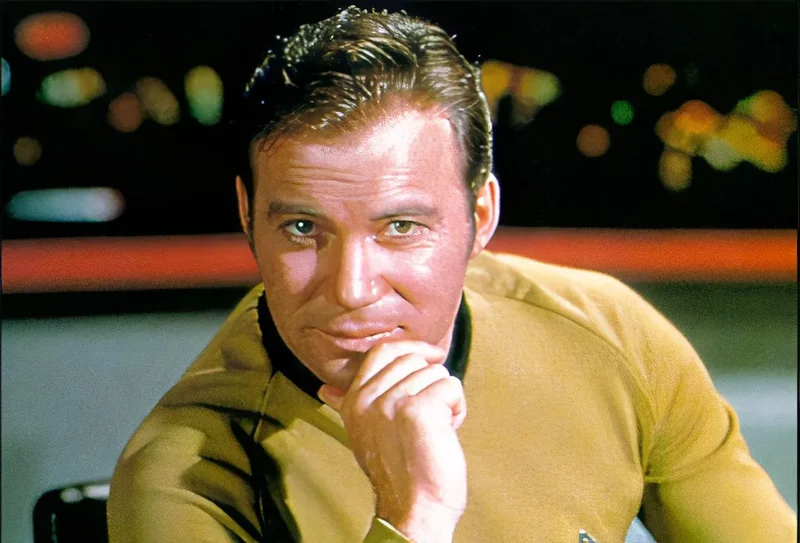
But if I could only pick one line to represent everything Star Trek stands for, it would be four simple words spoken by Captain James T. Kirk (William Shatner) halfway through “Return to Tomorrow," the 20th episode of season 2:
“Risk is our business.”
On the surface, it doesn't seem like an obvious choice. It's not printed on T-shirts nearly as often as “live long and prosper.” It isn't endlessly quoted by people who have never watched an episode of Star Trek. And unlike “beam me up, Scotty,” it never became part of the broader pop culture vocabulary. But that's exactly why it's the best quote. It doesn't just capture Kirk. It captures the entire philosophy of Star Trek.
First broadcast on Feb. 9, 1968, the episode “Return to Tomorrow” finds the Enterprise answering a mysterious distress call from a dead planet. There, Kirk and his crew discover Sargon, one of three survivors of an ancient civilization that has existed as beings of pure energy for half a million years. Sargon asks Kirk, Spock (Leonard Nimoy), and Dr. Ann Mulhall (Diana Muldaur) to temporarily surrender their bodies so he, his wife Thalassa, and the ambitious Henoch can build android bodies and begin life again. Dr. McCoy believes the aliens are manipulating them. Kirk believes the chance to learn from a civilization hundreds of thousands of years more advanced than humanity is worth the danger.
The episode also marks the first of three Star Trek appearances by Diana Muldaur. She plays Dr. Ann Mulhall here before returning as Miranda Jones in the third season episode “Is There in Truth No Beauty?” Years later, she'd become a series regular on Star Trek: The Next Generation as Dr. Katherine Pulaski. “Return to Tomorrow” is also a fun piece of Trek trivia because it's one of the times Spock describes Sargon as “pure energy,” a phrase longtime fans immediately recognize.
Faced with allowing unimaginably powerful aliens to occupy the bodies of his crew, Kirk doesn't issue an order. He makes an argument and reminds his crew that every leap forward in human history required someone willing to embrace uncertainty.
"They used to say if man could fly, he'd have wings," Kirk says. "But he did fly. He discovered he had to." He likens Sargon's offer to humanity's own journey from the Moon to Mars and eventually the stars, arguing that the potential for knowledge outweighs the danger. Only then does he arrive at the four words that define both the captain and the franchise. Those four words explain Kirk better than decades of pop-culture impressions ever could.
For years, pop culture has reduced Kirk to an oversimplified caricature: the swaggering captain who punches first, flirts with every alien woman he meets, and somehow loses his shirt during every other away mission. The real Kirk is far more thoughtful than that. He takes risks, certainly, but not because he enjoys gambling. He takes them because he believes some opportunities are too important to ignore.
There's a world of difference between being reckless and accepting risk in pursuit of discovery. Kirk isn't arguing that danger is exciting. He's arguing that progress is impossible without it.
More importantly, he's explaining what separates Starfleet from almost every other organization. Plenty of fictional explorers travel because they're ordered to. Others do it for conquest, profit, or survival. Starfleet goes because knowledge itself is worth pursuing.
That's why I think this quote is even more meaningful than the famous opening narration about boldly going where no one has gone before. The opening tells us what the Enterprise does. This one explains why.
The timing of the episode makes the speech even more remarkable. “Return to Tomorrow” aired in early 1968, roughly 17 months before Apollo 11 landed on the Moon. America was still trying to prove humans could successfully reach another world, and Star Trek was already imagining the next step beyond that. Kirk's speech places the Enterprise in the same lineage as every explorer who came before it, suggesting humanity's future won't be built by playing it safe.
That idea has become the beating heart of Star Trek. Optimism, in the Star Trek universe, has never meant believing everything will work out. It means believing the unknown is worth facing anyway.
There are more famous quotes in The Original Series. There are funnier ones. There are certainly more quotable ones. But no other line distills what Star Trek has always been trying to say better than four words Kirk spoke nearly 60 years ago: “Risk is our business.”