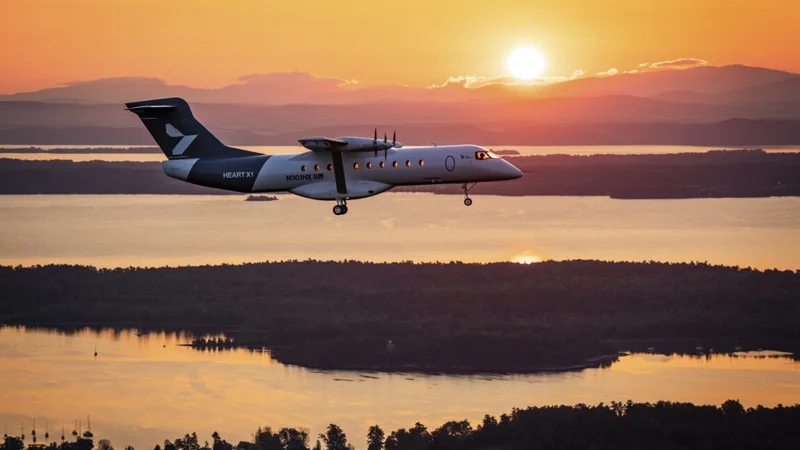
The first flight of the largest battery-electric aircraft to take to the skies lasted nearly half an hour while costing just $5 of electricity. That aviation feat comes at a time when jet fuel prices have skyrocketed because of the US war with Iran.
The test flight of Heart Aerospace’s X1 demonstrator aircraft took place at Plattsburgh International Airport in upstate New York on August 12. The X1 aircraft is comparable in size to a small regional airliner and can achieve a maximum takeoff weight exceeding 25,000 pounds with the help of four wing-mounted electric motors. The battery-electric propulsion system delivered more than one megawatt of power during the maiden flight.
All-electric aircraft can offer quieter and cleaner flight without the emissions that come from burning jet fuel. They may also prove more reliably cost-effective than conventional aircraft that come with jet fuel costs subject to geopolitical disruptions.
But the initial success of the X1 demonstrator does not mean Heart Aerospace is planning to commercialize an all-electric aircraft. Current battery-electric systems can only typically sustain short flights of about 100 to 200 miles, which is why they have been limited to air taxi operations by companies such as Joby and Archer.
Instead, testing of the X1 and a planned follow-on X2 aircraft will shape development of Heart Aerospace’s main offering to the airline industry—a 30-seat hybrid-electric regional airliner known as the ES-30.
That planned production aircraft for commercial flights would combine two inboard electric motors with commercial turboprop engines that run on jet fuel, enabling 125 miles of all-electric flight and 500 miles of flight range when operating in hybrid mode.
Looking to innovation as jet fuel prices rise
Having the extended 500-mile range would enable the ES-30 hybrid-electric airliner to operate in popular short-haul corridors that connect major US and European cities. United Airlines has committed to eventually purchasing 100 aircraft from Heart Aerospace, with other major airline customers also having signed letters of intent, according to Flying magazine.