Each week , Good Weekend’s how-to column shares expert advice on how to navigate some of modern life’s big – and small – challenges. This week: How to run a marathon.
Given that a marathon is 42.2 kilometres – the distance, approximately, from the MCG to Frankston, or from Sydney Town Hall to Waterfall – let’s, momentarily, put aside the central question of how to run a marathon to address a more pressing one: why do it in the first place?
“People do it for their own reasons,” says Gold Coast-based record-breaker Erchana Murray-Bartlett who, in 2022-23, ran 150 marathons in 150 days and is the subject of a new doco called 150. “Maybe to prove something to themselves or to support a charity.”
Full disclosure: I ran one some years back to get one over on a mate who’d made me sign up for the Melbourne Marathon with him, only to pull out a month into our training, citing some vague injury.
Related Article
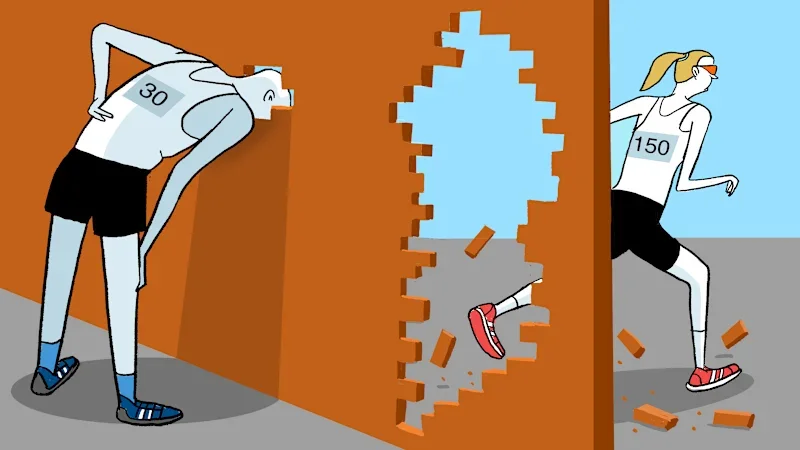
“Leaning on” your why, says Murray-Bartlett – even if it’s spite – can help get you through that part of the endeavour, at about the 30-kilometre mark, when, low on glycogen (stored glucose), you’re likely to “hit the wall”. This is when it feels like Luciano Pavarotti has climbed onto your back; worse, he won’t be getting off.
Of course, getting to the finish line requires getting to the start line. “About 95 per cent of the work needed to finish a marathon happens before the race,” says Murray-Bartlett. She recommends a minimum of 12 to 16 weeks’ training, which equates to a lot of early-morning runs and weekend treks when your loved ones are either in bed or at the pub.
Use a coach, she advises, or research a plan that incorporates running or running/walking every other day, with a longer run at the weekend. A beginner’s first week might total 12 kilometres or so. “It’s important to begin slowly so you don’t put yourself off or get injured,” she says. Weekly mileage should then increase to a peak of 50 to 60 kilometres by week 14 before tapering off to 35 kilometres in week 15 and then 13 kilometres the week before the event.
The biggest mistake, come race day, is going off too fast. “It’s easy to get carried away on adrenaline,” says Murray-Bartlett, but you must remember to drink water and take on enough fuel, such as carb gels and lollies.
Finishing a marathon won’t come without adversity, she warns, but if you can ride out the tough patches, the satisfaction of having accomplished a goal – even if it’s only to lord it over a mate in perpetuity – is very real. “The relief is immense,” she says, “and then you’re just overwhelmed with elation and pride.”
Read more from Good Weekend:
- Disputing a will? Get in quick, be realistic, and if you were a terrible kid, own it
- I thought Parkinson’s had taken my mum away. Then we began playing poker
- Hugo Weaving on overcoming a childhood diagnosis – and the secrets to a happy family
- He’s known as TV’s obnoxious loser. Now he’s taking on a classic Aussie romantic lead role
Continue this edition
The August 15 edition##### Up next
You should be judicious when following the actor/entrepreneur’s life advice – see jade eggs and bee-sting therapy – but she is clued up on culottes.
Previously
The singer-songwriter and Grinspoon frontman on his secret party trick, surviving as a muso and getting a hug from a stranger.