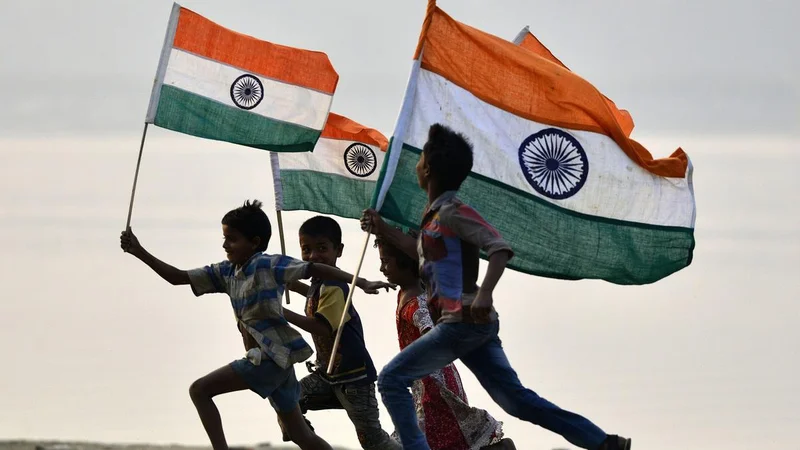
The nation has entered its 80th year of Independence. This is an occasion when all Indians, rising above their differences, will join together in paying homage to their freedom fighters, whose endless exertions and sacrifices delivered the people from the British colonial rule. This is when a subject nation rose to freedom to embark upon its ‘tryst with destiny’ and found its soul in the promised freedom and dignity of a people, long oppressed.
India has since traversed a long distance, navigating a turbulent course of history, managing religious, caste and regional conflicts as also economic disparities. India has suffered wars, terrorism, famines and pandemics. And, today it can justly pride itself in its scientific and technological accomplishments, its defence and nuclear capabilities, a robust economy and a leadership role in the shaping of a new world order.
The erosion of fraternity
But an objective audit of the nation’s trajectory as a democracy must contend with grave challenges to the aspiration for an inclusive and benevolent society. Without a partisan apportioning of blame or underplaying national achievements, India must consider whether its politics as practised in the decades gone by has secured fraternity amongst fellow citizens. The heightened disparities and communal discord have resulted in the othering of large sections of its people.
The pervasive arrogance of power at all levels defies the constitutional and moral constraints upon its exercise. Transgression of constitutionally demarcated jurisdictions by the co-equal branches of the Indian state and the strained Centre-State relations are ominous signals for the future of India’s federal polity. The pursuit of politics fixated on the acquisition of power at any cost, unconcerned with the means and ends, is a clear affront to the moral injunctions that undergird the founders’ vision of a just political order. Electoral outcomes influenced by money, muscle and a pliant bureaucracy suborn the autonomy of voters and interrogate the purity of the country’s electoral processes.
A political culture in which opponents are crushed into submission, conscientious dissenters are trolled to unbearable levels of humiliation, and their reputations maligned and families targeted, question the idea of politics as the highest form of public service that, as Thomas Mann famously reminded us, determines the destiny of man in our times. Clearly, substantive democracy is more than majoritarian triumphalism. It is about the vindication of justice, freedom and human dignity perched at the zenith of constitutional fundamentals.
The mixed performance of their roles by constitutional institutions has added to the nation’s democratic deficit. The Supreme Court of India’s role as custodian of individual freedoms and as sentinel on the qui vive has been increasingly scrutinised in recent times. Notwithstanding the richness of its profound pronouncements in Puttaswamy (2017), Romila Thapar (2018), Navtej Johar (2018) and the ‘Bulldozer’ justice case (2024) et al., some of its recent decisions, particularly in bail matters, and delays in its adjudicatory processes have been critiqued as abnegation of the judicial function.
In some instances, it has preferred a “formal or barren legalism” (against which, years ago, Chief Justice of India H.J. Kania had cautioned us), to justify long incarceration of the accused without trial. The Court appears to have failed to enforce its edicts and indifference to media trials that impinge on the fairness of the judicial process has dented its credibility. The functioning of the collegium system in the matter of appointment of judges has contributed to the diminished moral authority of the highest court.
Parliament, as the highest forum of India’s representative democracy, has long ceased to be an institution for informed deliberations about the country’s future. Floating political loyalties of elected representatives of the people mock its institutional sanctity. The Election Commission of India needs to rescue its battered reputation as the chief superintendent of the country’s electoral processes by dispelling widespread doubts about its functioning, even as it may rightfully claim credit for successfully conducting the world’s largest electoral exercises over the years. Exceptions apart, the credentials of the Indian media as guardians of public interest are suspect. Most journalists and television anchors now combine the role of presenter, prosecutor and judge in the service of their masters’ preferred agendas. That the pillars of Indian democracy have frayed over the years is an inescapable conclusion tested on the touchstone of practised politics and constitutional philosophy.
The worrying indifference of the citizenry
But the failure of India’s politics to promote substantive democracy does not rest with any one party, leader or an institution. The indifference of a vast section of the citizenry to the brazen aberrations of constitutional governance has contributed to a gradual hollowing out of an otherwise promising democracy, rendered hostage to visceral animosities and ideological bankruptcy. Hannah Arendt, the philosopher, reminded us of the “banality of evil”, implying the necessity of an enlightened citizenry to participate in the life of the nation in a dialectical relationship between politics and society. Amartya Sen’s idea of democracy premised on “participatory living and government by discussion” eludes us. Indeed, the popular response against routinised state violence and atrocities against the weak has not been loud enough to invite the necessary structural changes in the processes of governance. It is trite, therefore, that “the ballot box echos the living room”, leaving us Indians with the shell without the substance of democracy.
Because politics mirrors the state of society, and its values and failings, the task of national renewal must begin by looking inwards to apply the correctives. A social and political order that allows the brutalisation of a person in custody without meaningful recourse, which contents itself with illusory and wholly inadequate welfare schemes for crores of indigent persons and is not outraged enough at the unspeakable atrocities against children, youth, women and the marginalised, invites a decisive self indictment. We know that “when society rewards greed, politics becomes transactional. When it condones deception and lies, leaders tend to follow”.
Ennobling politics is not about manipulative conversations in which patriotism and truth are perceived as mutually exclusive. Politics that insists on a history made to order, negates the historical continuum and carries within the seeds of its rejection. Responsive democracy can thrive only in an inclusive society guided by a moral compass transcending the seductions of realpolitik. Elevating politics suffused with purpose presupposes a social milieu in which conscience prevails over power and where idealism is not dismissed as a utopian impossibility. The obvious needs reiteration, lest it is forgotten.
The choice before Indians
It is, therefore, for We, The People, to ensure that a larger political morality rooted in ethical fundamentals prevails over narrow identities in a renaissance of political culture that defers to justice, social, economic and political, as the ultimate command of the Constitution. Wisened by history and empowered by reason, it is for Indians, as inheritors of a free nation, to ensure that a democracy envisioned to enrich lives does not waste itself through acquiescence in injustice of any kind.
The debt of gratitude owed to India’s freedom fighters summons Indians at this transformative moment to make choices that will place them on the right side of history — on the side of freedom and justice for all.
In conclusion, this writer repeats what he had written when India turned 75. “It is time to conquer our fears, reclaim our freedom and anchor our politics in honour that values principle over power”. And as Frantz Fanon had reminded us, it is for each generation to “discover its mission, fulfil or betray it”. The outcome of the recent students’ protest at Jantar Mantar carries a hopeful message that democracy and dignity, despite the challenges, are secure in the idealism of the youth, inspired by a purifying sense of justice.
Ashwani Kumar is Senior Advocate, Supreme Court of India, an author and a former Union Minister for Law and Justice. The views expressed are personal
Published - August 15, 2026 12:16 am IST