Brazil · Business
Key Facts
—Dates and location. August 26–28, 2026, in Florianópolis, Santa Catarina.
—Expected attendance. More than 10,000 in-person participants and over 200 speakers.
—Organizers. Sebrae Startups, the entrepreneurship arm of Brazil’s micro and small business support service, together with the Santa Catarina technology association ACATE.
—Main themes. Artificial intelligence, SaaS, venture capital, deeptech, HealthTech, EnergyTech, and internationalization.
—Ticket access. Passes are sold through the official event website, with early-bird tiers typically released months in advance.
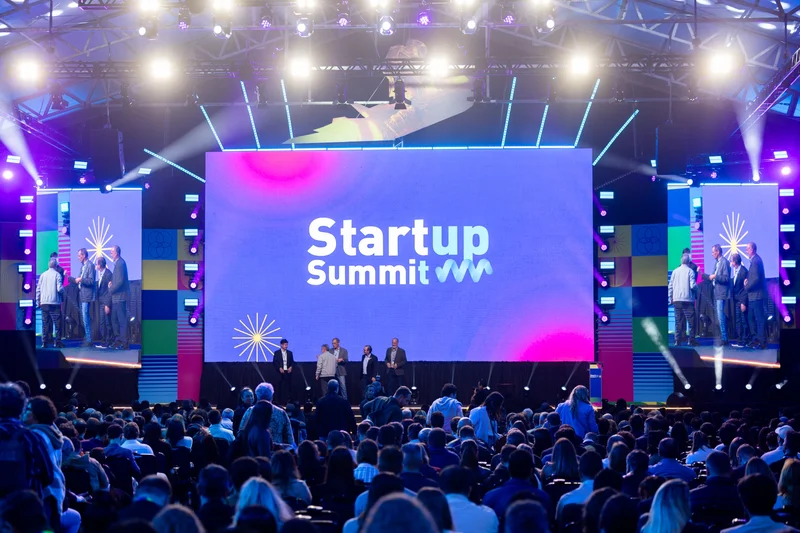
The Startup Summit 2026, Sebrae’s flagship gathering for startups, innovation, and entrepreneurship, will take place in Florianópolis from August 26 to 28, bringing more than 10,000 people to the southern Brazilian island city.
Startup Summit 2026 Returns to Brazil’s Tech Island. (Photo internet reproduction)
One-stop reference
Company Intelligence
Every listed company in Latin America — financials, ownership and structure for 1,450+ companies across 26 exchanges, in one place.
RTAsk Rio TimesCost of living, safety, visas in Brazil›
RT
Ask Rio Times
Straight answers about living in Brazil, from our reporting.
×
Cost of livingIs it safe?VisasNeighborhoods
What the Startup Summit Actually Is
The Startup Summit is a three-day conference built around practical programming for founders, investors, and corporate innovation teams. It is organized by Sebrae Startups — the entrepreneurship arm of the Brazilian Micro and Small Business Support Service — in partnership with ACATE, the technology association of Santa Catarina state.
Sebrae is a nationwide non-profit that has spent decades helping millions of small businesses get off the ground, and its startup division now runs some of the country’s most influential pitch competitions and training programs. ACATE, meanwhile, represents more than 1,600 tech companies clustered in and around Florianópolis, giving the event deep local roots.
The 2026 edition will feature more than 200 speakers across multiple stages. Confirmed names include Alexandre Messina from the AI platform Lovable, Google Brazil executive Rodrigo Akira, Neil Redding of Redding Futures, and Claudia Rosa, an investor known from the Brazilian edition of Shark Tank.
For foreign attendees, the speaker lineup signals that the event is not just a local affair: it deliberately mixes Brazilian operators who understand the domestic market with international voices who bring a global perspective on scaling technology companies.
Why Florianópolis Keeps Hosting the Startup Summit
Florianópolis, the capital of Santa Catarina, has quietly built one of Brazil’s densest technology ecosystems over the past two decades. The city now regularly tops national rankings for startups per capita and attracts a steady stream of remote workers and digital nomads.
Much of that momentum traces back to the 1990s, when local universities began feeding engineering and computer-science graduates into a nascent software industry. Over time, those small firms grew into mid-sized tech exporters, creating a flywheel of talent, mentorship, and angel capital that is rare in Latin America.
ACATE, the local tech association, runs a network of innovation hubs that house hundreds of early-stage companies. The state government has also invested in connectivity, university partnerships, and tax incentives that make the island a natural landing pad for tech events.
For expats and investors scouting Latin American opportunities, the city offers a compelling mix: a beachside lifestyle that helps companies recruit talent from across Brazil, combined with a business environment that is more predictable than in the country’s larger megacities.
The Agenda: AI, Money, and Going Global
The 2026 program is organized around themes that reflect what Brazilian startups are actually wrestling with right now. Artificial intelligence leads the agenda, with dedicated tracks on how founders can move beyond experimentation and into revenue.
Venture capital and M\&A sessions will cover fundraising in a more selective market. After the easy-money era of 2020–2021, Latin American founders now face investors who demand clear paths to profitability, and the summit’s programming is designed to help them meet that bar.
Other tracks include SaaS business models, deeptech and new technologies, marketing and sales for startups, and a growing internationalization track aimed at companies ready to export software or services. HealthTech, EnergyTech, and RetailTech also get dedicated space, reflecting sectors where Brazilian startups have recently gained traction.
For an English-speaking attendee, the internationalization track is likely the most accessible entry point. It typically features founders who have already opened offices in the United States or Europe, sharing hard-won lessons about cultural differences, legal structures, and hiring across borders.
Practical Notes for Foreigners Attending
Florianópolis is served by Hercílio Luz International Airport (FLN), with direct flights from São Paulo, Rio de Janeiro, Buenos Aires, and Santiago. August is late winter in southern Brazil, so daytime temperatures hover around 18–22°C (64–72°F) and evenings can be cool.
Most programming will be in Portuguese, but main-stage keynotes and international panels typically offer simultaneous interpretation. The event venue is centrally located, with hotels and short-term rentals available across the island and on the mainland side of the bay.
Visitors should plan to arrive a day early if they want to explore the island’s famous beaches and seafood restaurants, though the summit schedule itself is dense. Ride-hailing apps work reliably, and many restaurants in the tourist-heavy north of the island have English menus.
What the Summit Means for Expats and Investors
For foreigners living in Brazil or considering a move, the Startup Summit offers a concentrated look at where the country’s tech economy is heading. It is a rare chance to meet hundreds of founders, government innovation officers, and venture capitalists in a single venue over just three days.
Investors who have historically focused on São Paulo may find that Florianópolis presents a different risk profile. Companies emerging from the island’s ecosystem often bootstrap longer and raise smaller rounds, which can translate into more disciplined capital management and lower-burn growth models.
The event also serves as a barometer for Brazil’s regulatory mood. Sebrae works closely with federal and state governments, so policy announcements — such as new visa pathways for digital nomads or tax breaks for tech exports — sometimes surface during the summit’s opening sessions.
For anyone building a Latin America portfolio, attending in person signals commitment to the region. Brazilian founders still place high value on face-to-face relationships, and showing up in Florianópolis can open doors that cold emails simply cannot.
What Happens Next
Early-bird ticket tiers typically sell out within weeks of being announced, so prospective attendees should monitor the official event website closely. Sebrae usually releases the full stage-by-stage agenda about 60 days before the opening, which helps visitors decide which days are most relevant.
After the summit concludes, Sebrae and ACATE generally publish a public report summarizing attendance figures, investment commitments made on the sidelines, and key policy takeaways. Those reports often influence the themes of the following year’s event, creating a feedback loop that keeps the programming tightly aligned with market realities.
For readers who cannot attend in person, selected keynotes and panels are usually streamed or posted on Sebrae’s YouTube channel in the weeks following the event. While the live networking is irreplaceable, the digital content still offers a useful window into Brazil’s fast-evolving startup landscape.
Frequently Asked Questions
Do I need to speak Portuguese to attend the Startup Summit?
The core language of the event is Portuguese, but international keynotes and select panels provide English interpretation. Many speakers and attendees also speak English, especially in investor-track sessions, and the internationalization track is deliberately designed to be accessible to non-Portuguese speakers.
How do I get from São Paulo to Florianópolis?
Direct flights from São Paulo’s Congonhas (CGH) and Guarulhos (GRU) airports take roughly 70 minutes. Several airlines operate the route multiple times per day, with round-trip fares typically ranging from R$600 to R$1,200 (US$119 to US$238).
Is Florianópolis safe for foreign visitors?
Florianópolis consistently records one of the lowest violent-crime rates among Brazilian state capitals. Standard precautions apply, especially with phones and laptops in crowded event spaces, but the city is widely considered welcoming and walkable, and many expats choose to live there year-round precisely because of its reputation for safety.