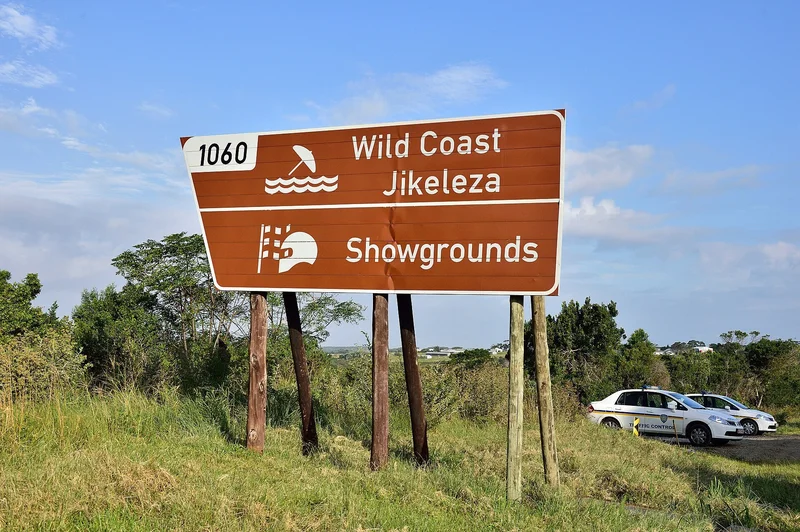
Constitutional Court Blocks Shell’s Wild Coast Offshore Exploration Plan
South Africa · ENERGY
What the Constitutional Court decided
On 14 August 2026, Reuters reported that the Constitutional Court ruled Shell’s offshore exploration cannot proceed, overturning a Supreme Court of Appeal decision that had kept the exploration right alive pending a renewal process. The ruling effectively restores the Makhanda High Court’s September 2022 outcome, which set aside exploration right 12/3/252 as unlawful.
The right was first granted in April/May 2014 to Impact Africa Limited and later exercised by Shell Exploration and Production South Africa BV and BG International Limited after Shell acquired a participating interest. The courts accepted that the public participation process was deficient, with Reuters reporting that the Constitutional Court emphasised consultation is not a box-ticking exercise but must respect community dignity and participation rights.
The case also turned on whether officials had properly weighed marine ecology, livelihoods, customary fishing rights, heritage and spiritual interests, and climate change before granting and renewing the right. The planned seismic survey area covered about 6,011 square kilometres off the Eastern Cape coast, between Port St Johns and Morgan Bay.
The money and power stakes behind Shell Wild Coast exploration
Shell and Impact Africa had spent about US$68 million on the project, according to Reuters and other reports. The company announced in October 2021 that it would begin seismic surveys off the Wild Coast from 1 December 2021, prompting urgent court action by communities and environmental groups.
The planned 3D seismic survey would have blasted the seabed with low-frequency airgun noise, which opponents argued would harm whales and other sound-sensitive marine species. Shell’s own South Africa page said it was using extensive mitigation measures, including marine monitoring and 800-metre exclusion zones, but the company still awaited court approval and ultimately lost the case.
The Wild Coast is described as a roughly 250-kilometre stretch of shoreline with significant customary fishing, cultural and spiritual importance for local communities. The Makhanda High Court stopped the survey on an interim basis in December 2021, then set aside the exploration right in September 2022 as unlawful because affected communities had not been properly notified or consulted.
A legal fight that reshaped South Africa’s energy debate
The dispute began in earnest when Shell announced its 2021 survey plans, and the Makhanda High Court intervened within weeks. On 3 June 2024, the Supreme Court of Appeal agreed the right had been granted unlawfully but suspended the setting aside and allowed a further renewal process, which gave Shell a legal lifeline.
On 27 August 2024, the Constitutional Court dismissed Shell and Impact Africa’s cross-appeals against the unlawfulness findings. The remaining issue was whether the Supreme Court of Appeal was correct to keep the right alive pending renewal, and the Constitutional Court has now resolved that question against Shell.
Reuters noted the case is one of several offshore disputes that have dampened investor appetite in South Africa’s upstream sector. The ruling raises the cost and uncertainty of frontier exploration in the country, reinforcing the idea that social licence and legal process are now as important as geology.
Who gains and who loses from the Wild Coast ruling
Coastal communities and environmental groups that fought the seismic survey have won a decisive legal victory, with courts accepting their arguments about livelihoods, cultural rights and marine ecology. Shell and Impact Africa lose their exploration right and the roughly US$68 million spent on the project.
South Africa’s energy-policy establishment also suffers a setback, having argued for more exploration amid chronic electricity shortages and import dependence. The state has been under pressure to attract exploration investment, but this ruling signals that constitutional process and community consent now carry more weight in court.
The judgment matters regionally because Shell is still interested in other southern African exploration opportunities, including the Orange Basin on South Africa’s west coast. Namibia’s offshore oil discoveries are reshaping regional energy geopolitics just across the maritime border, and this ruling could influence how investors approach frontier exploration across the region.
The great-power and South-South angle
This case sits inside a larger contest between global oil majors, African states seeking resource-led growth, and civil society and climate actors using courts to constrain fossil-fuel expansion. It shows how African resource politics is now being shaped by courts, not just ministries and companies, with downstream effects for investment and coastal livelihoods.
The ruling also highlights the tension between energy security and environmental governance in a country that has struggled with electricity shortages. South Africa’s top court has prioritised constitutional process, community consent and environmental review over an offshore hydrocarbons push that the state and Shell framed as part of an energy-security strategy.
For readers following the broader scramble for African resources, this outcome reinforces a pattern: legal and social licence requirements are becoming as decisive as geological potential. The story connects directly to the wider competition covered in Africa: The New Scramble.
What to watch next for Shell Wild Coast exploration
Shell has not announced whether it will pursue any further legal options after the Constitutional Court ruling. The company’s interest in the Orange Basin on South Africa’s west coast remains a separate question, and investors will watch whether the Wild Coast outcome changes its approach there.
The ruling may also embolden communities and environmental groups in other offshore disputes across southern Africa. Namibia’s offshore oil discoveries continue to attract attention, but this case shows that courts can halt projects even after significant spending and years of legal proceedings.
The next test will be whether South Africa’s government adjusts its exploration policies or appeals for legislative changes to speed up approvals. For now, the Constitutional Court has made clear that community consultation and environmental review cannot be skipped in the pursuit of energy security.
Frequently Asked Questions
What did South Africa’s Constitutional Court rule on Shell’s Wild Coast exploration?
The Constitutional Court ruled on 14 August 2026 that Shell’s offshore exploration cannot proceed, overturning a Supreme Court of Appeal decision that had kept the exploration right alive.
How much had Shell and Impact Africa spent on the Wild Coast project?
Shell and Impact Africa had spent about US$68 million on the project, according to Reuters and other reports.
Why did the courts set aside the exploration right?
The courts found that affected communities had not been properly notified or consulted, and that decision-makers failed to consider impacts on livelihoods, cultural and spiritual rights, climate change, and coastal governance rules.
Sources
This article was produced by The Rio Times’ automated newsroom system. How we use AI · Report an error
LatAm Markets: Live Signals → — real-time movers, turnover leaders and FX across Latin America.