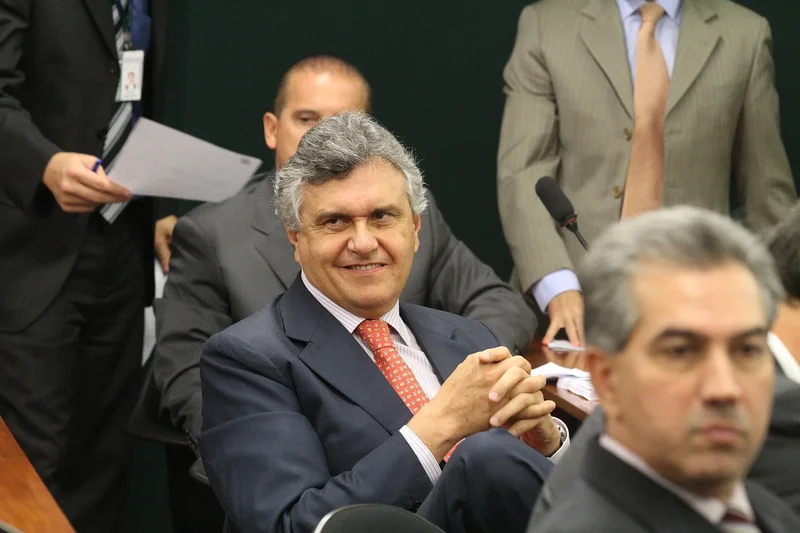
Caiado Declares US$10 Million Fortune as He Registers 2026 Presidential Bid
Brazil · Politics
The former Goiás governor’s declared wealth more than doubled since 2022, even as he vows a constitutional ban on reelection.
Ronaldo Caiado, the former governor of Goiás, has made his 2026 presidential bid official. He registered his candidacy with Brazil’s top electoral court on 14 August.
Declaring a fortune of about R$52.5 million, or roughly US$10.1 million. That figure is more than double what he reported four years earlier.
What Caiado filed with the electoral court
On 14 August 2026, Caiado formally registered his presidential ticket with the Superior Electoral Court, known as the TSE. He filed a day before the 15 August deadline for candidates.
The registration is the legal step that turns a campaign into an official candidacy. Once filed, it also puts a candidate’s declared wealth and government plan on the public record.
A fortune that more than doubled
In his filing, Caiado declared assets of about R$52.5 million. Some outlets put the precise figure at R$52.56 million, which converts to roughly US$10.1 million at about R$5.22 to the dollar.
That is a sharp jump from 2022. Back then he declared R$24.87 million when he ran for reelection as governor.
As a result, the rise works out to around 111% over four years.
The party switch behind the run
Caiado is not running under the banner that carried him for years. He left União Brasil and joined the PSD, the Social Democratic Party, early in the election year.
Meanwhile, the PSD confirmed his candidacy at a convention in São Paulo on 26 July. Party leader Gilberto Kassab was named as his running mate on the same ticket.
A pledge to end reelection
The centerpiece of his platform is striking for a sitting politician. Caiado proposes to abolish consecutive reelection, the pledge Brazilians call fim da reeleição.
He would send a constitutional amendment to Congress at the start of his term. Moreover, the change would cover all executive posts, meaning the president, governors and mayors alike.
Why the rule would bind Caiado too
The proposal is unusual because it would apply immediately. The new rule would take effect for the term starting in 2027, not some distant future date.
As a result, Caiado himself would be blocked from running again in 2030 if he wins. He frames that as proof the pledge is not just talk.
The rest of the platform
Beyond reelection, his plan leans on fiscal discipline and political reform. A proposal he calls the Truthful Budget would review subsidies, tax breaks and mandatory spending.
He also wants to lift the investment rate from about 17% to 25% of GDP. In addition, he backs a mixed-member district system for electing lawmakers.
A hard line on crime
Security sits high on his agenda, in line with his record in Goiás. He proposes a dedicated Ministry of Public Security to coordinate the fight against organized crime.
For instance, his plan would treat gangs such as the PCC and Comando Vermelho as domestic terrorism in some cases. It also calls for lowering the age of criminal responsibility to 16 for serious crimes.
Where this fits in the 2026 race
This is Caiado’s second attempt at the presidency, and it lands in a crowded field. Brazil’s right remains split among several governors chasing the same anti-Lula vote.
To run, he stepped down as governor of Goiás earlier in the year. His wealth declaration and tough platform now give rivals and voters plenty to weigh.
Frequently Asked Questions
When did Caiado register his 2026 presidential candidacy?
He filed with the TSE on 14 August 2026, one day before the registration deadline of 15 August.
How much is Caiado worth?
He declared about R$52.5 million in assets, roughly US$10.1 million, up close to 111% from R$24.87 million in 2022.
Which party is Caiado running for?
He runs for the PSD after leaving União Brasil, with party leader Gilberto Kassab as his running mate.
What is his pledge on reelection?
He proposes a constitutional amendment ending consecutive reelection for all executive offices, applying from the 2027 term onward.
This article was produced by The Rio Times’ automated newsroom system. How we use AI · Report an error