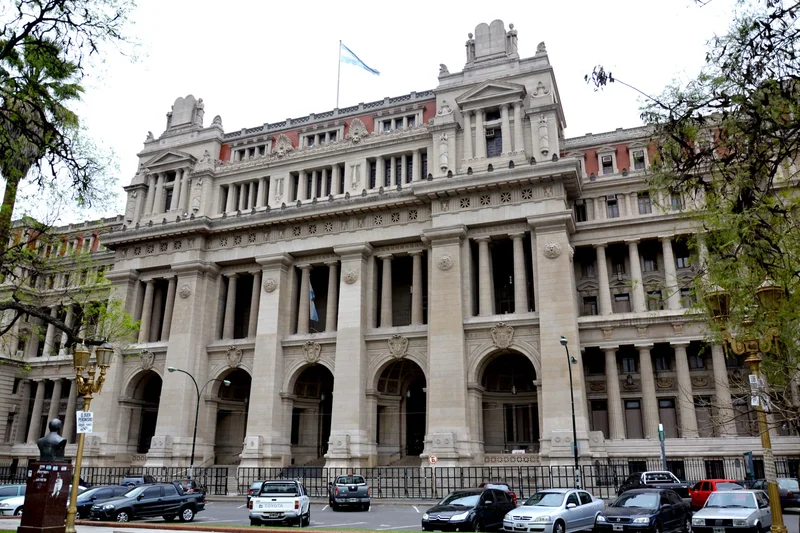
Argentina’s Top Court Curbs Milei’s Power to Rule by Decree
Argentina · Politics
Key Facts
- The ruling:Argentina’s Supreme Court set clear limits on how a president can use emergency decrees.
- Date:The three justices ruled unanimously on August 14, 2026.
- The case:It struck down part of a 2019 decree from ex-president Mauricio Macri, in a fine dispute with retailer Cencosud.
- Core finding:A president cannot use a decree to change matters the Constitution reserves for Congress.
- Milei link:President Javier Milei has signed more than 80 emergency decrees since December 2023.
- The fine:The case began with a penalty of ARS 700,000 (about US$470) against Cencosud in 2023.
- Meanwhile:Milei’s central bank overhaul heads for a floor vote in Congress on August 19.
The court never mentioned Milei by name. It still handed every judge in Argentina a sharper tool for telling a decree-happy president no.
Argentina’s top court has drawn a line around one of the president’s favorite tools. On Thursday, it ruled that a president cannot use an emergency decree to rewrite things only Congress is allowed to decide.
What the court actually said
The Supreme Court’s three justices agreed on one core point. A president can issue an emergency decree only in truly exceptional moments.
That means times when Congress cannot meet, or when a problem is so urgent it cannot wait for normal lawmaking. Convenience does not count.
The justices were blunt about the decree in front of them. They found “not a single line” explaining why an emergency existed.
So the court declared that piece of the decree unconstitutional. The president, it said, cannot replace Congress just because a decree is faster.
The case that started it
This fight did not begin with Milei at all. It started with the retailer Cencosud and a small pricing penalty.
Back in 2023, regulators fined the company ARS 700,000 (about US$470) for price discrepancies in its stores. Cencosud challenged the fine in court.
The problem was a 2019 decree signed by then-president Mauricio Macri. It had quietly changed which court hears these appeals.
Deciding which court has jurisdiction is a job the Constitution gives to Congress. The justices ruled that a decree cannot take that job away.
Why this matters for Milei
The ruling targeted just one article of one old decree. Its reach, though, is much wider than that.
Milei governs Argentina largely by decree. He has signed more than 80 of these emergency measures since taking office in December 2023.
Now lower-court judges have a clear Supreme Court precedent to lean on. When they doubt a decree, they can point straight to this decision.
That does not erase any of Milei’s decrees overnight. But it makes each one easier to challenge, and harder to defend.
The central bank fight running alongside
The timing stings for the government. Milei is pushing a major overhaul of the central bank through Congress right now.
The bill would ban the bank from financing the Treasury, the provinces, or city governments. It would also make currency stability the bank’s single job.
A floor vote in the Chamber of Deputies is targeted for August 19. The government is still hunting for the votes it needs.
Talks with provincial governors and bloc leaders are ongoing. Milei has signaled he will accept some changes to get the bill over the line.
Why you should care
If you live in Latin America or invest here, this is about more than one court case. It is about whether the rules hold when a leader is in a hurry.
Strong courts that can check a president make a country more predictable. That predictability is what long-term investors and ordinary savers quietly rely on.
It also shapes how durable Milei’s reforms will be. Changes forced through by decree can be undone; laws passed by Congress tend to last.
Frequently Asked Questions
What did Argentina’s Supreme Court decide about emergency decrees?
The court ruled that a president can only use an emergency decree in truly exceptional situations. A president cannot use one to change matters the Constitution reserves for Congress, such as which court hears a case.
Does the ruling cancel any of Milei’s decrees?
No. The decision struck down one article of a 2019 decree signed by Mauricio Macri. But it sets a precedent that makes Milei’s many decrees easier to challenge in court.
What is a DNU?
DNU stands for Decreto de Necesidad y Urgencia, or emergency decree. It lets a president make rules that act like laws without waiting for Congress, and it is only meant for genuine emergencies.
What happens next with Milei’s reforms?
His central bank overhaul is heading for a vote in Congress, targeted for August 19. The ruling is a reminder that reforms passed as laws are far harder to reverse than ones imposed by decree.
Sources: Buenos Aires Herald; La Nación; Infobae; Ámbito; El Destape.
This article was produced by The Rio Times’ automated newsroom system. How we use AI · Report an error