I used to be an avid consumer of daily news. I woke up to it and went to sleep with it. For hours each day, I consumed whatever intellectual fare the cable networks had prepared: breaking news, exclusive interviews, heated debates, political panels, and an endless parade of pundits. I watched them all with the reassuring conviction that I was becoming better informed. To some extent, perhaps I was.
I would not suggest that the world of yesterday was some idyllic El Dorado in which everyone agreed and lived happily ever after. It was not. Yet compared with today’s deeply polarized and perpetually agitated environment, it can sometimes appear almost tranquil by comparison.
There was a time when America seemed to embody Ronald Reagan’s vision of a “shining city upon a hill”, a nation that, despite its flaws, aspired to be a beacon of optimism, liberty, and opportunity. Many news organizations also appeared to retain a stronger sense of public responsibility. Today, that image has become considerably more complicated.
To many observers, Uncle Sam appears less like a benevolent guardian of the international order and more like a global hegemon, pursuing strategic interests and waging wars whose human costs are often borne by innocent civilians, including children.
| | |
|---|
Last year, I made a deliberate decision: I canceled our cable television subscription. Our children are grown and have long since outgrown Disney Channel and Nickelodeon. But that was only the superficial explanation. The deeper reason was that I had grown weary of paying for what increasingly felt like a poisoned intellectual diet; one that left me agitated, cynical, and emotionally exhausted.
When I realized that my consumption of the news was beginning to interfere with my peace of mind, I decided it was time to walk away. We often speak of “the news” as though it were a public utility. It is not. News is a business, and every business has incentives.
Larry Ellison is not providing more than $40 billion in personal guarantees to facilitate his son David’s acquisition of Warner Bros as a patriotic gesture. Elon Musk did not spend tens of billions acquiring Twitter as an act of philanthropy. Whatever else may be said about them, both men understand a fundamental principle of power: whoever controls the narrative possesses enormous influence.
This is also why media organizations compete so aggressively for ratings. Ratings generate advertising revenue, and advertising revenue sustains the enterprise. The product being sold by much of the modern news industry is therefore not merely information. It is your attention. Your eyes. Your emotions. Your time.
The longer a network keeps you watching, the more advertising it can sell. Truth matters, accuracy matters, and journalism matters. But within a commercial system, truth is not always the dominant economic incentive. Attention is and attention is most easily captured by emotion.
Fear generates more engagement than hope, and it is not surprising that cable news networks traffic in fear. Outrage generates more clicks than calm. Conflict generates more viewers than consensus. Panic generates more advertising revenue than perspective. This does not require a grand conspiracy. It is simply how incentives work.
Imagine owning a restaurant where customers paid according to how long they stayed inside. You would quickly discover that food designed to be irresistible would be more profitable than food designed merely to nourish.
The news industry has learned a similar lesson.
Every morning, editors and producers compete for the same scarce commodity: our attention. Sophisticated analytics tell them which headlines keep audiences watching, clicking, sharing, and arguing. Stories that frighten or anger us often outperform stories that educate us.
Anger travels faster than nuance.
Social media has accelerated this transformation. Platforms such as Facebook, X, TikTok, and YouTube are built around engagement. Traditional media organizations have adapted accordingly. Stories are packaged for virality. Headlines are crafted to provoke. Every controversy becomes “breaking news.” The result is a population increasingly conditioned to react rather than think.
This matters because information is power. Information shapes public opinion. Public opinion influences elections. Elections shape laws. Laws shape markets. Narratives influence every link in that chain. And the beat goes on.
I am not suggesting that billionaires dictate every headline from behind the scenes. Reality is subtler. Editorial priorities emerge from the interaction of institutional culture, commercial incentives, audience expectations, and ownership interests. Yet the outcome can sometimes look remarkably similar.
Some stories receive relentless coverage. Others receive little attention. Some disappear altogether.
Perhaps most revealing is that many of the wealthiest and most influential people do not consume news the way ordinary citizens do. Executives, investors, policymakers, and serious business leaders often rely on primary documents, research reports, earnings calls, government data, specialized publications, and historical analysis.
They read source material and study trends. They seek information that helps them make decisions. Meanwhile, millions of ordinary people spend hours watching pundits interpret events for them.
An investor studying economic indicators has an advantage over someone spending every evening watching political personalities quarrel. An entrepreneur studying industry trends is better positioned than someone endlessly refreshing breaking-news alerts.
Since disconnecting from cable news, I have not become less informed. In many respects, I have become better informed. I read more books, consult more primary sources, and compare competing perspectives before reaching conclusions. Most importantly, I have reclaimed something more valuable than information. I have reclaimed my peace of mind.
Attention may be the most precious resource of the 21st century. Whoever controls it exercises extraordinary influence over what we think about, what we fear, whom we trust, and ultimately how we live. That is why we must guard it.
The person who allows strangers to determine what occupies his mind every morning has surrendered a measure of his freedom before the day has even begun. Too often, ordinary people are encouraged to consume outrage while those who wield power consume information. One reacts while the other decides.
We can continue renting our minds to an industry whose profitability depends on keeping us anxious, angry, and perpetually engaged. Or we can take possession of our attention again.
Thankfully, the choice remains ours.
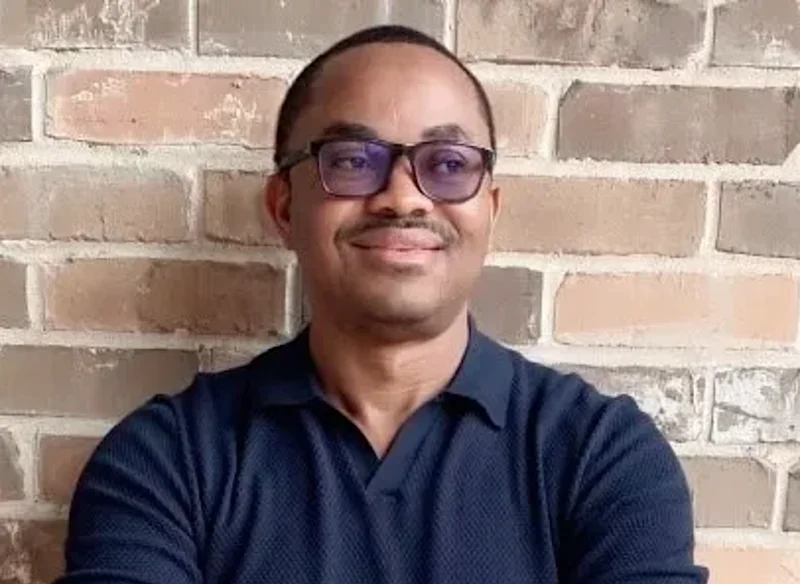
Osmund Agbo is a medical doctor, author, and the 2026 recipient of the Thabo Mbeki Prize for Scholarship and Public Service.