Whereas our people are hesitant to admit good fortune, those of us on this side have learnt to trace where the ball bounces and detect where the benefit is going as a result of reforms. The inflow of funds and the stratospheric performance of capital markets could also be traced directly to reforms in the foreign exchange market. One key player, Mr Femi Otedola, believes that the naira may rally to ₦1,000 for one dollar by December. This prediction must be taken seriously.
I was in front of about 20 Executive MBA students recently giving a talk, and when we discussed how the economy was doing, they seemed to unanimously believe that the Nigerian economy was worse off. But by the end, I had shown the whole class that their initial belief was exaggerated and came from an innate psychological bias. I did a quick diagnostic of people in the room, split them into those who earned salaries and those who ran some business or the other. Of those who earned salaries, I asked who among them hasn’t had their salaries doubled in the past three years. Some 70 per cent of those in this category admitted immediately to having had their salaries doubled, maybe tripled in the past three years. Mind you, our people don’t readily admit to things like this.
Among those who ran businesses, I asked what businesses they did specifically, one by one, as much as time permitted. By then the opinion in the room had split and some readily told me how they just were of a different political persuasion. I admitted to them that I could never fully convince them to my side immediately, but I was glad I made a point and had sowed seeds altering some of their perspectives. One gentleman who was quite outspoken stated that he was into the real estate sector in Abuja. I asked where his estate developments were and we discussed for a bit about why he was unable to sell. Our conclusion was that perhaps he was too invested in the luxury segment of the market where the big money is. And on and on.
I think that those who are on the side of the current administration should not be afraid of taking on contrary opinions, but we must be armed with the facts. What most people need are mere explanations and logical odysseys that carefully unpack the issues and reveal the underlying psychological phenomena at play in Nigeria today. We may not win the noisy war, the “ariwo oja” as Yorubas say, but we also cannot keep quiet and allow people to revel in ignorance – a scenario that profits a desperate opposition.
| | |
|---|
Luckily there are examples everywhere and explanations from different jurisdictions, about what is going on in Nigeria. Our country seems to be a victim of a phenomenon known as ‘vibecession’ (a blend of “vibe” and “recession”). This term was coined by economic commentator, Kyla Scanlon, and it describes when public sentiment and chatter are deeply pessimistic about the economy — driven by media repetition, social contagion, and general anxiety — even when data or personal bank accounts show stability or growth. Nigeria being a country heavy on social media chatter must be very careful about this. The key concepts to note around ‘vibecession’ include:
- Social Contagion:whereby people echo negative economic news because hearing it constantly makes doom-mongering the default social script.
- Loss Aversion:whereby people fixate heavily on high prices or negative headlines while ignoring personal progress.
- Negativity Bias:the human tendency to notice, remember, and give more weight to negative experiences and information, than to positive ones of the same size.
- Media Framing:how news outlets and communication platforms choose, emphasise, and organise specific details of a story to influence how the public understands it
- Negative Solidarity:people bond over shared misery or declining standards, feeling that if others must suffer or face hardship, venting about it together preserves an emotional sense of fairness and community
- The Sentiment-Reality Gap:describes the stark divide between hard data showing economic improvement and the persistent, collective social mood that things remain grim.
And in many instances, it is just plain, old politics. People in this group are benefiting from this economy, making good returns, but they believe that they must get the government out maybe because they dislike the person at the helm for now. They also point to similar politics being played in the past. To these people, all is fair in love and war, even if choosing someone else may end up reversing their good fortunes. In this category are folks who function only from the prism of tribalism and/or religion. Whereas they are entitled to their opinions, still some of us must coldly and calmly explain to the larger population what exactly is going on.
…the ball bounced even further. As a corollary to this meteoric rise in stock market capitalisation, attention has been drawn to the increased importance of domestic capital in Nigeria. A good portion of the ₦130 trillion addition to our stock market capitalisation (between 82 per cent to 88 per cent) is benefited by local investors, who have dominated the market. Recent banking and insurance industry recapitalisation has seen ₦4.6 trillion and ₦300 billion raised, mostly through local investors, and this time around, there hasn’t been any issues of major distress unlike past experiences.
So, dear friends, let us look at how the ball has bounced per some of the policies:
- NELFUND:This is a sub-reform in the educational sector but is quite illustrative for this purpose. As at a week ago, NELFUND had disbursed the sum of ₦303 billion to 1.64 million students in Nigeria’s tertiary institutions. About 300 higher institutions are involved in this scheme. Now, whereas these are loans to students, let us look at where the ball has bounced: the ₦303 billion was paid mostly to the universities and polytechnics, with a small allowance or stipend paid as grants to students. This is ₦303 billion that parents of these students would have had to cough out. So, this is a great relief to the parents and the students will only worry about paying back years after they start work. How can some rabid opposition members say nothing has touched the people and that Tinubu’s policies only bring suffering? Certainly not. But we can see the bouncing of the ball further than the parents of university students. The universities and polytechnics themselves are awash with cash. Many of them no longer struggle as they used to, because school fees are paid regularly. Staff salaries are paid on time. Contractors and counterparties are well settled too. No wonder we no longer hear about strikes. University communities will also thrive as a result of this intervention. Indigent students in hostels are able to pay part of their rents, meaning that landlords around the universities are thriving. Let us say the last bounce of the ball is with those who provide food and socials around the universities. Some 1.64 million students earning ₦20,000 stipends monthly is ₦32.8 billion released to the entrepreneurs that the students need to buy from on a monthly basis – caterers, landlords, sellers of clothing, even bitter kola sellers for those who need it to read.
- STOCK MARKET:This development is also phenomenal. The stock market capitalisation in Nigeria has increased from a mere ₦40 trillion to ₦160 trillion since the ascension of President Bola Ahmed Tinubu. Now, let’s look at how that ball has bounced since then, for the purpose of those who say it is a mere elitist trip. The increased capitalisation of circa ₦120 trillion since 29 May, 2023 has been the result of new listings, as well as positive trading in that market. This means that companies have been capacitated when they list afresh, raising money to be able to fund their operations, and pay increased salaries to their staff. If we look at the companies listed on the exchange in Nigeria, across sectors, they employ millions of Nigerians – and even foreigners. Their abilities to pay constantly and even increase salaries has been a positive development for the Nigerian economy. Even the trading that happens in the secondary market, which does not put cash directly in the coffers of the listed companies, has advantages for Nigerians. Commissions made in share trading go to stockbroking firms and keeps them afloat, supporting their staff and the families of their staff. These companies – listed companies and stockbroking firms – pay taxes to government and this comes back full circle to fund infrastructure and provide those things society now takes for granted. This is no mean feat. The stock market supports millions of families across Nigeria, given the kinds of companies listed thereon, from banks to oil companies, to insurance companies, manufacturers, assemblers, pharmaceutical companies, and so on. The fact that that market has grown in leaps and bounds over three years also gives the companies positive vibes, a good perception with the investing public, and enables the success of many projects that those companies embark upon. The sum of ₦120 trillion is no chicken feed. We need to slow down on these negativities and lies about our economy. A whole lot is happening. And what is more? There are seven exchanges in Nigeria, not one. A few others, like the Lagos Futures Exchange, FMDQ, and NASD are doing well, even if at slightly lower velocities. The entire value chain includes stockbrokers, settlement companies, trustees, banks, regulators and so on. This is massive.
But the ball bounced even further. As a corollary to this meteoric rise in stock market capitalisation, attention has been drawn to the increased importance of domestic capital in Nigeria. A good portion of the ₦130 trillion addition to our stock market capitalisation (between 82 per cent to 88 per cent) is benefited by local investors, who have dominated the market. Recent banking and insurance industry recapitalisation has seen ₦4.6 trillion and ₦300 billion raised, mostly through local investors, and this time around, there hasn’t been any issues of major distress unlike past experiences. Also, Dangote Refinery raised $2.5 billion (about ₦3.5 trillion) in its recent Private Placement, most of which was local. This can only mean that domestic investors are inflowing capital from abroad in a rare reversal of behaviour. This whole development also means that millions of Nigerians are thriving through primary, secondary and tertiary effects of these flows.
Whereas our people are hesitant to admit good fortune, those of us on this side have learnt to trace where the ball bounces and detect where the benefit is going as a result of reforms. The inflow of funds and the stratospheric performance of capital markets could also be traced directly to reforms in the foreign exchange market. One key player, Mr Femi Otedola, believes that the naira may rally to ₦1,000 for one dollar by December. This prediction must be taken seriously.
- INCREASED FUNDS TO STATE AND LOCAL GOVERNMENTS:First of all, almost every governor in Nigeria has boasted that he hasn’t borrowed a dime since 2023! Now, that’s something. But this would not have been possible but for the fact that all of the executives are now having thrice what they were getting pre-2023. It’s their good fortune and no one should begrudge our darling governors. When I checked the indices in 2025, only Enugu, Lagos, Niger, and Rivers State borrowed as at 2024. Even Lagos State did not borrow for two years out of three! Something has shifted in our country’s finances, perhaps permanently, and this new vista is tough to decode for many opposition members who just cannot imagine a new reality. This is also due largely to the ending of wasteful subsidies, a keener revenue drive, and naira rate unification. I was at the Delta State Investment Summit, where Governor Oborevwori (Ukodo) swore never to borrow a dime from anyone or anywhere till his eight years are over, even though Governor Soludo (who has also not borrowed from anywhere in more than three years) cautioned that he may be open to borrowing somewhere down the road.
Apparently, the Nigerian economy is on the upswing, and a vast number of people are taking advantage either as workers, investors, speculators, contractors, pioneers, innovators, and so on along the value chain. Fortuitously as I rounded up this article, Mr President himself spoke up around the issues of poverty in the land, insisting that Nigerians should stop taking undue advantage of each other around the CNG issue, and showing great conviction around the fact that the reforms have not unduly impoverished the people but rather lifted millions.
Over ₦20 trillion has been distributed to states and local governments through the FAAC since 29 May, 2023, alongside another ₦2.9 trillion in intervention funds. A lucky state like Akwa Ibom has been able to spend over ₦4 trillion from its FAAC collections and internally generated revenue. This is remarkable! I don’t believe that all the monies going to the states do not reach the grassroots, even though most Governors are focused, quite rightly, on hard infrastructure. The problem could, however, be that their refusal to borrow has resulted in them financing long-term infrastructure with monthly revenue, which creates a treasury mismatch. Unless the people can get involved, somehow, in the infrastructural developments in their states by supplying sand, chippings, manual labour, artisanal skills, and whatever is required for construction, we may end up squeezing poor folks to a corner of the economy, while many people thrive. This means that Governors should ensure they localise the contracts they give, as much as possible.
But the good fortunes of the subnationals also mean that they are able to fulfil their obligations to contractors and suppliers even much more quickly. Many contractors have told me that they would rather work for states than the Federal Government because states have the liquidity now to pay faster. I have also let anyone that will listen know that this is the time to leave Abuja and Lagos and get involved with their states and local governments. A lot is happening at the subnational level. The ball keeps bouncing and new people are coming into real wealth. Of course, a major bounce of the ball is the fact that no state is owing any salary in this country. People talk about the halcyon days of the Peoples Democratic Party (PDP), but when I checked, since 1999, below are the scores for when we owed salaries at state level:
- 1999–2007 (Olusegun Obasanjo Era):15 states frequently defaulted on salary payments. This era was marked by the slow rebuilding of public structures post-military rule and volatile global oil prices.
- 2007–2010 (Umaru Musa Yar’Adua Era):Five states struggled with salary payments. A brief period of stable financial allocations kept subnational debts lower.
- 2010–2015 (Goodluck Jonathan Era):23 states fell heavily into salary and pension arrears by the end of this tenure. The global oil crash of 2014 severely slashed the federal allocations that states relied on.
- 2015–2023 (Muhammadu Buhari Era):27 states were officially verified as owing a backlog salaries to primary school teachers and secretariat staff. This forced the Federal Government to issue multiple multi-billion naira bailout packages.
- 2023–Present (Bola Tinubu Era):0 (zero) states are systematically owing standard baseline monthly salaries to central civil servants. However, according to BudgIT’s “Subnational Liability Reports,” some states still carry legacy debts, localised parastatal wage backlogs, and severe pension/gratuity arrears.
In this very important take on our finances and as I try to trace the impact of recent reforms and successes to the grassroots level, it is imperative that I split the article at this point. In marketing, it is agreed that one has to pitch an idea an average of five times before they start to register in the minds of people. In politics, perhaps that number will be more, especially if you are an incumbent government in a country with Nigeria’s history, where the people naturally suspect government and everyone thinks yesterday is always better than today. This is why we will continue to interrogate the issues and don our thinking caps to be able to at least discredit the idea being pushed by opposition that Nigerians have never had it so bad – a blatant lie!
As I had written on these same pages earlier, it seems certain now that if at all, we have an inequality problem, and an informality crisis which is being resolved with technology around tax and revenue, rather than a poverty crisis. In truth, because of our social capital, there are no vast territories in this country where people are dying of malnutrition or food famine. There are problems at some family levels, like we will find in most countries. Still, we are constantly researching the truth with a view to intervening rapidly. Also, people must strive to help themselves in a world that is getting a lot more individualistic.
Apparently, the Nigerian economy is on the upswing, and a vast number of people are taking advantage either as workers, investors, speculators, contractors, pioneers, innovators, and so on along the value chain. Fortuitously as I rounded up this article, Mr President himself spoke up around the issues of poverty in the land, insisting that Nigerians should stop taking undue advantage of each other around the CNG issue, and showing great conviction around the fact that the reforms have not unduly impoverished the people but rather lifted millions.
We must cut through undue political pessimism. We must convince our people to wake up and see the truth. The economy is on an upswing and Nigerians must take advantage, even as government works on better income equality and inclusive growth. More next week.
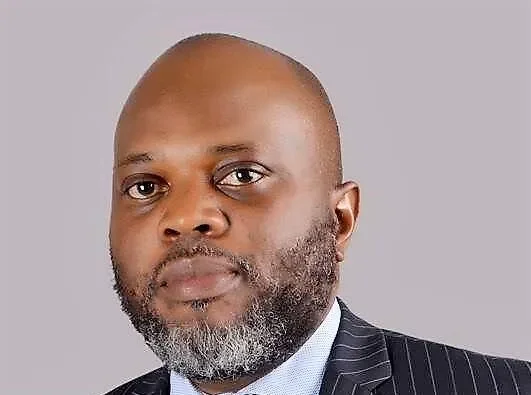
‘Tope Fasua is the special adviser to the President on Economic Matters.