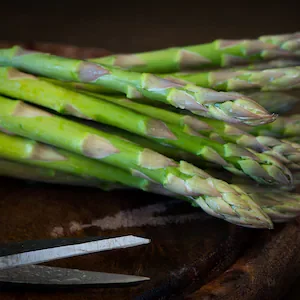
Asparagus takes a while to grow, but it's worth the wait. Photo / Pixabay
I am really waiting for summer to arrive.
From my calculations, I have gained an extra hour at the end of each day, which can mean only one thing, and that is that daylight saving will be arriving next month, although admittedly, at the end of September,
My garlicis doing well in its pot with no rust to be seen as yet; my peas are flowering, and I have my early potatoes planted, having had their first mound up.
My onion seedlings are up in the tray and rapidly growing, and the parsley is making a real show.
Now is a good time to get that gardener’s journal out and see when you planted what last season.
While a lot of plants won’t be planted out till the end of October and later if you live further south, they still need time to grow and get established.
Remember, while it is still cold and not much activity is happening in the soil, you can grow microgreens on your window ledge, sprout some tasty seeds and use some of your herbs to make warming herbal tea.
August is the time to plant your asparagus, but there are a few things you need to know about growing this wonderfully tasty and versatile vegetable.
Firstly, you will have to wait two years before you will get a crop; in fact, really three years, to get a really decent crop, and you need space.
Asparagus plot preparation
You need a permanent site for asparagus, and it needs to be sunny.
If you choose the right position for your asparagus bed, you could possibly get 20 years from it.
It needs to be easy to weed and harvest, free-draining, and have a good amount of compost and organic matter well dug into it before planting commences.
Most asparagus crowns can be planted from August through to October.
Once your bed is ready for planting, you need to start with the first crown by digging a hole and mounding it up at the bottom, so you can spread out those asparagus roots.
Do this with the rest of your crowns, leaving at least 45cm between each crown. You should space your rows about 50cm apart.
Fill up the holes with your well-rotted compost and soil and put some mulch on top to keep those weeds from taking over the space.
In the first year, you will see some spindly asparagus pop from the ground.
You need to leave this to turn into fern and start harvesting maybe 50% of your crop in the second year.
Stop harvesting in December and let the asparagus go to fern.
In autumn you can remove the fern. I usually just lay it on top of the bed with some more compost, give the plot some liquid seaweed fertiliser and leave it up to nature to do its best.
The asparagus fern can get a bit unruly, so corral it behind a string line and a few cane rods.
Pick when spears are about 15- 20 cm long and before the tips open out.
Some common favourite varieties are Jersey Giant, large, plump spears, while Sweet Purple are purple-looking spears and need to be eaten when young (usually grown from seed).
Then, there is Mary Washington, a popular and early variety.
If you are wondering about white asparagus, it is grown under conditions that prevent photosynthesis — in other words, kept in the dark!