Cosiquien charts own path as home builder
MANILA, Philippines — It was in a quaint, family-owned hardware store in Libertad that a young Michael Cosiquien got his start in construction. It was decades before becoming one of the Philippines’ wealthiest tycoons and cofounder of a major engineering and infrastructure company.
There, near Sta. Clara Church in Pasay, he learned the nuts and bolts of construction in the most literal sense. By the age of seven, he was already assembling fluorescent lamps, repairing Christmas lights and handling nearly every task in the store.
Article continues after this advertisement
“There, I could do almost anything,” Cosiquien, an engineer by training, recalls in an interview with Sunday Biz.
Everything, that is, except lifting the 40-kilogram sacks of cement.
Now in his 50s, and armed with decades of experience in the unforgiving construction industry, the former Megawide Construction Corp. executive is charting a different course.
Cosiquien now chairs ISOC Holdings Inc., the company he founded after leaving Megawide in 2017. ISOC has interests in property, energy and cold storage.
In 2025, Forbes ranked him the 46th richest person in the Philippines with an estimated net worth of $255 million.
Article continues after this advertisement
Like the Pasay hardware store, which eventually shut its doors during the pandemic, ISOC had also begun as a family venture focused on cold storage. Cosiquien now wants to turn it into a significant housing developer known for what he calls “affordable luxury.”
Weathering crises
“We want to be one of the relevant or important developers here,” Cosiquien says. “I’m not really dreaming of becoming the biggest, but we want to be always relevant.”
Article continues after this advertisement
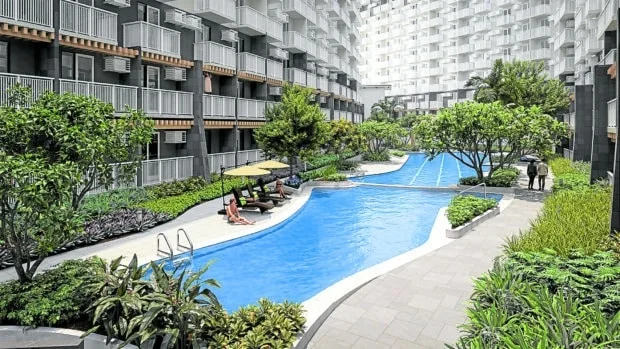
ISOC’s flagship development is I-Land Residences Sucat, a six-tower condominium complex launched in 2019. Construction began in 2020, just as the pandemic disrupted the property market and forced developers to rethink their projects.
But building through crises was nothing new to Cosiquien. He and his De La Salle classmate, Edgar Saavedra, founded Megawide in 1997 at the height of the Asian financial crisis.
Despite the pandemic and the lingering residential property glut, ISOC sees demand remaining resilient. The first two towers at I-Land Residences had been largely taken up, while more than half of the units released in the third tower had already been sold even before construction began.
According to the company, sales volume has grown by 7 percent from a year earlier, while sales value has risen by about 18 percent.
As an added catalyst to that growth, ISOC is allocating around P500 million for residential development this year. Cosiquien estimates each succeeding tower will require investments of nearly P1 billion.
What ‘affordable luxury’ is
For Cosiquien, affordable luxury is about giving buyers something that is increasingly difficult to find in Metro Manila: space.
At I-Land Residences, vehicles are routed below the main pedestrian level, leaving the ground floor open for people instead of traffic. About 60 percent of the property is devoted to open spaces, along with amenities such as swimming pools, a basketball court, a jogging path and a pet park.
“You only find that in high-end developments,” Cosiquien says. “Space is a luxury. But we made it affordable.”
“Low-cost doesn’t mean low-standard,” he adds.
Units are priced from roughly P3.7 million to P7 million, with typical floor areas of about 24 square meters. Cosiquien says the project is geared primarily toward end-users rather than investors.
Next growth phase
All of ISOC’s projects remain internally funded. But will taking the company public eventually be an option for the businessman who helped steer Megawide’s stock market debut in 2011?
“No plans yet,” Cosiquien says. “We’re just focusing on building and growing.”
Even so, ISOC is already preparing to bring its concept beyond Sucat.
I-Land has acquired a roughly 1.5-hectare property along Daang Hari in Cavite, near Vermosa and about 20 minutes from Alabang. Cosiquien says the vertical development is expected to break ground next year.
That planned Cavite community is expected to remain within the company’s affordable-luxury niche.
“We don’t want to serve the rich; they can have five houses,” Cosiquien says. “But those who can afford one, we want to provide them the best.”
After helping build Megawide into the multibillion-peso infrastructure company it is today, and decades after first learning construction in a family-run hardware store, Cosiquien is unsurprisingly building again.
This time, he hopes the structures that bear his imprint are homes within reach of more Filipinos. INQ