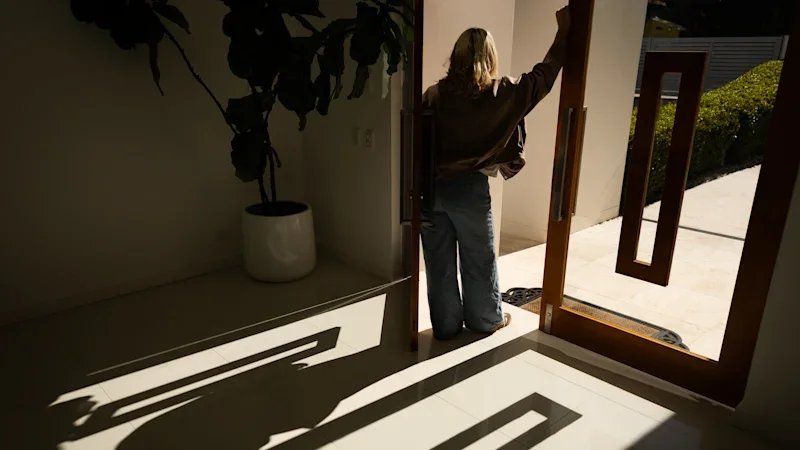
A few days after her violent ex-boyfriend faced court on domestic violence charges, Sally* was woken by three officers banging on her front door.
“I woke up to a police flashlight shining in my face,” Sally said. “They arrived with lights and sirens and wanted to check every room.”
There had been an anonymous tip to police about alleged criminal behaviour, and officers needed to search her entire house on Sydney’s northern beaches. They found nothing.
The police returned the following evening, this time for a welfare check. A week later, they attended her home again, and once showed up at her workplace, this time on a tip-off about an “intoxicated woman abusing children”, Sally said.
After Sally explained the history with her former partner and confirmed she wasn’t in need of support, police flagged her business and home so officers would call first to check on her.
The police visits coincided with developments in her ex’s case, such as court dates and bail breach charges, or when his offending was reported in the media.
‘I woke up to a police flashlight shining in my face … They arrived with lights and sirens and wanted to check every room.’Sally* on the vexatious police reports lodged by her ex-boyfriend
Sally believes he was weaponising systems designed to keep victims safe.
“He needed to be in control of everything – where I was going, who I was talking to, if I woke up too late,” she said. Because the reports were anonymous, police could not link them to her former partner or charge him with breaching her Apprehended Violence Order.
The experience compounded Sally’s trauma. Her ex faces eight domestic violence charges, including assault occasioning bodily harm, common assault, stalking, and property damage.
“He’s threatened to kill me so many times,” she said. The constant police checks left her feeling “like a criminal”, prompting her psychologist to write to police highlighting the escalating trauma.
Sally said he also created multiple social media accounts to monitor her and signed her up for unwanted mail distribution lists.
“He knows how to work the system so he doesn’t get into trouble,” she said.
Domestic Violence NSW senior policy and advocacy officer Angie Gehle said misusing police reports and welfare checks is a recognised form of system-based intimidation.
Gehle said survivors have told her about unannounced police visits during stressful periods or false child protection reports.
“It’s systems abuse, using the systems there to protect people against victim-survivors,” she said.
NSW Police Domestic and Family Violence Commander, Superintendent Danielle Emerton, said false anonymous reports complicate police responses, though she added that it is not a widespread tactic.
The uncertainty of not knowing who was contacting them, or police, “creates anxiety, stress, and a constant feeling of vulnerability”, she said.
“Often, victims feel overwhelmed and unsure of how to piece together what has happened to them.”
Perpetrators making false reports can be charged with stalking and intimidation, and repeated vexatious reports may constitute coercive control.
“Police are looking beyond the black eyes and bloody noses. Since the introduction of coercive control legislation, we’re conscious of gathering evidence of coercive controlling behaviours,” Emerton said, adding officers have undergone training to recognise patterns that instil fear over time.
“Police take any report of domestic and family violence seriously, and we are compelled to investigate if there’s evidence of criminal activity.”
Emerton said anonymous reports could assist police in investigations, and encouraged witnesses or victims of domestic violence to call Crime Stoppers or the police assistance line.
Police have responded to 130,000 incidents involving a victim protected by an Apprehended Domestic Violence Order, averaging a job every three minutes.
*Name changed for privacy
If you or anyone you know needs support, you can contact the National Sexual Assault, Domestic and Family Violence Counselling Service on 1800RESPECT (1800 737 732), Lifeline 131 114, or Beyond Blue 1300 224 636. You can reach Crime Stoppers on 1800 333 000.